Fresh water flushing helps small outboards last for decades
A five-minute freshwater flush is the cheapest insurance a small outboard gets, and old engines prove it when their cooling passages stay clean.

The cheapest five minutes on the boat
Five minutes with a bucket of fresh water can decide whether a small outboard survives for decades or ends up on the bench with salt packed into its cooling passages. Stu Davies points to his own 2.5 hp Mercury, now 20 years old, as the kind of proof every dinghy sailor understands: a few months after the motor was stripped to replace the main bearings, its cooling-water channels were still remarkably clean.
That is not luck. It is the payoff from the unglamorous habit of flushing the engine with fresh water after use, so salt and other deposits never get the chance to harden inside the cooling system. If you run a small auxiliary, a tender motor, or a trailer-sailor’s outboard, this is the maintenance task that buys the most life for the least money.
Why the flush matters
Outboard cooling systems are raw-water cooled, which means they ingest whatever the water carries with it. In saltwater boating environments and brackish water environments, that includes salt crystals and corrosion risk; in dirty harbors or shallow water, it can also mean sand, silt, and mud. Yamaha says freshwater flushing helps dislodge those contaminants and removes salt buildup from cooling passages, and it recommends doing it after every use in salt or dirty water.
Mercury Marine makes the same basic point in plainer language: if you do not flush after saltwater or brackish-water use, corrosion can take hold in the water passages and shorten engine life. BoatTEST notes that guidance like this shows up in the maintenance and engine-flushing sections of owner’s manuals from BRP/Evinrude, Honda Marine, Mercury, Suzuki, Tohatsu, and Yamaha. This is not an optional nicety buried in fine print. It is standard care for the part of the motor that keeps the whole thing from cooking itself.
The reason to stay on top of it is simple: deposits build quietly. The engine may still run, but the cooling system can be getting narrower inside every time you skip the flush. Once that buildup hardens, the repair stops being a rinse and becomes a teardown.

Do it after every saltwater or dirty-water run
The right time to flush is not “when you remember.” It is after every use in saltwater or dirty water, while the engine is still easy to care for and before residues dry into the passages. Discover Boating says most manufacturers recommend a freshwater flush after every saltwater use, and that advice lines up neatly with what Yamaha and Mercury are saying.
That routine matters just as much after a short hop as after a long day. A motor that spent only a few minutes in saltwater can still carry enough residue to start the process. If the engine has been in brackish water, treat it with the same respect as a saltwater run. Mercury’s warning about corrosion in the water passages is exactly why.
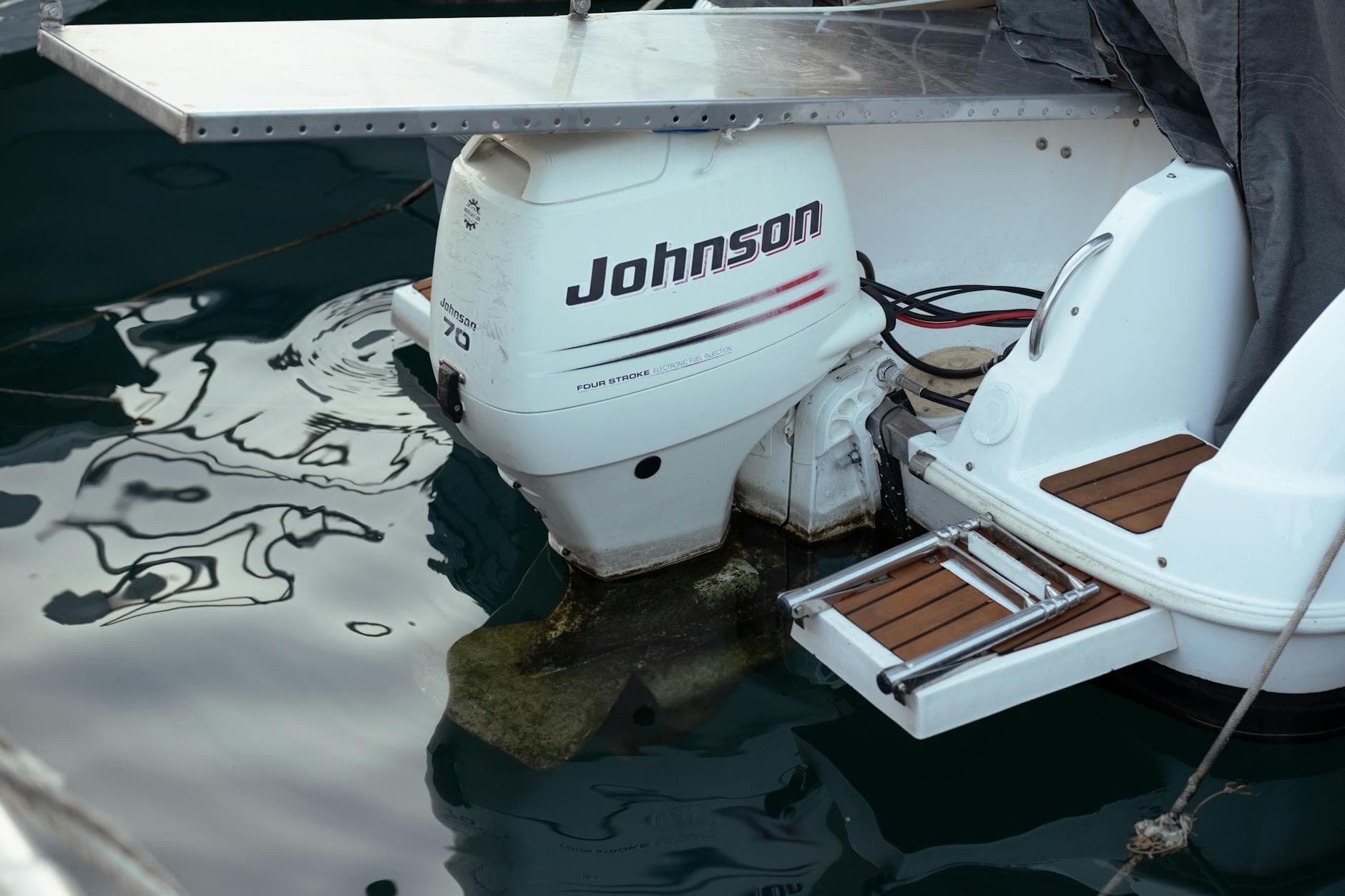
For small outboards, the habit is especially valuable because these engines often live hard lives on tenders, dinghies, and compact auxiliaries. They get dunked, tilted, and stored in ways that make them vulnerable to trapped residue. A quick flush is the difference between a motor that keeps looking nearly new inside and one that slowly accumulates a hidden problem.
How to improvise the job with minimal gear
You do not need a marina-grade setup to do this right. Discover Boating says many outboards made in the last 10 to 15 years have a built-in flush connection, which is the easiest option if your motor has one. If it does not, you can still get the job done with flush muffs, a flushing bag, or a bucket.
The bucket method is the classic field fix and the one most small-boat owners can manage anywhere. Davies describes running the engine in a bucket of fresh water with the leg submerged, which is exactly the kind of low-drama setup that keeps a maintenance habit from becoming a project. If the bucket is tall enough to cover the water intakes, you have the basics covered.

A practical setup looks like this:
- Use clean fresh water, not hose water that has sat in a hot deck line
- Make sure the leg is submerged enough for the cooling system to draw properly
- Run the motor long enough for fresh water to circulate through the passages
- Shut it down, drain it, and do not let salty residue sit in the system
The point is not to make the boat spotless. The point is to move fresh water through the same passages that just saw salt, sand, or mud. That is what prevents buildup from getting a foothold.
When chemicals help, and when they do not
Sometimes plain fresh water is not enough. Davies notes that severely blocked systems can reach the point where the only real solution is to strip the engine and physically clean the cooling channels with a wire brush. That is the ugly end of a neglected maintenance story, and it is exactly why the easy flush matters so much.
Chemical descalers can help before things get that bad. Davies mentions Rydlyme, which can be used to flush an engine by running it in a bucket with the leg submerged. The caution is just as important as the product itself: do not leave it in place too long. Rydlyme Marine’s own outboard-cleaning instructions say to dispose of the solution and then flush the motor with fresh water for about five minutes, or until the discharge runs clear.
That detail matters because chemical cleaning is a tool, not a place to park the motor. The goal is to loosen deposits, then get the solution out and replace it with clean fresh water. Leave a descaler sitting in the system and you swap one problem for another.
The warning signs that the engine is already suffering
By the time overheating shows up, the cooling system is already telling you it has been ignored. That is the clearest red flag in the notes, and it is the one you cannot afford to shrug off. If the motor is running hot, the passages may already be narrowed by salt, scale, or grit.
Another sign is when a simple flush no longer restores clean flow. At that point you are no longer talking about routine care. You are in the territory of blocked cooling-water channels, hardened deposits, and the kind of internal cleanup that Davies describes with a wire brush. BoatTEST’s reminder about salt and brackish water being especially corrosive to the aluminum used in outboards only sharpens the point: the damage is not just mechanical, it is chemical too.
That is why the humble flush routine is worth more than it looks. It keeps corrosion from taking hold in the water passages, keeps sand and mud from sitting where they should not, and helps a small outboard stay the kind of motor you trust instead of the kind you half-expect to overheat.
A bucket, a hose, or a built-in flush port is cheap insurance. The five minutes you spend now are what keep a 20-year-old small outboard looking clean inside, and the next passage from becoming a repair bill.
This article was produced by Prism’s automated news system from verified source data, official records, and press releases, then run through automated quality and moderation checks before publishing. The system is built and supervised by the people who set the standards it runs under. Read our full AI policy.
Did this article answer your question?


