How a short-cut near La Longue tower left a yacht aground
A clean-looking shortcut past La Longue tower ended on a drying rock, and the real lesson is how to build margins before the boat runs out of them.
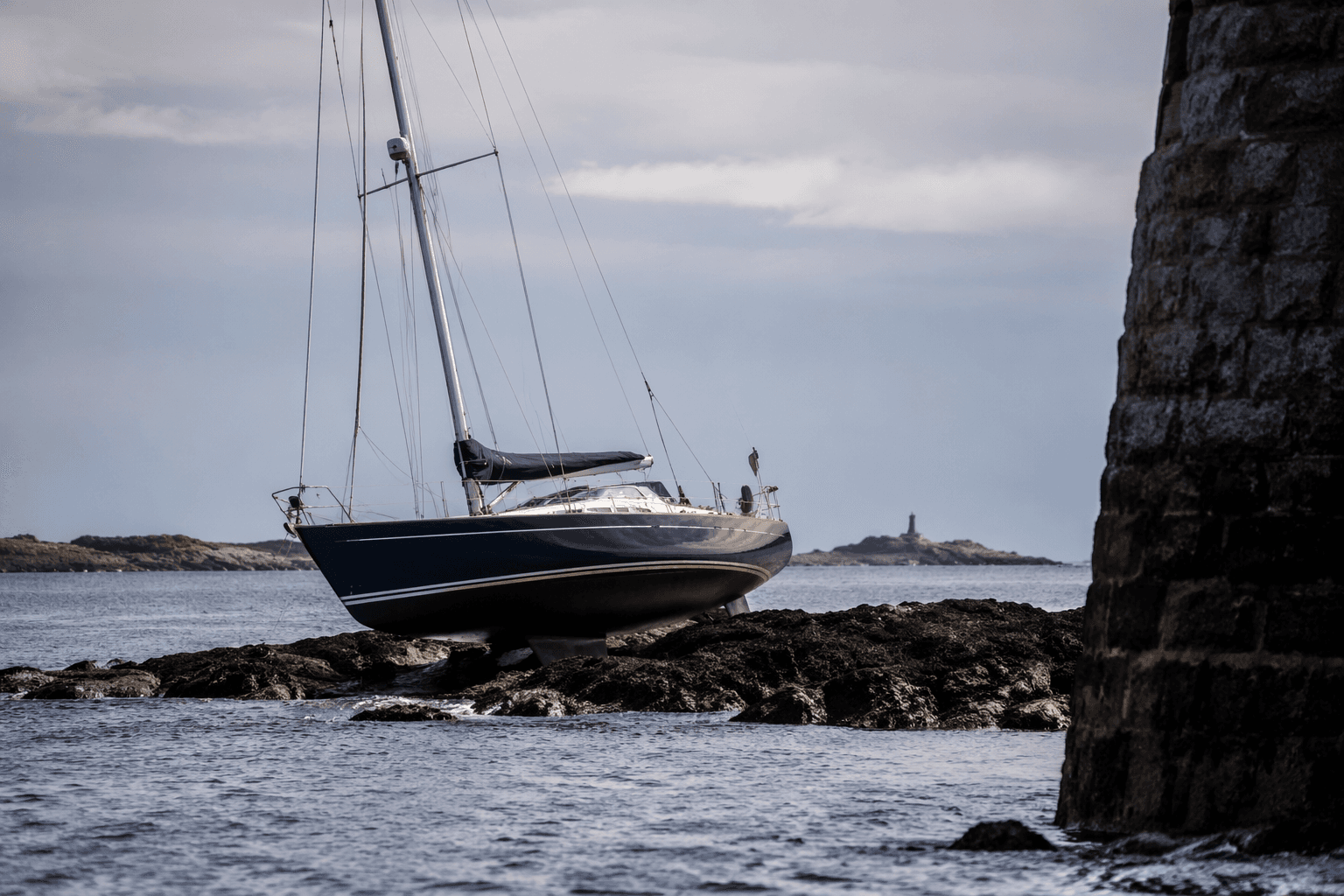
A shortcut past La Longue tower turned a confident downwind run into a dead stop in seconds when Arthur Manning’s Knight Star hit a rock that dries at 7.2 meters. The mistake was ordinary: a shorter line looked fine on the chart, the plotter agreed, and the crew kept going.
How the shortcut was chosen
Knight Star, a Starlight 35, was on the final leg from Binic toward Jersey in the Waller-Harris Two-handed Triangle Race after the crew had already completed the Jersey-to-Granville and Granville-to-Binic legs. Manning had competed in the race most years since 1984, and Knight Star had won her class for the previous two years, so the temptation to keep the race plan tidy and fast was real. The crew chose a more direct line, leaving La Longue tower to starboard, with the boat making a confident downwind run.
The problem was not a reckless gamble but a chain of small assumptions. Their French chart and monochrome plotter showed no obstructions north of the cardinal tower, so the line looked clean enough to justify holding course. That is the kind of moment where racing judgment can outrun pilotage discipline: the boat is moving well, the tactical picture feels simple, and the safe option starts to look like the slow option.
Where the navigation failed
The sound changed and the run ended. Knight Star grounded on the rock, and the crew learned how quickly a tidy plan can collapse when a drying hazard sits just outside the part of the chart you have really internalized. Manning later called it an “embarrassing mis-judgement.” It was not a mystery, but a chain of decisions that looked defensible one by one.
A competent crew can still be caught by chart scaling, by assuming the tide has bought enough clearance, or by trusting a display that looks authoritative without being cross-checked against the actual water level and the actual mark. In Brittany and the Channel Islands, where rocks and tide work together, the margin you think you have can vanish fast.
Race context
The Waller-Harris Two-handed Triangle Race, organized by the Royal Channel Islands Yacht Club, is not a casual potter. In 2025, twelve boats started the 28th edition, and a 2007 report put the event at as many as twenty-five boats in stronger years. That kind of fleet density changes the psychology of a leg like the Binic-to-Jersey run, because the pressure to preserve position can make a direct line feel smarter than a cautious one.
Knight Star’s record also shows this was no novice outfit. The boat finished second in class in the 17th race in 2012, and the earlier class wins show the crew knew how to race the course.
The prevention checklist
A grounding like this is not prevented by one clever gadget. It is prevented by a habit stack that makes the risky shortcut obvious before the boat commits to it.
Pilotage habits
- Rehearse the leg before you leave the dock, not after the start, and mark the marks that matter: La Longue tower, the drying rock, and the side of the cardinal buoy you intend to pass.
- Decide in advance which line you will not take if visibility, tide, or traffic changes the picture.
- Say the danger out loud in the cockpit. If the route depends on a precise side of a tower or buoy, it should be a shared call, not a private assumption.
Chartplotter cross-checks
- Treat the plotter as a second opinion, not the plan. If the French chart and the monochrome display both look clean, that is the point to verify, not relax.
- Check the scale. A display can make scattered rocks disappear into tidy water if you are zoomed out too far.
- Compare the route against the paper chart and the buoyage before you lean on the electronic picture.
Tidal awareness
- Know the drying height of the hazard, not just the name of the mark. In this case, the rock dries at 7.2 meters, which is the number that should sit in your head before you commit to a line.
- Build the tide into the decision, not just the passage plan. A route that looks fine at one stage of the tide can be unforgiving at another.
- In local waters, assume the shortest line is the one most likely to punish a tidal mistake.
Gear and drills that reduce damage
- Keep the response kit ready where it can be reached fast: bilge pumps checked, handheld VHF charged, and the basics for plugging or controlling water ingress easy to grab.
- Practice the first minute after a grounding. Stop the boat, account for crew, check for flooding, and confirm whether the hull is pinned before anyone improvises.
- Run a simple “what if we stop here?” drill on passage. The goal is not paranoia; it is making sure a sudden stop does not become a larger emergency.
Knight Star was roughly 400 meters past La Longue tower when the sound changed and the run ended.
This article was produced by Prism’s automated news system from verified source data, official records, and press releases, then run through automated quality and moderation checks before publishing. The system is built and supervised by the people who set the standards it runs under. Read our full AI policy.
Know something we missed? Have a correction or additional information?
Submit a Tip