How to spot joker valve failure in a boat toilet
A weak flush is often the first warning. Catch joker valve wear, seal drips, and bad cleaning habits early, and you dodge odors, clogs, and pump failures.
The head is the least glamorous system aboard, but it has the highest payoff when it stays quiet and dry. In a manual marine toilet, the joker valve and the seals are the small parts that keep waste, rinse water, and smell moving in one direction, and the first sign of trouble is usually not a dramatic breakdown but a change in how the toilet clears, sounds, or smells.
What a failing joker valve looks like
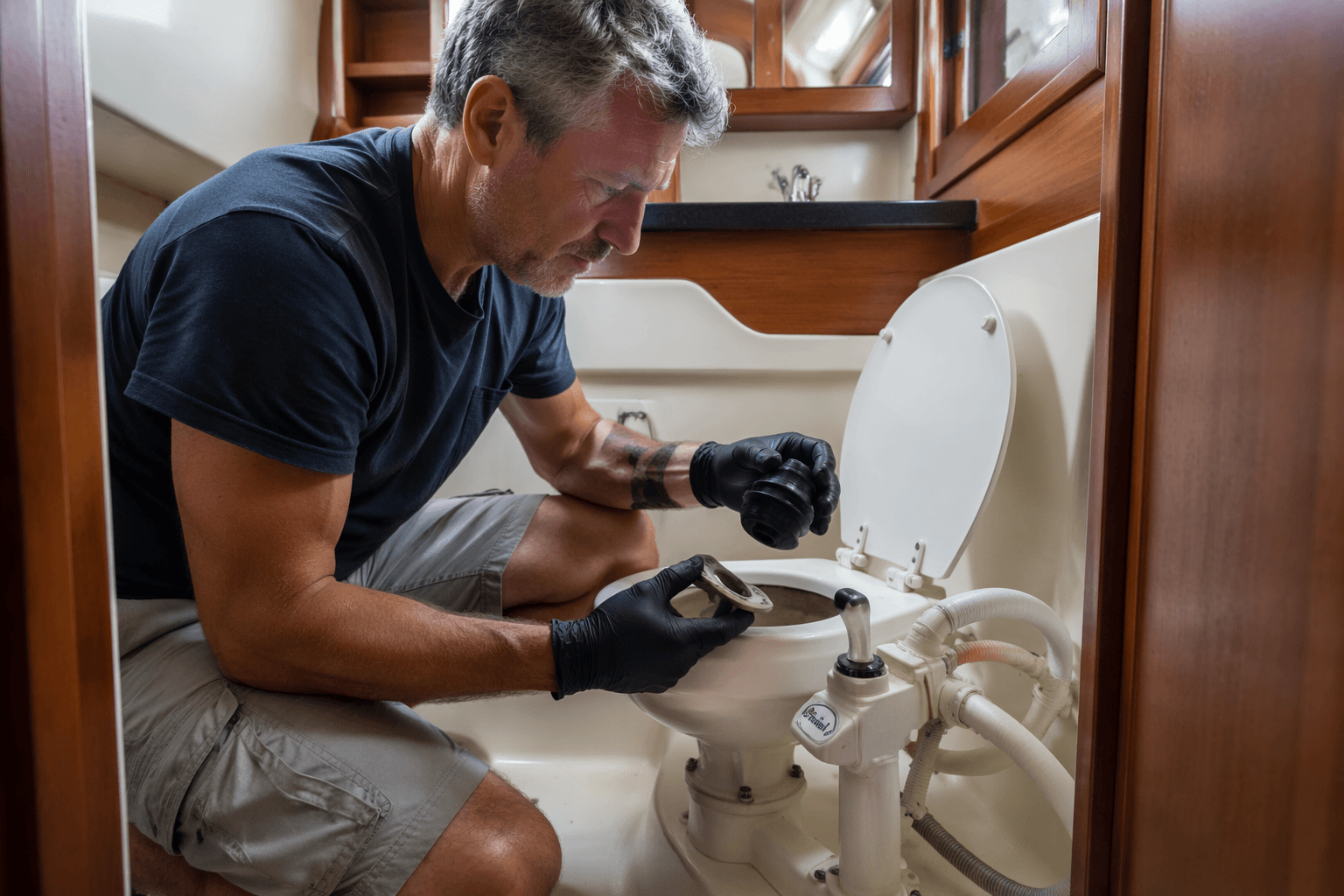
The joker valve is the duck-billed rubber piece that closes after the flush and stops water and odor from coming back into the bowl. When it starts to harden, warp, or pick up contamination, the toilet often leaves a little water behind instead of clearing cleanly. That incomplete flush is one of the clearest warning signs, and it tends to show up alongside backflow, weak pumping, a stubborn belowdecks odor, or drips from the pump body.
They also tell you where to look first. A toilet that still moves water but does not fully clear often points to the joker valve itself, while a drip around the pump body usually puts the spotlight on the seals. In practice, the fix is often less about major plumbing and more about catching a worn rubber part before it turns into a messy, smell-prone cabin problem.
Why seals usually fail first
The joker valve gets the attention, but the seals often give up before it does. That is why a good head inspection should not stop at the valve itself. If the pump body is showing dampness, salt crust, or a slow leak after use, the seal housing and surrounding rubber deserve the same scrutiny as the duck bill in the discharge path.
Jabsco's manual heads use a full-flow triadic joker valve, and the external seal housing is designed for easier replacement. A head is meant to be maintained in place, with parts swapped before wear turns into a plumbing failure.
How to read the symptoms
The fastest way to narrow the problem is to match the symptom to the likely failure point:
- Backflow or odor return: the joker valve is no longer sealing cleanly.
- Poor flushing or incomplete bowl clearing: the valve may be hardened, warped, or contaminated.
- Drips from the pump body: look at the seals and seal housing.
- A system that works only after repeated pumping: the valve may be restricting flow or failing to open and close consistently.
The distinction between misuse, worn parts, and bad installation matters on board. Harsh chemicals and long idle periods can age rubber quickly, but a misaligned part or a poorly fitted seal can create the same symptoms much sooner. If a valve has been installed correctly and still shows these signs, the part itself is usually the problem rather than the pump handle technique.
What the old testing showed about brand differences
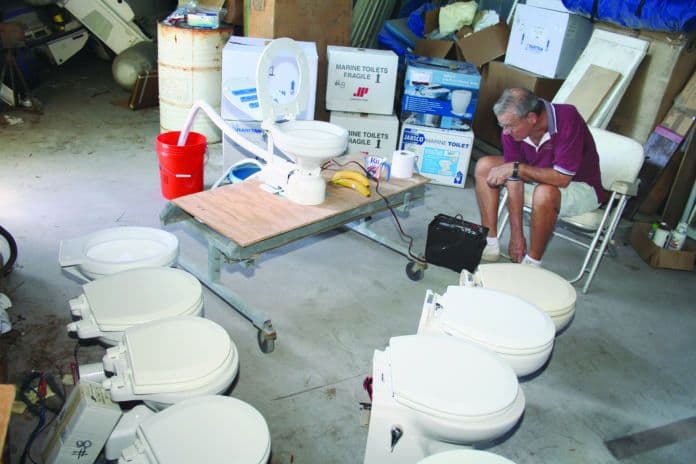
Practical testing from 2013 found that some joker valves were clearly better than others, and Groco, Jabsco, and Raritan manual-head joker valves were dimensionally similar enough to be interchangeable, even though manufacturers do not recommend swapping them. For DIY sailors, that means not every repair has to wait for a single branded part to arrive, but it also calls for care: close in size is not the same as officially approved.
A joker valve is a wear item, and the best time to think about it is before the cabin smells or the pump starts acting up. If a boat relies on a manual head, keeping a spare valve and checking compatibility against the actual housing saves time when the toilet becomes the most important system aboard.
Cleaning choices can make or break the parts
Chemical habits are part of head maintenance, not a separate chore. Bleach, quaternary amines, and solvents can damage rubber parts and pump lubrication, which means a toilet can be harmed by over-cleaning just as easily as by neglect. That is why aggressive bathroom chemistry belongs on land, not in a marine sanitation system built around rubber seals and moving parts.
A brief soak in a mild acid can help remove calcium deposits from joker valves and hoses, and that is the kind of targeted cleaning that preserves function without attacking the whole system. The distinction is simple: use chemistry to clear mineral buildup, not to brute-force the head into submission. If the part has gone stiff, cracked, or permanently distorted, cleaning will not resurrect it, but it can extend the life of healthy rubber and keep deposits from narrowing flow.
The regulatory side is part of the same job
Under 33 CFR Part 159, marine sanitation devices are equipment designed to receive, retain, treat, or discharge sewage from vessels. The federal rules are meant to prevent untreated sewage from reaching U.S. waters. The Environmental Protection Agency and the Coast Guard treat that equipment as part of a regulated sanitation system, not just a convenience under the sole.
For cruising boats, that includes new vessels covered by the federal definition that applies to construction initiated on or after January 30, 1975.
This article was produced by Prism’s automated news system from verified source data, official records, and press releases, then run through automated quality and moderation checks before publishing. The system is built and supervised by the people who set the standards it runs under. Read our full AI policy.
Know something we missed? Have a correction or additional information?
Submit a Tip