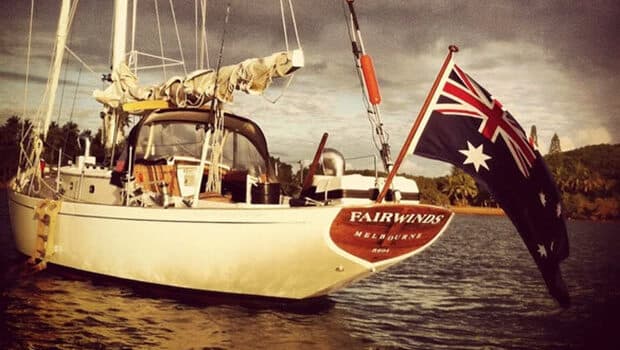
Irwin Citation 38: Model Confusion, Build Issues, Solid Sailing Performance
Irwin Citation 38 coverage highlights a photo mix-up, build quirks like glassed-in chainplates and a screw-fastened hull-to-deck joint, and a boat prized for its sailing feel.

Buyers and brokers should take a close look before signing on to an Irwin Citation 38. The model confusion between the aft-cockpit Citation 38 racer/cruiser and the center-cockpit Irwin 38 cruiser has led to mismatched photos and descriptions, and ordinary production finish can mask more important structural and mechanical issues.
The Citation 38 was designed by Ted Irwin and built by Irwin Yachts in the United States. Dimensions on record list a 38.00 foot LOA, 30.67 foot LWL, a 12.50 foot beam, 15,000 pound displacement and 5,500 pound ballast, with a listed maximum draft of about 6.92 feet. Sail area figures vary on available spec sheets - a reported total of 675 square feet appears alongside a triangle-based total of 608 square feet - producing S.A./Displ. figures of 17.82 (reported) and 16.05 (calculated). Calculated performance numbers include a hull speed of 7.42 knots, a comfort ratio of 24.41, and a capsize screening value near 2.03, all suggesting a boat in the mid-line performance cruiser range.

Construction is typical of modern production boats of the era: fiberglass hulls with hand-laminated sections. Practical Sailor called the Citation 38 “a moderate, well-made boat with modern production construction: hand-laminated hull.” Interior finish is utilitarian. Practical Sailor observed that “the only other shortcoming of the interior is that it looks like a standard, run-of-the-mill production boat, with lots of veneer and plastic, finished a little crudely in spots. But, for a relatively low-priced boat, it’s better to compromise here than in the hull construction or mechanical systems.”
That emphasis on structure is important because owners and forum posters flag inspection headaches. CruisersForum user a64pilot noted chainplates “glassed into the hull,” which limits visual inspection, and described a hull-to-deck joint fastened with screws that looked “poorly done,” even if no leak was found. Engine fit varies between boats. Factory auxiliary listings show Yanmar diesel as original equipment, but the forum poster described a Perkins installation with oil seepage from a main seal and limited engine access.
Sailing is the Citation’s chief appeal. Practical Sailor summed it up plainly: “The main reason to choose the Citation 38 is sailing performance: she has the feel of a well-designed boat.” Reader recollections from charters in the 1980s back that up, noting an aft cockpit, fin keel and a racer/cruiser character distinct from the center-cockpit cruiser Irwin 38.
In market terms, Practical Sailor judged the Citation 38 “a good boat that seems a little ordinary, generally representative of mid-line production boats.” It is “not as well finished as competitive boats like the Pearson 37, but it is generally better done than lower-priced boats such as the Hunter, and the price is appropriately in between.”
For anyone inspecting an Irwin 38 hull, verify the cockpit layout to confirm whether the boat is the Citation aft-cockpit racer or the center-cockpit cruiser. Confirm current engine make and service history, measure actual sail area, and have a surveyor check chainplates and the hull-to-deck joint. Those checks will separate solid sailing performance from avoidable maintenance surprises and keep you steering toward a rational purchase rather than a photo-led impulse buy.
This article was produced by Prism’s automated news system from verified source data, official records, and press releases, then run through automated quality and moderation checks before publishing. The system is built and supervised by the people who set the standards it runs under. Read our full AI policy.
Did this article answer your question?