Keep Mice Off Your Boat, Practical Rodent Proofing Tips
Mice aboard can turn into wiring damage, spoiled stores, and a bigger cleanup fast. Cunliffe’s fix is simple: block access early, trap early, and treat rodent control like seamanship.
%2520(12).png&w=1920&q=75)
A mouse aboard a yacht is not a minor inconvenience. It can chew wiring, foul food stores, hide in lockers, and turn a quiet night at anchor into an expensive maintenance job before you have even spotted the culprit.
Tom Cunliffe’s latest cruising note takes that reality seriously, and with good reason. His message is practical: do not wait for the first scratch in the liner or the first chewed packet in the galley, because by then the mouse may already be settled in a hard-to-reach corner. Cunliffe’s own background, as an MCA Yachtmaster Instructor Examiner and Fellow of the Royal Institute of Navigation, gives that advice real weight in a seamanship context.
Why mice are a boat problem, not just a shore problem
Mice do not need a grand invitation. A yacht tied up alongside a dock, moored in a busy marina, or left sitting in storage can offer exactly the kind of hidden access points they exploit ashore. Cunliffe notes that he encountered a mouse in Denmark, a useful reminder that even clean, well-run harbours are not immune.
Once inside, the damage can be far more than cosmetic. Discover Boating warns that mice can chew wiring and upholstery, which means the nuisance can quickly become a repair bill. Mercury Marine makes the same point from the storage side: prevention is the key to keeping a boat free of rodent damage, especially when the boat is laid up and less frequently checked.
How they get aboard and where they hide
The weak spots are usually the smallest ones. Cable runs, locker gaps, service holes, and openings around fittings can all become entry points if they are not sealed properly. A mouse only needs a gap that looks insignificant to you, and once aboard it will use the boat’s hidden structure to move out of sight.
That is why routine rodent-proofing matters more on a boat than it might ashore. A house can often tolerate a delay before repairs; a boat can hide the problem behind trim, under berths, or inside electrical spaces where chewing can continue unnoticed. The practical lesson is simple: seal first, inspect often, and assume that if a gap exists, a rodent will eventually find it.
The damage that matters most
Wiring is the real red flag. Chewed electrical runs are not just a nuisance issue, because damaged wiring raises fire and electrical hazards, especially in the tight confines of a boat. NFPA 303, the fire protection standard for marinas and boatyards, exists specifically to address fire and electrical hazards at those facilities, which underlines why rodent damage belongs on the safety checklist, not just the cleaning list.
Stores and upholstery are vulnerable too. A mouse in the galley can contaminate food, damage packaging, and force you to throw out provisions you expected to rely on underway. Upholstery, insulation, and soft trim can all be nibbled, torn, or used for nesting material, leaving you with avoidable repairs and a lingering cleanup problem.
The DIY prevention plan that works
Cunliffe’s approach is straightforward: treat rodent proofing as part of regular boat care. He recommends having traps on board even before you have a problem, because the first sign of activity may not appear until the animal has already made itself at home. That is a small investment compared with the cost of chasing a hidden infestation later.
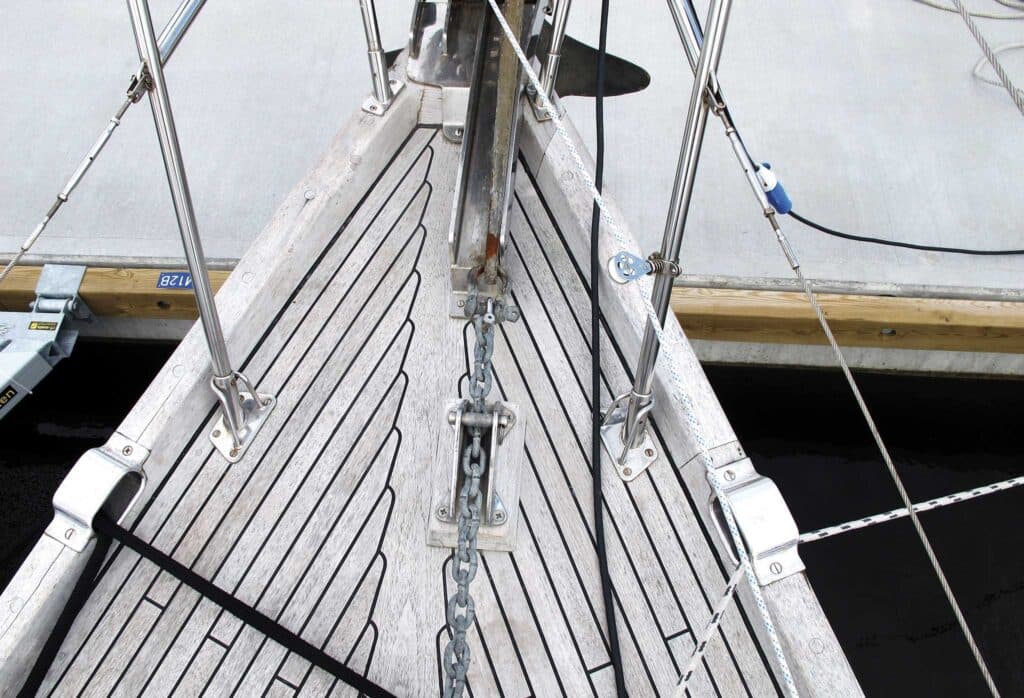
- Use copper mesh to block gaps around wiring runs and openings.
- Apply rodent-proofing tape where cable routes and access points need extra protection.
- Seal openings before the boat is left unattended or stored.
- Protect vulnerable wiring instead of assuming the boat’s layout will keep it safe.
The strongest physical defenses are the simplest ones:
These steps fit squarely with the broader marine guidance. Mercury Marine stresses prevention in storage, while the U.S. Navy’s shipboard pest-management manual emphasizes exclusion and sanitation as the foundation of control. The Navy also treats documentation seriously, which is a reminder that rodent control works best when it is systematic, not improvised.
What to do when you suspect activity
If you find signs of a mouse, do not shrug it off as a one-off. The U.S. Navy’s manual says signs of rodent activity help determine the location and degree of infestation, the species involved, the food and water sources, and what improvements are needed in exclusion and sanitation. In plain sailing terms, that means your first job is to identify where the problem is coming from and what is feeding it.
A sensible onboard response is to work in order: 1. Remove food sources and clean up crumbs, packaging scraps, and any spilled stores. 2. Set traps in places where activity is likely, especially near suspected routes and hidden corners. 3. Inspect wiring runs, lockers, and access points for chew marks or nesting material. 4. Seal the openings that likely let the mouse aboard in the first place. 5. Check again after dark and over the next few days, because a single sighting rarely tells the whole story.
Sanitation matters as much as trapping. If food, water, and nesting material remain available, the boat keeps advertising itself as a good place to stay. A clean interior with locked-down stores is far less inviting than a galley full of accessible packaging and easy hiding spaces.
Lay-up and storage are the danger zones
Storage is where lazy assumptions cost the most. Mercury Marine’s guidance is blunt: prevention is key to avoiding rodent damage while a boat is in storage. That makes off-season preparation a critical part of the maintenance cycle, not an optional extra.
Before lay-up, clear food off the boat, seal any tempting stores, and inspect every likely entry point around wiring and openings. Put traps aboard before the boat is left idle, not after you find evidence weeks later. If the boat sits in a marina or boatyard, remember that the surrounding environment matters too, because rodent control at the berth is part of the risk picture.
Make rodent control part of seamanship
The strongest point in Cunliffe’s note is not just that mice are unwelcome. It is that dealing with them is part of ordinary seamanship. Small, cheap steps taken early can prevent electrical damage, spoiled stores, and a much bigger cleanup later, and that is exactly the kind of practical discipline cruising sailors rely on.
Keep the same habits you use for bilge checks, line handling, and passage prep. Inspect, seal, trap, and sanitize with the same attention you give to sails and systems. A mouse problem is easier to stop on the outside of the boat than it is to fix once it is already living inside it.
This article was produced by Prism’s automated news system from verified source data, official records, and press releases, then run through automated quality and moderation checks before publishing. The system is built and supervised by the people who set the standards it runs under. Read our full AI policy.
Did this article answer your question?


