Lightning protection for sailboats, what works and what doesn't
Lightning protection can reduce risk, but it will not make a sailboat strike-proof. The real choice is how much control a grounding path can buy.
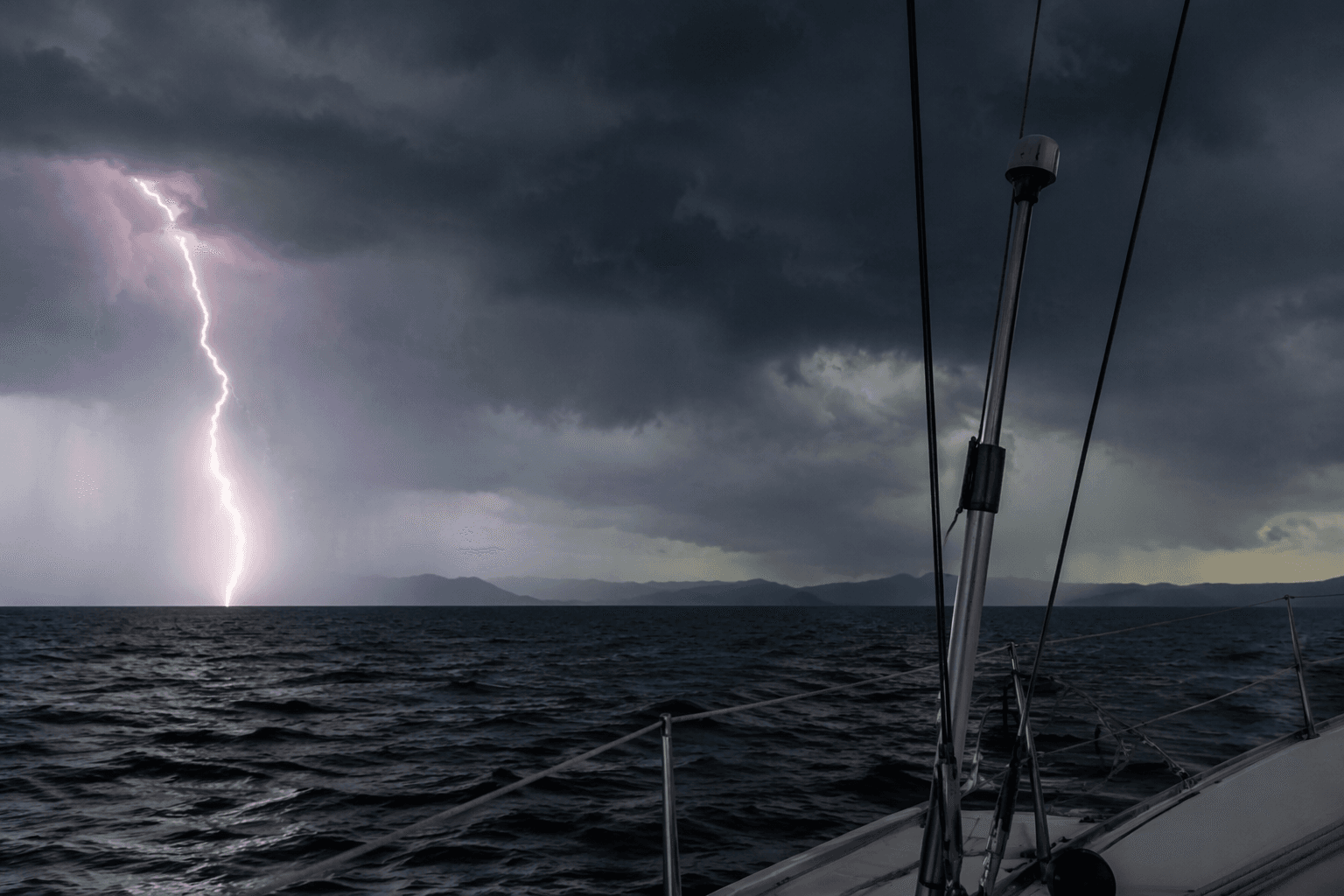
When lightning finds a sailboat, the real questions are ugly ones: can you prevent the strike, can you minimize damage, can you keep crew safe, and can you spare the electronics? A Good Old Boat piece is useful because it refuses the fantasy of a magic shield. ABYC and NFPA are both trying to give lightning a direct path to ground, but neither standard offers a guarantee.
The hard truth about what protection is
Lightning protection on boats is not about immunity. It is about making the strike behave in a more predictable way, so the energy has a route away from critical components instead of wandering through wiring, rigging, or a person in the wrong place at the wrong time. That is why the conversation keeps coming back to grounding paths, bonding, and the practical limits of any system when a huge electrical discharge hits the mast, shrouds, or deck hardware.
ABYC’s TE-4 says the quiet part out loud: complete protection from equipment damage or personal injury is not implied. It also says protection of persons and small craft depends on a combination of design and maintenance. That is the right mindset for a DIY sailor, because it frames the job as risk management, not a promise of invulnerability.
Why ABYC and NFPA do not sound exactly alike
The disagreement is not just academic. ABYC downgraded its lightning standard from E-4 to TE-4 in 2006, while NFPA rewrote its lightning standard in 2011. Those changes matter because they show how hard it is to turn lightning, which is an act of nature, into a fully controllable engineering problem.
ABYC says its standards and technical information reports are reviewed annually, and it also says its standards development has correlated with a significant reduction in boating accidents over the past six decades. NFPA says its codes and standards evolve with changing industry needs and new technologies. In other words, both organizations are still moving, because the boats, materials, and expectations keep changing too.
The other key difference is scope. NFPA 302 applies to boats under 300 gross tons used for pleasure and commercial purposes. NFPA 780 is the broader lightning-protection standard for installation of protection systems. That is why the boat debate does not map neatly onto shore-side lightning rules. A sailboat mast, standing rigging, and wet deck hardware are a different animal from a building rooftop.
What a lightning system can realistically do
The best case for any system is simple: it gives the strike a preferred route to ground. If lightning hits the mast, shrouds, or deck hardware, you want that energy to travel in a controlled way, as far as the boat’s geometry allows, instead of flashing through random paths.
That is the part where the standards are useful. They do not tell you that damage disappears. They tell you that the odds improve when the boat has a planned route for the current, and when that path is maintained. That is a very different promise, and a much more believable one.
Do not confuse “better odds” with “safe forever.” The research notes are clear that no method comes with a guarantee, and the standards bodies themselves have revised their recommendations over time. That is not a flaw in the conversation. It is the conversation.
How to decide whether a retrofit makes sense
The decision gets practical fast, and it should. A taller, more complex cruising boat with expensive electronics has more to lose than a simpler boat with a lighter loadout. If you are sailing offshore or in thunderstorm-prone waters, especially in the Southeastern United States and Florida, lightning deserves serious attention. NOAA and CDC-linked data say lightning injuries and deaths are highest there, and Florida is identified as the country’s lightning capital.
The numbers help cut through the wishful thinking. The National Lightning Safety Council reported 517 lightning deaths in the United States from 2006 through 2024, and boating is one of the recurring categories in that toll, with 26 boating-related deaths in its breakdown. That does not mean every sailor needs the same retrofit, but it does mean this is not a theoretical hazard.
Use this frame when you decide how far to go:
- If you cruise hard in thunderstorm country, a real grounding and bonding plan is worth serious consideration.
- If your boat is simpler and your sailing is mostly local, the best answer may be a modest system, careful maintenance, and honest acceptance that lightning protection is still partial protection.
- If your budget is tight, spend for the parts of the system you can inspect, maintain, and understand. A half-baked retrofit that nobody checks is just expensive hope.
- If your tolerance for risk is low, treat lightning as a systems problem, not an accessory choice. The point is not to buy a fantasy. The point is to reduce the chance that a strike becomes a total loss.
The DIY reality
This is where the article lands hardest for do-it-yourself owners: the useful work is not in chasing a myth of invulnerability. It is in understanding what your boat already offers, where the current would go, and whether your design and maintenance are good enough to give lightning a sane path if the sky goes ugly.
That is why the best lightning plan is usually a combination of preparation, realistic expectations, and a clear-eyed sense that the boat may still suffer damage even if the crew survives. When the mast becomes a conductor and the thunder is close enough to feel in your teeth, the value of a lightning system is not that it makes the strike harmless. It is that it gives you one more chance to keep the discharge from choosing its own route through the boat.
This article was produced by Prism’s automated news system from verified source data, official records, and press releases, then run through automated quality and moderation checks before publishing. The system is built and supervised by the people who set the standards it runs under. Read our full AI policy.
Did this article answer your question?