Linjett 34 proves thoughtful design still shines in light air
The Linjett 34 makes a strong case for calm, conservative design. In light air, its balance, deck logic, and shorthanded manners matter more than marina theater.
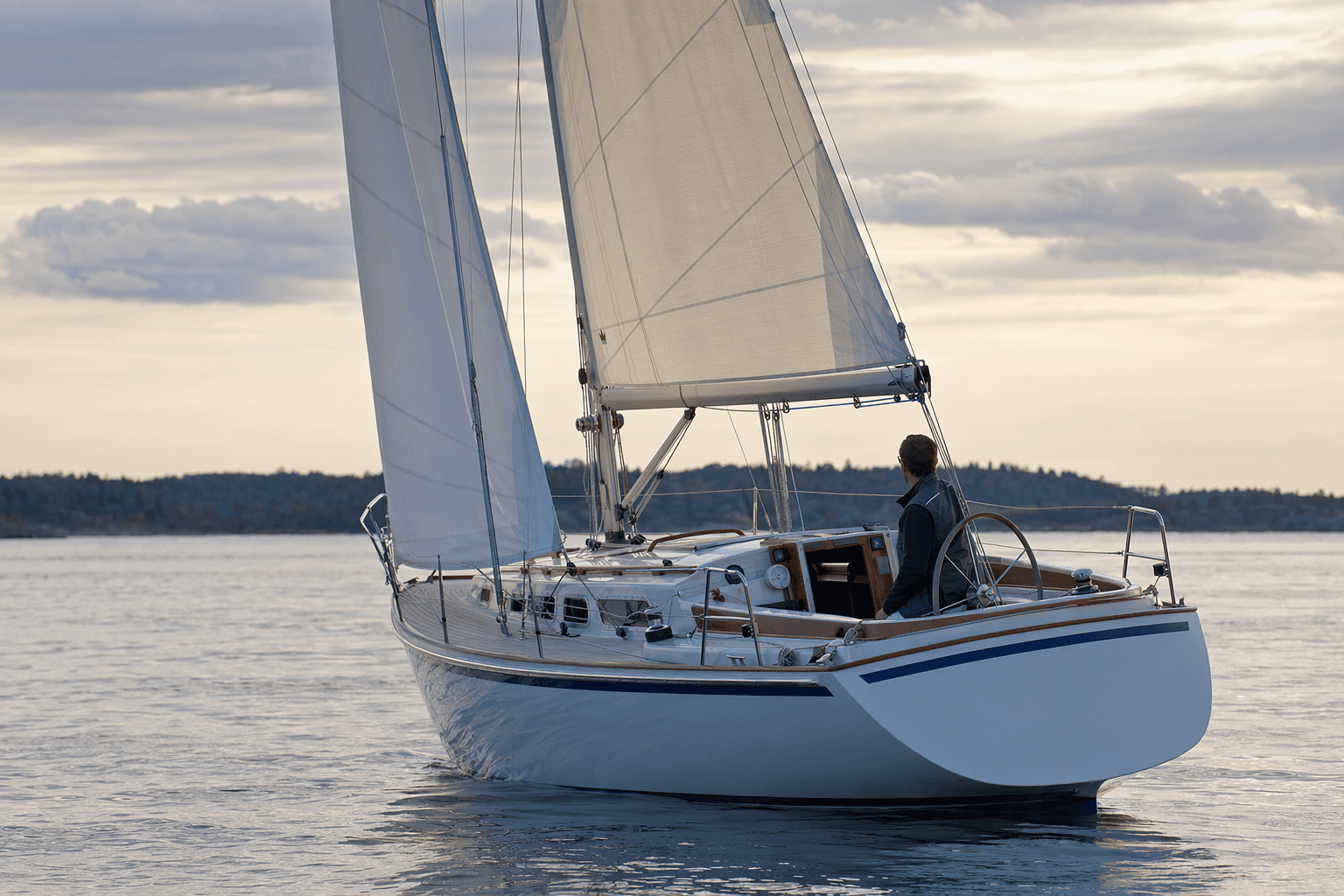
A boat that wins by being useful
The Linjett 34 does not try to shout over the dock. It looks composed, even a little modest, and that is exactly the point: in a gentle 5 to 8 knots, with gusts to 10, the boat shows how far a thoughtful shape, tidy deck plan, and sensible brief can take you when there is no brute wind to hide behind. Yachting Monthly’s test treated the boat’s age as part of the story, not an asterisk, because this is a design that had already had time to prove itself.

That matters in a market that often rewards the newest silhouette on the show floor. The Linjett 34 was launched in spring 2011, the first hull was built in 2012, and the test boat was already four years old. Instead of reading that as a drawback, the review framed it as evidence that good design does not expire just because it is no longer the latest thing in the marina.
Built for the water it actually lives in
Linjett’s own brief is rooted in the Swedish archipelago, and that is not just marketing gloss. The boat was developed for the unique conditions of those waters, where balance, easy handling, and durability matter every time you pick your way past rock, forest, and low, cold shoreline. The test took place in Sweden around the Lidofjard, with red houses and a hard, northern backdrop that suited the boat’s restrained character perfectly.
This is where the Linjett 34’s conservative design starts to look quietly radical. Instead of chasing excess volume or a dramatic, oversized profile, it prioritizes the kind of manners owner-sailors live with every weekend: a cockpit that makes sense, a rig that is easy to manage, and enough composure that the boat feels settled rather than busy. In a short-handed cruising life, that translates into less fatigue and fewer fiddly compromises.
Shorthanded sailing without drama
The practical setup is where the Linjett 34 earns its reputation. Linjett says the boat is easy to sail shorthanded whether you choose tiller or wheel steering, and that flexibility fits the way real crews sail now: often two-up, often adjusting sails without making a production out of it. The cockpit layout supports that approach, and the 10 clutches a side help keep control lines organized where they belong.
The inboard chainplates are another small detail that carries real weight. They help keep the rig compact and the deck geometry tidy, which means less clutter underfoot and a cleaner working area when you are moving around in a seaway. This is the kind of design decision that never looks flashy in a brochure, but pays back every time you reef, tack, or handle the boat in a crosswind with only one other person aboard.
A small boat with a big sail plan
On paper, the Linjett 34 is hardly a tiny cruiser in the way that matters offshore. Official specifications put it at 10.66 m overall length, 3.45 m beam, 1.84 m draft, about 5,500 kg displacement, and about 59.5 m² of sail area. Linjett says it is the smallest model in the range, but also the one with the relatively largest sail area in the family, which tells you the yard was not thinking in terms of visual restraint alone.
That balance between size and sail plan is part of why the boat makes sense in light air. Yachting Monthly and YACHT both point to the way the newer 34 moved toward a more sporting posture, with a wider stern, a more effective keel, and more sail area. Even so, the result is not a skittish performance toy; it is a cruiser that wants to sail properly, with enough drive to stay lively without demanding that you treat every outing like a race start.
Comfort that serves sailing, not the other way around
Inside, the Linjett 34 keeps the same practical streak. The boat has two generous double cabins, one forward and one aft, with berth sizes of 210 x 170 cm forward and 200 x 160 cm aft. Linjett also highlights standing headroom and slatted bed bases, details that sound domestic until you remember how much they matter after a wet, cold day in archipelago waters.
There is a useful logic here for owner-sailors: comfort is not being used as a substitute for sailing ability. It is there to make the boat easier to live with, easier to recover on, and more satisfying over time. A design like this reduces the little forms of exhaustion that creep into cruising, from awkward deckwork to cramped sleeping arrangements, and that is often the difference between a boat you use enthusiastically and one you merely admire.
A replacement that kept the family line intact
The Linjett 34 also sits in a clear family history. It replaced both the Linjett 33, built from 1994, and the Linjett 35, built until 2006, so it was created to refresh the yard’s smaller-cruiser line without abandoning the identity that made those earlier boats work. Mats Gustafsson is credited as the designer, and the yard’s own archive says the boat was nominated for Sailboat of the Year 2012 in Sweden, with praise for build quality, finish, equipment, features, and sailing characteristics.
That pedigree matters because Rosättra Båtvarv AB has been building boats since 1886, and the Linjett name carries the weight of that continuity. This is not a company trying to reinvent itself with each launch. It is a builder refining a language it already knows well, and the Linjett 34 reads as a confident sentence in that conversation.
Why the old-fashioned approach still feels fresh
What makes the Linjett 34 interesting is not that it is conservative for the sake of being conservative. It is that the boat demonstrates how a settled design can still feel alive when it is drawn for the right conditions and used in the right way. In light air, on northern water, with a short-handed crew and no appetite for gimmicks, the boat’s balance and proportion do the work that flashier boats often promise but do not deliver.
That is the real lesson hiding inside this quiet Swedish cruiser: not new does not mean not relevant, and not flashy does not mean not good. The Linjett 34 proves that thoughtful design can still shine precisely because it was made to sail, not to pose, and that is why it keeps making sense long after the showroom shine has faded.
This article was produced by Prism’s automated news system from verified source data, official records, and press releases, then run through automated quality and moderation checks before publishing. The system is built and supervised by the people who set the standards it runs under. Read our full AI policy.
Did this article answer your question?