Make your own stack pack for easier sail handling
A homemade stack pack can make the end of a passage feel a lot less like a wrestling match. The catch is getting the lazy-jack geometry, fabric, and closures right.
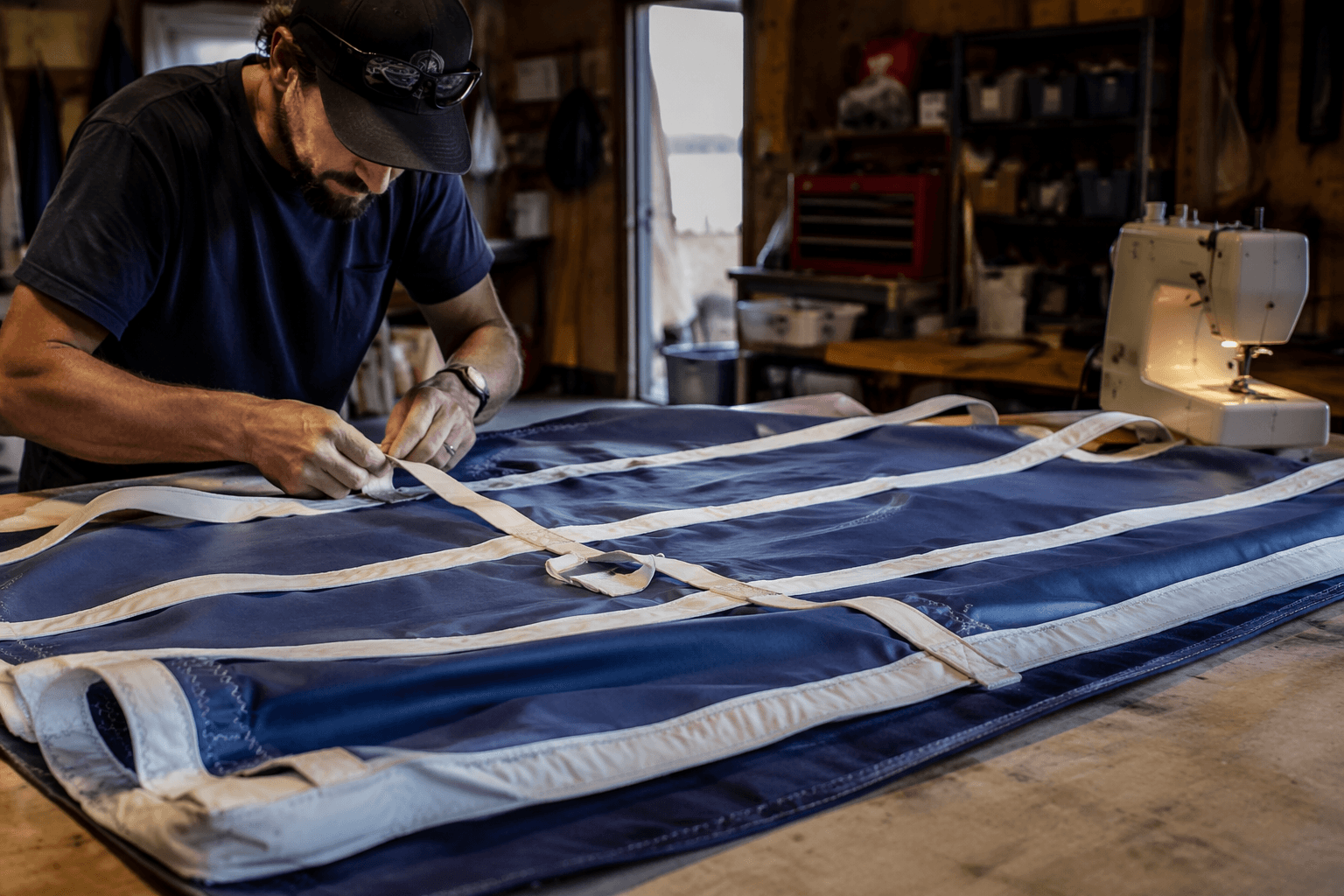
The moment the stack pack earns its keep
You feel the difference at the end of a windy leg, when the main comes down and there is no extra hands-on deck to tame it. Instead of a floppy heap across the boom, the sail drops straight into a bag and stacks where it belongs, which is exactly why a stack pack, also called a lazy bag, has such a loyal following among cruising crews. Cruising World’s DIY take on the project treats it as a functional upgrade, not a dress-up cover, and that is the right lens for it.
The payoff is simple but real: less flaking effort, quicker sail securement, and fewer awkward moments when the wind is up or the crew is thin. For cruising couples, older boats, and anyone sailing shorthanded, that matters every time the main goes up or down. A good homemade system can make the boat easier to live with, but only if the measurements and hardware choices are tied to the way your own rig actually works.
What a stack pack really is
At its core, a stack pack is a mainsail handling system built around a fully battened mainsail, integral lazy jacks, and a cover that opens automatically as the sail is lowered. Doyle Sails describes the setup that way, and its installation manual adds that the package includes a Dacron mainsail with attached sail cover, coiled lazy jacks, and six full-length battens. That combination is what lets the sail fall into the cradle instead of sprawling over the boom.
The useful part for a DIY build is that the concept is already proven. UK Sailmakers, Elvstrøm Sails, and other sailmakers describe similar lazy-cradle systems as cruising aids, not exotic gear. The homemade version is really an owner-built adaptation of a standard sailmaking idea, which is why it can be so effective when the dimensions are right and so irritating when they are not.
Where the DIY version saves money, and where it does not
The biggest attraction is cost. A homemade stack pack lets you tailor the fit to a specific boom, specific reefing gear, and a specific way of sailing without paying for a fully custom shop installation. That is a real advantage on older boats, where factory solutions may no longer match the way the boat is used.
But DIY also means you own the compromises. If the cover is cut too tight, the sail will fight its way in. If the lazy jacks sit in the wrong place, battens can catch during hoisting, which is a common cruising headache. If you ignore how reef lines, sail ties, and closing flaps interact, the system may look neat at the dock and turn clumsy the first time you need to reef quickly.
The measurement traps that make or break the build
The lazy-jack geometry is the first thing to get right. Modern Sailing describes lazy jacks as a network of lines rigged along each side of the mainsail from multiple points on the boom or stack pack to a point on the mast just above the spreaders, at about 60% of mast height. That detail matters because the whole cradle depends on where the lines start, where they rise, and how they support the sail as it comes down.
This is where a lot of homemade projects go sideways. If the mast attachment is too low, the cradle does not catch the cloth cleanly. If it is too high or the spans are wrong, the sail can hang up on the lines instead of sliding into the bag. Cruising World’s own lazy-jack advice also reminds you that the lines should be easy to loosen and move clear while sailing downwind to reduce chafe, which means the rig needs to be accessible, not buried under layers of hardware.
Material choices that make the system work underway
Doyle’s manual is a good clue to the right materials: Dacron for the mainsail and an integral cover attached by a membrane, with the top of the cover supported by two battens. That tells you the cover is not just a loose flap; it has enough structure to open and hold shape as the sail comes down. For a homemade build, the fabric and reinforcement need to do the same job, or the whole system turns into a bag that collapses at the wrong moment.
UK Sailmakers notes that stack-pack and lazy-cradle systems may include integral sail ties with plastic snap buckles and reef-line pass-through slits. Those are not decorative details. Snap buckles make the cover faster to open and close, while reef-line slits keep the reefing gear from becoming an afterthought you have to route around later. If you are building your own, those openings and closures should be planned from the start, not cut in after the fact when the first reef shows you what you forgot.
How the bag changes hoisting, reefing, and stowage
The real test is not whether the cover looks tidy at the dock. It is whether the sail goes up cleanly, reefs without a fight, and drops into place when the crew is tired. In the described Cruising World setup, the main drops straight into the bag as it is flaked, and that eliminates sail ties. That is a strong case for the system because it removes a whole layer of after-the-fact tidying.
Reefing still has to be thought through. The bag must leave room for reef points, and the lazy jacks must not create a trap for battens as the sail is hoisted. The Boat Galley’s warning about battens catching on lazy jacks is worth taking seriously, because that is the exact kind of annoyance that can make a good idea feel broken. A smart build keeps the sail path clean, keeps the cover open where it needs to be open, and keeps the hardware out of the way when the sail is going up.
Best candidates for a homemade stack pack
This project makes the most sense on cruising boats where mainsail handling is a routine workload, not a race-day concern. Shorthanded crews, cruising couples, and older boats with gear that no longer matches their current use are all strong candidates. If the main is already fully battened, the system fits naturally into what the sail is doing anyway.
It is a poorer fit if your boat is constantly sailed in a way that demands frequent mainsail adjustments and you do not want to live with the geometry of lazy jacks. It is also less appealing if you are unwilling to tune the setup after the first few sails, because the geometry almost always needs a little correction once the sail and cover have been loaded in real conditions. The best DIY stack pack is not a one-and-done craft project; it is a fitted piece of rigging architecture.
A well-made stack pack changes the whole rhythm of the end of a passage. Instead of fighting a sail that wants to spill over the boom, you get a controlled drop, a cleaner stow, and less drama when the wind or crew are not cooperating. That is the real test of the system, and it is why the right homemade version pays back every time you ease the halyard and watch the main fall neatly where it should.
This article was produced by Prism’s automated news system from verified source data, official records, and press releases, then run through automated quality and moderation checks before publishing. The system is built and supervised by the people who set the standards it runs under. Read our full AI policy.
Did this article answer your question?