Masthead rig tweaks could help a Hunter 19 Europa match Squibs
A Europa that trails Squibs may need a better tune, not a bigger budget. Start with mast shape, rig tension and helming habits before you chase new hardware.
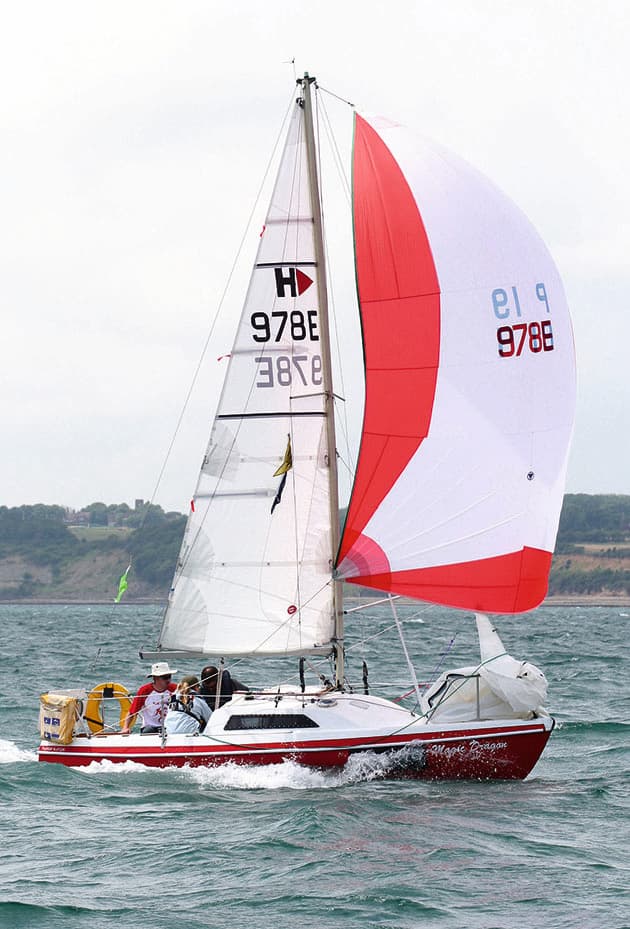
A Hunter 19 Europa that keeps finishing behind Squibs is not automatically a slow boat. David Harding’s Practical Boat Owner piece starts from a more useful question: where is the speed actually being lost, in the sail shape, the rig tune, the hardware, or the way the boat is being sailed?
Know what boat you are really comparing
Ralf Teubert’s Europa began as a bargain buy from eBay after years racing a Squib in the fleet at Newhaven and Seaford Sailing Club. That matters, because he was not moving from one anonymous small keelboat to another. He went from a strict one-design boat designed by Oliver Lee in 1967 as a successor to the Ajax 23, to a Hunter 19 Europa that grew out of the Squib idea, but added a cabin, more cruising comfort and more variables to tune.
The Europa itself was first built in 1972 and is about 18.96 ft long with a displacement of roughly 1,501 lb. The Squib is about 19 ft long, carries around 170 sq ft of upwind sail area and is sailed by two people. That is a tight benchmark, especially when the class is still active through the National Squib Association, which keeps news, events, fleets, membership and history in play.
Start with the masthead rig
The PBO feature centres on the Europa’s original masthead rig, with in-line caps, aft lowers and a babystay. In the example discussed, the spreaders look droopy, which is exactly the kind of detail that can hide a speed problem in plain sight. A masthead rig is generally easier to tune than a fractional rig, but it is also less adjustable, so small geometry faults can have a bigger effect than owners expect.
That is why this story is best read as a diagnostic guide, not a parts list. Masthead rigs typically rely on a smaller main and larger headsails, so if the sail plan is not carrying its shape cleanly, you can feel underpowered even when everything looks sound at the dock. On a boat like the Europa, the answer may be measured changes to rig tension, spreader angle and sail balance, not an expensive refit.
Work through the diagnosis in order
1. Read the sail shape first.
If the main is baggy, the jib is not setting cleanly, or the slot is misbehaving, you have already found one source of lost pace. The quickest gains often come from getting the existing sails to work with the rig, not against it.
2. Then check the rig tune as a system.
The cap shrouds, aft lowers and babystay should be working together to control mast bend and headstay behavior. On a masthead boat, that balance drives how the sails present to the breeze, so one loose or over-tight element can spoil the whole package.
3. Inspect the spreaders and mast alignment.
Droopy spreaders are not just cosmetic. They can change how the mast is supported, alter symmetry from tack to tack and make the boat feel stubbornly indifferent to tuning efforts.
4. Separate hardware limits from helming habits.
If the setup is sound but the boat still will not match the front of the fleet, look at whether the gear can actually produce the sail shape you want. Then look at the person on the tiller, because a boat that is well tuned but sailed with poor angle, late mainsheet work or sloppy steering will still bleed speed.
Use the Squib benchmark wisely
The Squib is useful here because it is not trying to be anything else. The National Squib Association treats the class as a living racing scene, and the boat’s performance is often described as closer to a racing dinghy than a cruiser. That close-sheeting geometry, plus the long-running debate over slack versus tight rig tension, shows how much a small change in luff sag or pointing can change the feel of a boat.
That is exactly the lesson a Europa owner can borrow. Harding’s comparison shows that top sailors have sometimes adopted a looser approach in the right circumstances to create more luff sag and different pointing behavior. In other words, the “right” tune is not always the tightest tune, and the quickest boat is not always the one with the hardest-rigged mast.
Remember what the Europa was designed to be
The Europa was not born as a pure class-racing weapon. PBO’s review says about 250 Hunter 19s had been built before suggested improvements produced the Europa, including a modified deck moulding that increased cabin headroom and gave four berths, including a V-berth. That is a useful reminder: this is a small cruiser-racer with roots in the Squib, not a Squib clone.
Boat-data references also point to several keel options, including fixed shoal keel, lifting keel and bilge keel versions, which is another reason to diagnose carefully before buying upgrades. If your boat’s speed problem is really a mix of keel drag, rig shape and technique, a new sail alone will only solve part of it. The smarter path is to test each variable in order and keep the gains that show up on the racecourse.
For Teubert, that approach is already paying off. He moved from the lower-mid fleet into the top half, which is the kind of improvement that usually comes from a boat becoming better understood, not from one dramatic purchase. When a Europa is trailing Squibs, the answer may be hiding in the masthead rig all along, waiting for the owner to tune the boat before trying to outrun it.
This article was produced by Prism’s automated news system from verified source data, official records, and press releases, then run through automated quality and moderation checks before publishing. The system is built and supervised by the people who set the standards it runs under. Read our full AI policy.
Know something we missed? Have a correction or additional information?
Submit a Tip