New recycled sailcloth aims to cut sailing’s plastic waste
Recycled sailcloth is finally good enough for cruising use, and the new drop-off and take-back routes give old sails, wetsuits, and sheets somewhere better to go than landfill.
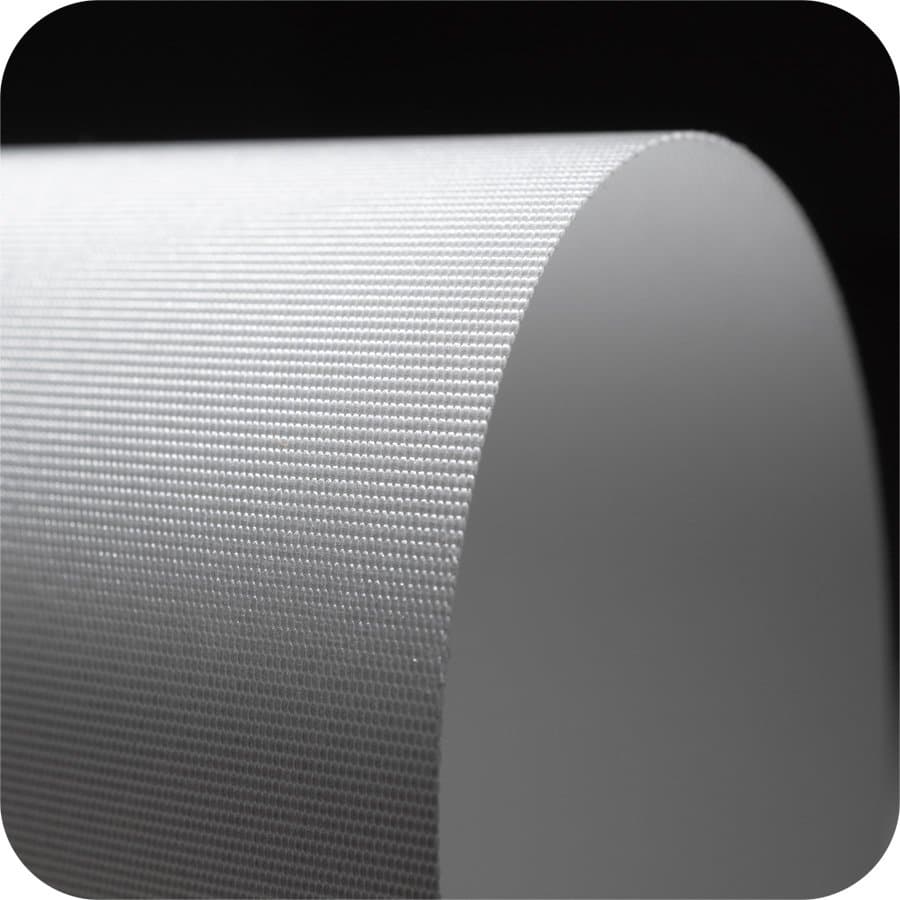
Recycled cloth is no longer a compromise fit only for the greenest boats
If you are ordering a new cruising sail or staring at a tired one that is one hard beat away from retirement, the decision is starting to change. Marblehead ECO, sold in the UK by Crusader Sails and made by Challenge Sailcloth in the United States, shows that recycled sailcloth is moving from a nice idea to a genuinely usable material for everyday polyester cruising sails. Challenge says a mainsail for a 40-foot boat uses 2,336 recycled plastic bottles, which is the kind of number that makes the waste issue feel immediate rather than theoretical.
The important part is that the cloth is not just recycled once and then stranded at the end of its life. Challenge says Marblehead REC is made from 100 percent recycled fiber and is itself 100 percent recyclable, so the loop can keep going instead of stopping at the first reuse claim. That matters on small boats, where a sail, cover, or bag may spend years aboard and then become one more awkward lump of plastic if there is nowhere sensible to send it.
Why this cloth is better than the early recycled stuff
Older recycled polyester had a reputation problem, and for good reason. Earlier generations struggled with consistency, ultraviolet resistance, and stretch, which made them a hard sell for owners who did not want to trade durability for a feel-good label. The newer Marblehead cloth is different enough that the comparison now is with conventional Dacron, not with some down-market compromise.
Challenge says Marblehead uses an Interlock weave designed to resist shape distortion, and that the cloth was developed from recycled Fiber R104. The company also says it was designed and used on the Maltese Falcon by sailmaker Robbie Doyle, which is a useful signal because nobody is hanging fragile novelty cloth on a famous boat like that unless it can behave in service. Challenge’s line is that the material allows sailmakers to design with lighter fabrics in heavier applications, while still matching the properties of virgin fiber.
For cruisers, that is the real test. If a cloth can hold shape, handle ultraviolet exposure, and do the job a normal cruising sail has always done, then recycled content stops being an optional extra and becomes a straightforward specification choice. Paul Lees of Crusader Sails makes that case plainly, arguing that there is little reason not to choose recycled sailcloth for polyester cruising sails when the performance is there and the recycling loop is closed.
The waste stream you can see every season
Sailcloth is only one part of the problem. Shrink-wrap is one of the ugliest, because it mostly goes straight to landfill and will not biodegrade. Anyone who has watched a marina hard fill up after lift-out knows how quickly that plastic accumulates, and how little of it looks like something that should still be around in 50 years.

That is why groups like Clean Sailors matter. Founded by Holly Manvell, the organisation built ReSail to prolong the life of sailing materials, not just talk about waste in the abstract. ReSail followed a successful pilot in South West England in 2021, and the platform lets sailors find local drop-off points for sails, bags, and sheets so those items can be reused or upcycled instead of being thrown away the moment they are no longer wanted.
The scheme has since widened. Clean Sailors says ReSail now also accepts wetsuits and neoprene gear through a partnership with Circular Flow, which is exactly the kind of practical extension that makes a take-back system worth using. OneSails GBR (East) joined ReSail in March 2023 to help create a circular economy in sail-making, and Clean Sailors says that collaboration has helped save more than 250 sails from landfill. That is not a symbolic pilot anymore. That is a working route for gear that would otherwise be dumped.
The bigger lesson sits below the waterline
The sustainability debate in sailing is usually framed around sails and packaging because they are easy to see, but the long-term problem is much larger. GRP boatbuilding took off after the first European GRP boat, a 3.7 metre dinghy built by W & J Tod Limited in 1950, and then expanded rapidly through the 1950s and 1960s. Those boats did what GRP was supposed to do, they lasted. Now the downside is arriving all at once as boats from the 1960s, 1970s, 1980s, and 1990s reach end of life in large numbers.
That is why the disposal side of the industry is suddenly under pressure. Practical Boat Owner reported that 118 abandoned boats had been removed from a shoreline at Eastney since 2022, and that Marine & Boat Recycling is operating with a zero to landfill promise. The point for owners is simple: the waste problem does not begin when a hull finally fails, it starts much earlier, with the materials you choose for sails, covers, and refits, and with whether repair, reuse, or take-back is an option before the boat becomes a disposal case.
What a DIY owner can actually control now
For a small boat owner, the win is not some grand sustainability gesture. It is making the next sensible call before a sail, bag, or fitting becomes rubbish. If a piece can still be repaired, stitched, reused, or handed into a local drop-off route, that is the cleaner move. If replacement is unavoidable, recycled sailcloth now gives you a material choice that does not feel like paying twice, once at the loft and again at the tip.
That is the shift worth paying attention to. The next cruising sail still costs real money, but it does not have to be dead plastic from the moment it leaves the loft. With cloth like Marblehead ECO and take-back systems like ReSail, the better question is no longer whether sailing can reduce its plastic waste, but whether you are choosing the options that keep the loop open from the first hoist to the last one.
This article was produced by Prism’s automated news system from verified source data, official records, and press releases, then run through automated quality and moderation checks before publishing. The system is built and supervised by the people who set the standards it runs under. Read our full AI policy.
Did this article answer your question?


