Old bath becomes mould for Corribee 21 doghouse build
A salvaged bath became the mould for a Corribee 21 doghouse, cutting custom-build costs while giving a small cruiser real headroom and shelter.
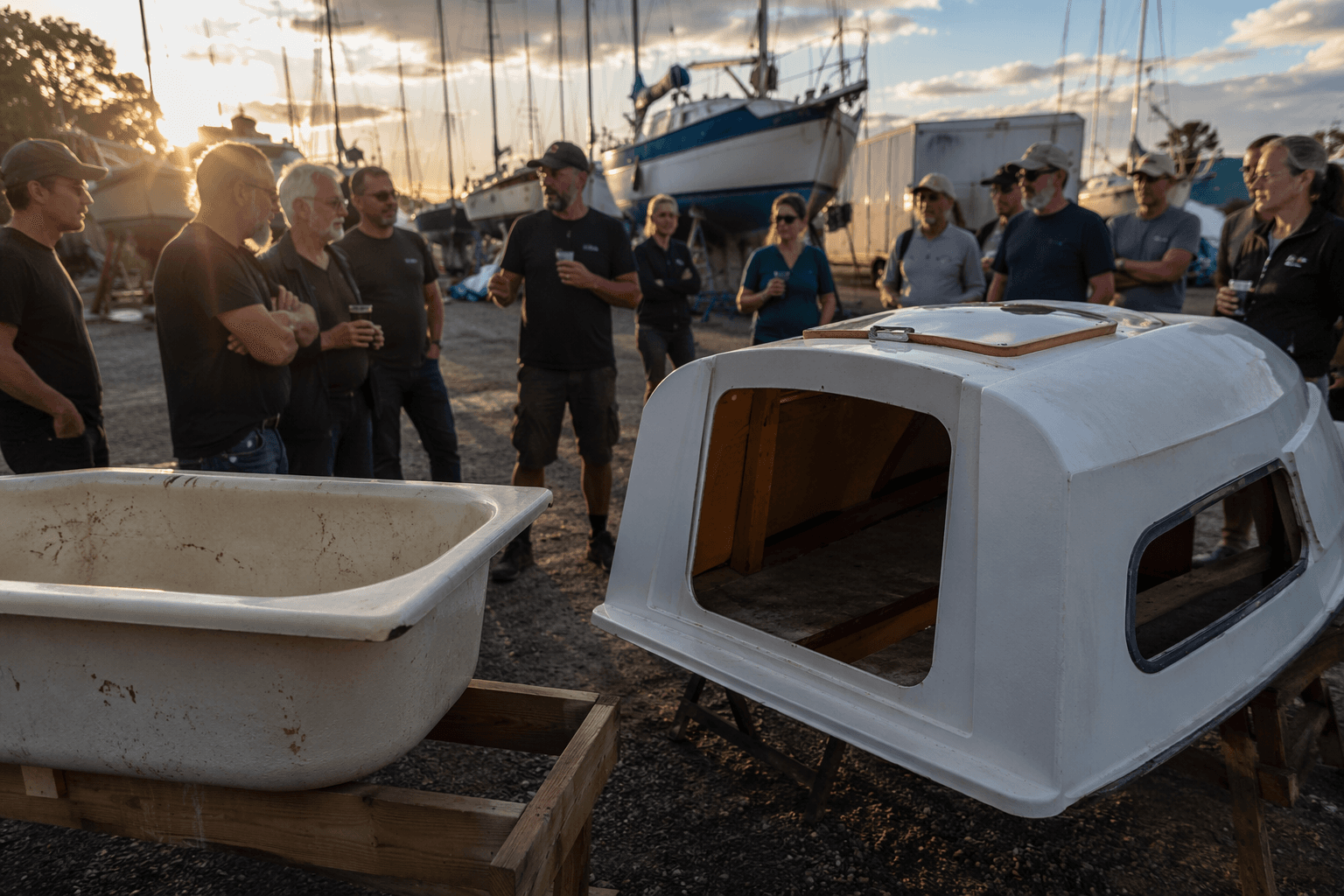
A half-bath from the local tip turned into the mould for a Corribee 21 doghouse, and that is exactly the kind of offbeat fix small-boat owners remember. Jake Kavanagh was trying to give the boat a shelter that followed the Corribee’s curves properly, not another boxy plywood add-on that looked stuck on after the fact. The result shows how a cheap, well-shaped salvage piece can beat expensive tooling when the job is one-off and the fit matters more than showroom polish.
Why the bath trick works
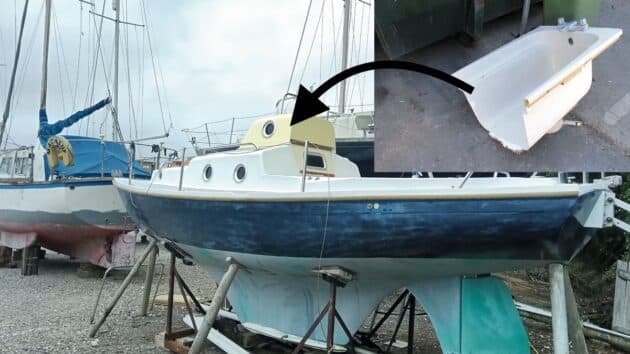
The key was shape, not sentimentality. Kavanagh found that the inside of half an old domestic bath was a near-perfect match for the Corribee’s cabin sides, which made it ideal as a mould for the new doghouse. That meant he did not need to build a conventional plug from scratch, fair it endlessly, or pay for the sort of mould-making that quickly turns a modest refit into a serious composite job.
That is the real lesson here: in small-boat fabrication, the mould is often where the money and time disappear. If you can source a ready-made curve that already suits the boat, you cut out a huge amount of shaping work. For a Corribee 21 Pod, where the shelter has to sit neatly on a compact coachroof, the bath hack is not a gimmick. It is a practical shortcut that solved the hardest part of the build before the laminating even started.
Why polyester GRP was the smart call
Kavanagh chose polyester GRP for a reason most amateur builders will recognise immediately: it is cheaper, easier to live with, and less intimidating than epoxy. He points out that polyester is relatively straightforward to mould and laminate, which matters when the whole project depends on getting one custom part right without a full-time workshop behind you.
There is also a very unglamorous advantage to polyester that DIY sailors appreciate once they have lived with a few refit mistakes. It can be filled, sanded, painted, patched, and reworked without the feeling that one misstep has ruined the whole part. For a custom doghouse built in a modest workspace, that forgiveness is worth a lot. The material choice keeps the project in the realm of achievable, not aspirational.
A roof with a useful bit of light and headroom
The top of the doghouse came from another smart salvage move: an old Astrodome bubble bought at a boat jumble for about £40. The same item had an RRP of around £160, which tells you everything you need to know about where the savings were coming from. Instead of paying new-price money for a clear roof section, the build reused a piece that already did the job.
That bubble was not just a cheap flourish. It gave the doghouse extra standing headroom for watchkeeping, which is the sort of upgrade you feel every time you move around inside a small boat. The finished concept also evolved during the build, shifting from a fixed doghouse to a sliding version. That change matters, because it shows the project was being tuned around use, not just appearance.
Where the money went, and where it did not
The numbers make the build especially persuasive. Fibreglass materials came in at around £120, which is modest for a custom shelter part. The portholes were Vetus units with an RRP of £174.35, but Kavanagh sourced them for £35 on eBay, keeping the budget from drifting into silly territory.
That combination is the whole pattern in miniature: spend where it counts, save where the market is absurd, and reuse anything with a useful curve. The bath supplied the mould, the Astrodome supplied the top, and the portholes were bought smart rather than bought new. None of those choices compromised the fit. If anything, they made the finished piece more believable as part of the boat, instead of an aftermarket lump bolted onto a classic hull.
Why the Corribee suits this kind of modification
The Corribee makes sense as the canvas for this kind of work because it has always been a compact boat with real cruising credentials. Robert Tucker designed the class in 1964, inspired by the Folkboat, and the design’s pocket-cruiser reputation has long appealed to owners who are happy to improve a small boat rather than replace it. A narrow hull means the below-decks space is tight, so every inch of usable shelter and headroom earns its keep.
That same tightness is why the Corribee Mk II gets attention for better headroom than earlier versions. In a boat with limited internal volume, a doghouse is not just cosmetic trim. It changes how the boat is used, how long you can comfortably stand watch, and how much less cramped the cabin feels when the weather turns ugly. Kavanagh’s build follows that logic exactly: it adds usable space without fighting the boat’s original character.
What makes the project worth copying
The reason this build lands so well is that it proves a custom shelter does not need a mould shop behind it. A bath from the tip, an Astrodome from a boat jumble, sensible polyester GRP, and a second-hand set of portholes are enough to produce something that fits properly and looks like it belongs on a Corribee. That is the kind of ingenuity people forward to friends because it feels replicable, not theoretical.
For anyone staring at a small cruiser and pricing up factory solutions that do not quite fit, this is the more useful path. The doghouse started as a shape problem, then became a materials problem, then became a budget problem, and each one was solved with a bit of scavenging and a steady hand. On a boat as compact as a Corribee 21, that is often the difference between wishing for shelter and building it.
This article was produced by Prism’s automated news system from verified source data, official records, and press releases, then run through automated quality and moderation checks before publishing. The system is built and supervised by the people who set the standards it runs under. Read our full AI policy.
Did this article answer your question?