Olympic sailor John Gimson shows how two-boat tuning speeds sail trim gains
John Gimson’s two-boat method turns speed problems into clear comparisons, so you can see whether the fix is in sail shape, rig tune, or helming.
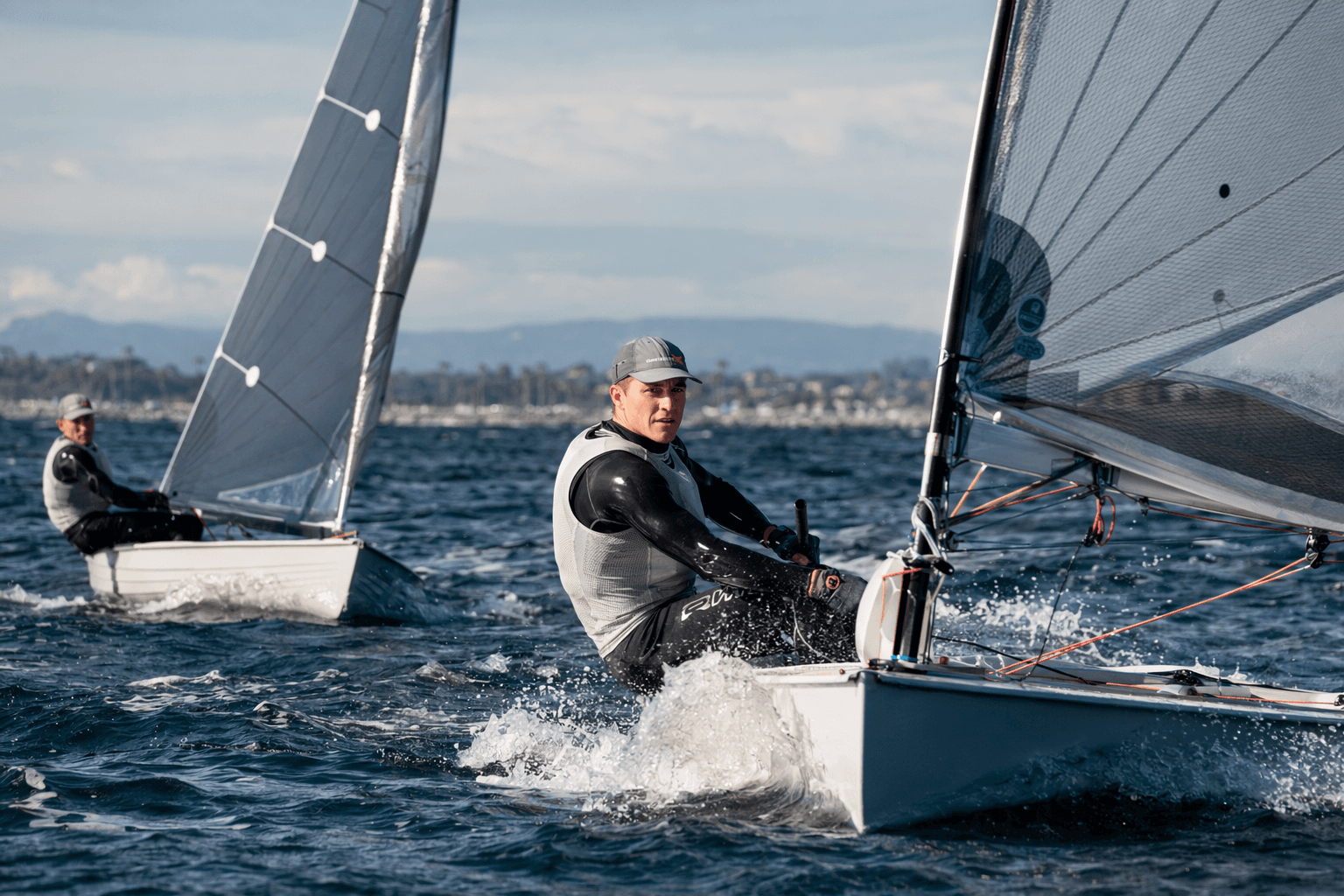
Why two-boat tuning beats guessing
The fastest way to lose a weekend is to chase the wrong problem. If the boat feels slow, it is easy to blame the sail, the mast, or the helming all at once, then make changes that only cloud the picture. John Gimson’s answer is brutally practical: put another boat alongside yours, change one thing at a time, and let the water tell you what matters.
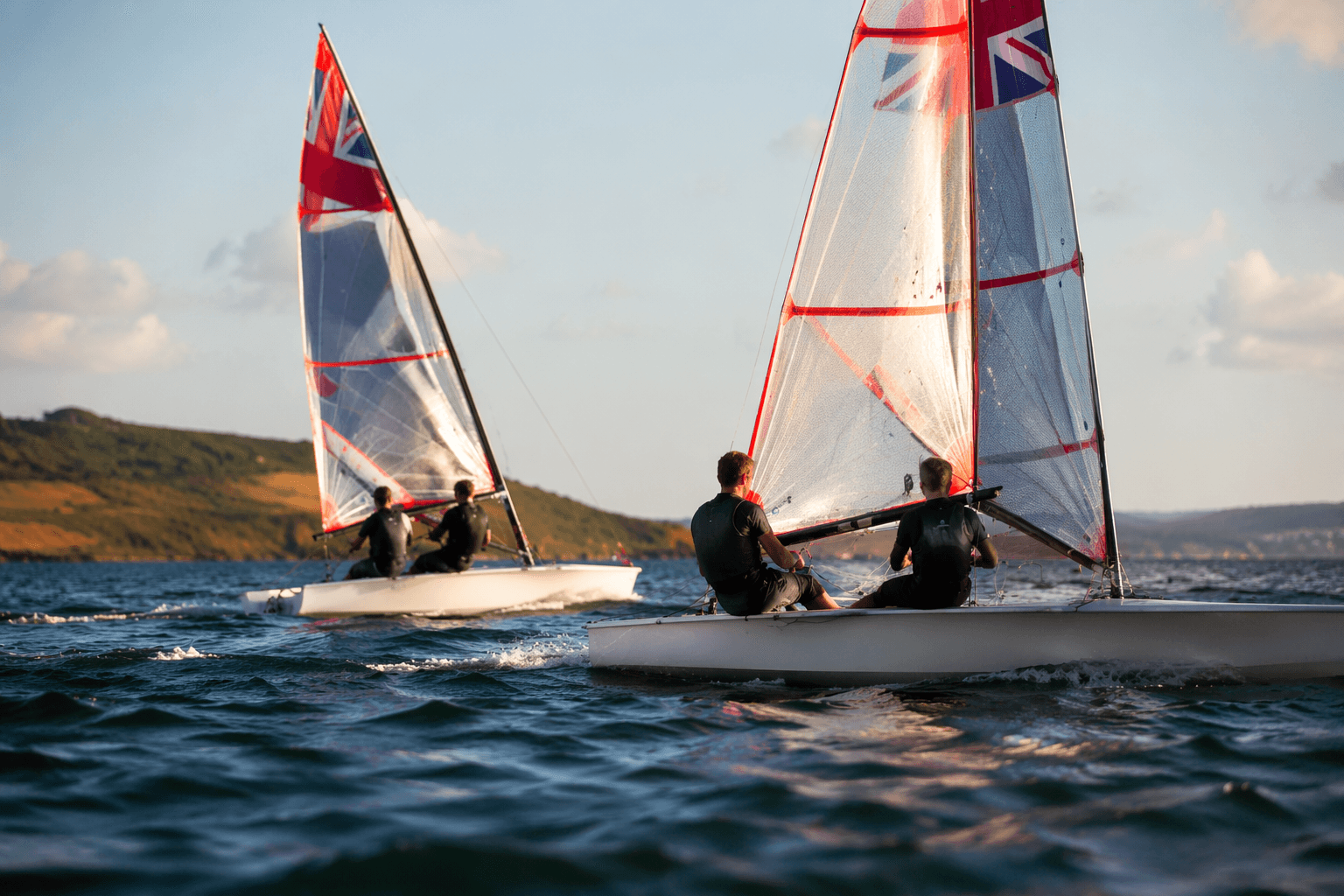
That advice carries weight because Gimson is not speaking from the sidelines. He came through the Star keelboat with Iain Percy and the late Andrew Simpson, a partnership that won gold and silver at the Beijing and London Games. He started sailing at 7, joined the British Sailing Team in 2005, and later built a championship record in the Nacra 17 with Anna Burnet, including Olympic silver at Tokyo 2020, two world titles, and a European title. When a sailor with that record says tuning can consume nearly half a technical campaign, the message is simple: setup is not a side issue, it is the work.
What two-boat tuning actually solves
The real value of a buddy boat is not just speed matching. It is the ability to isolate one variable and see the result immediately. Gimson’s point is that the feedback loop gets shorter and much clearer when two boats are sailing the same course in the same air. Instead of wondering whether a change helped, you can watch whether it improved speed, pointing, acceleration, or balance.
That matters most when you are deciding between sail shape, mast setup, or small rig changes. In a boat like the Nacra 17, where the class moved from design and production in 2011 and 2012 into the Olympic mixed multihull scene at Rio 2016, then into the foiling era for Tokyo 2020 and Paris 2024, the margin is tiny and the penalty for the wrong adjustment is real. The class itself is built around fine distinctions, with tuning resources divided into fixed sailing settings, dynamic sailing techniques, and equipment setup, because performance comes from getting many small pieces to work together.
For everyday sailors, that is the lesson to keep in mind. Two-boat tuning is not just for medal campaigns. It is a practical way to turn vague feelings into evidence, especially when one boat becomes the benchmark for the other.
Set up the weekend like a test, not a cruise
A useful tuning session starts before you leave the dock. Pick a similar boat if you can, ideally with comparable sails and a crew that can sail the same angles and maneuvers. Agree in advance that you are not trying to fix everything at once. You are trying to answer one question per run.
1. Choose the baseline.
Sail the first laps with both boats in their normal settings. That gives you a reference point before anyone starts making changes. The point is to know what the boat does now, not what you hope it might do.
2. Pick one variable only.
If you want to test sail shape, rig tune, or helm input, change just that one thing. If both boats change several settings at once, the result becomes noise. The strength of two-boat tuning is that the comparison is immediate and clean.
3. Sail the same line.
Stay on the same course, at the same time, in the same wind. Upwind and downwind runs each tell a different story, and a tack or gybe is often where a small change shows up first. Keep the routine identical so the difference comes from the setup, not the sailing pattern.
4. Swap boats or swap sides.
If one crew consistently gets a better lane or a cleaner puff, switch positions so the comparison stays fair. This keeps the result tied to the boat, not the luck of who was where on the water.
5. Debrief while the feel is fresh.
Talk immediately after each run. That is when the best detail is still in the crew’s heads and hands, before the memory gets blurred by the next round of sailing.
What to log on the water
A good tuning notebook does not need to be fancy, but it does need to be consistent. Gimson’s whole argument depends on making the comparison visible, so the log should capture both numbers and feel. If you have instruments, record them. If you do not, write down what the boat did relative to the other one.
- Wind strength and direction for each run
- Sea state, because chop can change how a tweak feels
- Which boat was upwind, downwind, or on which tack
- Relative distance gained or lost over a set leg
- Time to accelerate after a tack or gybe
- Pointing angle if you can track it, or how high the boat could sail before slowing
- Helm feel, especially whether the boat loaded up or stayed light
- Sail shape observations, such as whether the boat looked fuller, flatter, freer, or more stable
- Any change in balance through the tack, the bear-away, or the windward leg
The key is to write down observations the same way every time. If one setup feels faster but loses badly off the line or after a tack, that is not a win. If the boat points a touch lower but rolls through waves better and builds speed faster, that may be the better answer for the day.
Use the crew work as part of the test
Two-boat tuning teaches more than speed. It forces both crews to communicate better, watch more carefully, and separate cause from effect while the boat is moving. That skill matters just as much as the hardware. Gimson’s career shows the point from both ends of the spectrum: the Star campaigns with Percy and Simpson proved the value of technical precision at the very top, and his Nacra 17 results with Burnet show that the same discipline still pays off against the best in the world.
That current relevance matters. Gimson and Burnet finished second at the 2023 World Championships behind their Italian training partners Ruggero Tita and Caterina Banti, then went on to win the 2025 World Championships. His Tokyo 2020 silver came at 38 years and 145 days, making him the oldest British Olympic sailing medallist since 1992 at the time. That is the kind of shareable detail that says something bigger than age alone: in a class this sharp, the edge comes from preparation, not shortcuts.
The weekend payoff
A two-boat session does not need to be elite to be useful. The moment you can line up beside another boat, hold a steady course, and compare one clean change at a time, your tuning stops being guesswork. That is where real speed gains begin: not in random adjustments, but in repeatable tests that tell you whether the sail, the rig, or the helm is actually the problem.
This article was produced by Prism’s automated news system from verified source data, official records, and press releases, then run through automated quality and moderation checks before publishing. The system is built and supervised by the people who set the standards it runs under. Read our full AI policy.
Did this article answer your question?