Penetrating Epoxies Fail as Rot Cure but Work as Useful Primers
Practical Sailor tested five penetrating epoxy brands and found they can't cure rot or seal wet wood, but work well as sealers and primers when expectations are realistic.
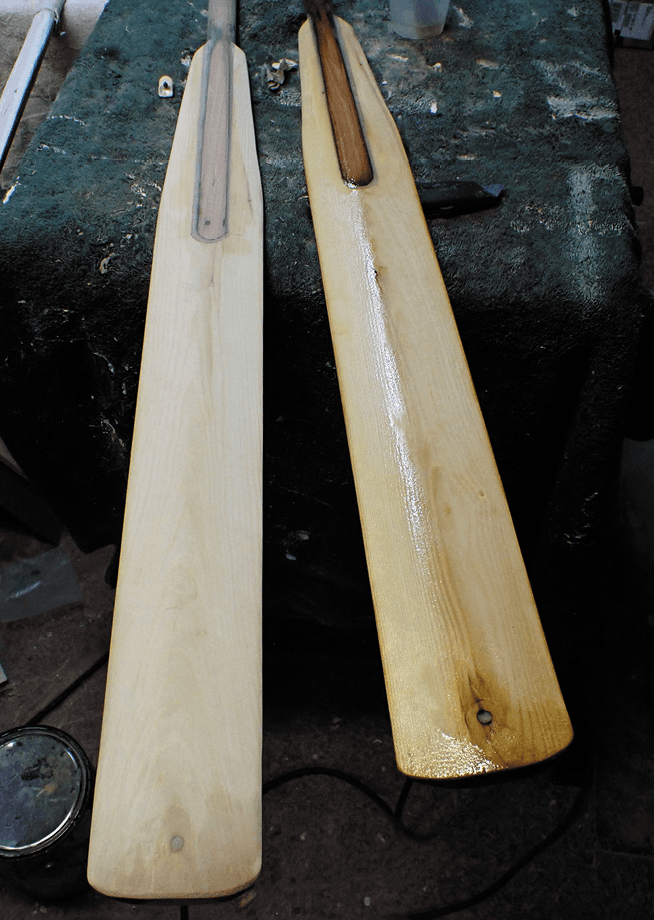
If you've ever stared down a soft spot on your boat's transom and reached for a bottle of Git-Rot or a penetrating epoxy, believing it would harden everything up and buy you another season, Practical Sailor's latest test report has some important news. The verdict, published March 10, 2026, is clear: "Our tests show that so-called penetrating epoxies don't magically cure rot or seal wet wood, but they can serve as useful sealers and primers when used with realistic expectations."
That's a meaningful distinction, and one worth understanding before your next repair project.
The Myth That Needed Busting
Penetrating epoxies have been marketed for years as the DIY sailor's fix for soft, rotted, or wet wood. The pitch is intuitive: thin epoxy soaks deeper into degraded fibers, consolidates them, and effectively arrests rot in place. It sounds right. It sells well. And according to Practical Sailor's testing, it's largely wrong, at least in its most optimistic framing.
Practical Sailor had already taken a run at this territory in an earlier piece titled "Wood Rot Prevention Eight Years Later," which busted the broader myth that you can reliably seal wood with epoxy at all. The newer test report picks up that thread and applies it specifically to the penetrating epoxy category, where manufacturers have long argued their thinned formulations behave differently because they soak into the wood rather than sitting on the surface. Practical Sailor's tests put that argument under scrutiny.
What Practical Sailor Actually Tested
The test group covered the major penetrating epoxy products you'd encounter shopping for a rot repair solution. Products from Total Boat, West System, System Three, Abatron, and Boat Life (Git-Rot) were all included. To understand how formulation and dilution affect performance, the team diluted samples with acetone and compared the results, both penetration depth and strength, against undiluted versions of the same products.
For context, they also ran comparisons against a range of non-penetrating products: Total Boat Slow Epoxy, West System's Fast Epoxy, Total Boat Wood Sealer, Total Boat Gleam 2.0 varnish, and Minwax Helmsman spar varnish. That lineup gives the results real grounding; you're not just seeing how penetrating epoxies compare to each other, but how they stack up against the conventional epoxies and sealers most of us already have in the locker.
What the Tests Found: Better Penetration, Significantly Weaker Bonds
The core finding is a trade-off. Penetrating epoxies do what they claim in one specific sense: they penetrate better than conventional epoxies. High-molecular-weight conventional epoxy resins are relatively viscous and don't soak into wood grain effectively, even when you thin them. The problem is that the same properties that make penetrating epoxies flow into wood also make them significantly weaker than full-strength conventional epoxy.
Practical Sailor's report addresses the obvious workaround directly, and shuts it down: "You can thin conventional epoxy with acetone, but the resulting formulation is weaker than penetrating epoxy. We do not recommend thinning epoxy with solvents." So the idea of mixing your own penetrating epoxy on the cheap by cutting a conventional product with acetone actually produces something worse than the purpose-built penetrating products, not better.
There's a related tension in the test data around strength comparisons between undiluted conventional epoxy and penetrating formulations. Practical Sailor's report notes that conventional high-molecular-weight epoxy "is stronger than penetrating epoxy, and in principle, the surface film is better for bonding," but immediately follows with the caveat that "the high-molecular-weight resin does not penetrate well, even when thinned." The underlying point is consistent: you face a genuine trade-off between penetration and structural strength, and no single formulation fully delivers both.
West System's Contrarian Position
West System occupies an interesting position in this test. Their penetrating epoxy product was included in Practical Sailor's test group, yet the brand doesn't actually believe penetrating epoxy works as marketed. According to Practical Sailor, West System "does not believe in penetrating epoxy, and they explain why on their website." The implicit logic, as Practical Sailor frames it, is pointed: "If they thought penetrating epoxies made sense, they would sell them."
There's also a noteworthy methodological wrinkle. Practical Sailor reports that West System's own tests "used penetrating epoxies for bonding as well as for sealing," which differs from Practical Sailor's tested approach. How you use the product affects what the results tell you, and that distinction matters when comparing test conclusions across sources.
The Practical Approach That Actually Works
The most actionable takeaway from the report is how Practical Sailor structured its own repair process during testing. Rather than using penetrating epoxy as a structural adhesive or rot consolidant, they applied it strictly as a sealer and primer, then did all structural bonding with full-strength epoxy. The result: "Our tests used penetrating epoxy only for sealing, and then bonded using full-strength epoxy, which gave us good results."
That's the workflow worth adopting. Penetrating epoxy can do a legitimate job of wicking into dry or partially degraded wood to provide a sealed surface that full-strength epoxy can then bond to effectively. What it cannot do is consolidate actively rotting or wet wood into a sound structure, or replace the need for full-strength epoxy in any load-bearing or structural application.
To summarize the practical guidance from Practical Sailor's findings:
- Use penetrating epoxy as a sealer or primer on dry wood, not as a rot cure or wet-wood consolidant.
- Follow penetrating epoxy application with full-strength epoxy for any structural bonding.
- Do not thin conventional epoxy with acetone as a substitute for penetrating epoxy; it produces a weaker result and Practical Sailor explicitly advises against it.
- Conventional epoxy provides a stronger bonding surface film in principle, but will not penetrate significantly into wood even when thinned.
Reading the Marketing Skeptically
The framing of Practical Sailor's headline, "Penetrating Epoxy: Another Marketing Gimmick?", signals the editorial posture clearly. These products are not gimmicks in the sense of being useless; the test results confirm genuine utility as sealers and primers. But the marketing language around rot arrest, wet-wood sealing, and structural consolidation consistently overstates what the chemistry can deliver.
The five brands tested represent the mainstream of what's available at marine chandleries and hardware stores. Total Boat, System Three, Abatron, and Boat Life's Git-Rot all carry similar claims on their labels. Practical Sailor's findings apply broadly to the category, not just to any single product. The penetration advantage is real. The strength limitation is equally real, and it's the part the marketing tends to minimize.
Understanding both sides of that equation is what separates a repair that holds from one that looks solid until you press on it. Penetrating epoxy has a place in the boatyard toolkit; it just isn't the place the label usually suggests.
This article was produced by Prism’s automated news system from verified source data, official records, and press releases, then run through automated quality and moderation checks before publishing. The system is built and supervised by the people who set the standards it runs under. Read our full AI policy.
Did this article answer your question?


