Phosphate Coatings Rescue Rusty Tools and Protect Marine Hardware
A phosphate bath can turn lightly rusted tools and marine fasteners back into service, but only if you prep the surface right and know when to replace.
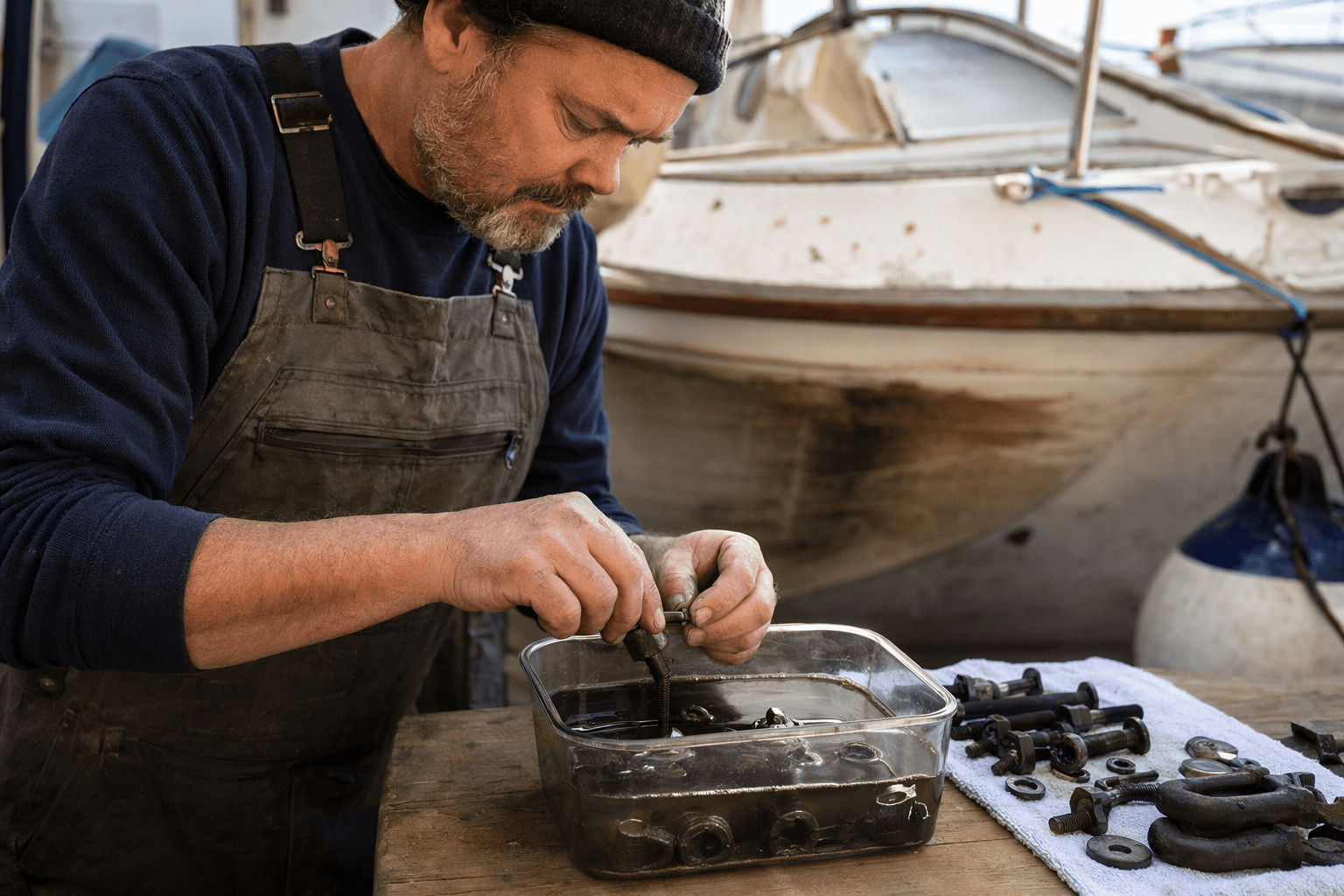
When rust is a rescue job, not a replacement order
A light bloom of rust on a good wrench is not a death sentence. If the metal still has life in it, phosphate conversion coatings can pull a tired part back into service and leave it better protected the next time it sits in a damp locker or a salty toolbox.
That is the real appeal for sailors and boat owners: you are not just making rust look tidier. You are deciding whether to scrap a usable tool or hardware piece, or save it with chemistry, patience, and a little shop discipline. Drew Frye’s Practical Sailor treatment lands in the sweet spot every DIY sailor knows well, where a box of old machinist tools, engine fasteners, or deck hardware can still earn its keep if you handle the corrosion early enough.
What the coating actually does
Phosphate conversion coating is not paint and it is not a cover-up. It is a chemical conversion process that forms a thin, adherent layer of iron, zinc, or manganese phosphates on steel. ISO 9717:2024 describes the coatings as being made with solutions whose main constituents are appropriate dihydrogen orthophosphates, and says they are applied principally to ferrous materials and zinc.
That matters because the coating changes the surface itself. The rusted metal becomes less vulnerable to further corrosion, which is the whole point on a boat where tools live through humid stowage, wet decks, and the occasional salt splash. Technical summaries also note that phosphate coatings can serve as a base for paint or powder coat, and can improve salt-spray resistance, which makes them useful beyond a one-off save. In a chloride-heavy marine environment, that extra resistance is the difference between a part that goes back in the drawer and one that comes out pitted again next season.
Best candidates are the parts you actually use
This is the kind of treatment that makes sense for the working kit: wrenches, dies, taps, nuts, clips, washers, and other ferrous threaded and non-threaded fasteners. ASTM F1137/F1137M exists specifically for phosphate and phosphate/oil corrosion-protective coatings on that class of hardware, which tells you this is not some boutique hobby finish. It is a practical answer for small steel pieces that need corrosion protection, not jewelry.
On board, that usually means the parts you reach for all the time: engine fasteners, cabinet hardware, hand tools, and spare threaded bits that would be annoying to replace one by one. Frye’s story starts with inherited machinist tools that had only light corrosion after decades in storage, and that is exactly the kind of case where phosphate coating makes sense. If the part still fits, still turns, and still has useful life left in it, conversion coating can buy it more years.
A good rule of thumb is simple:
- Surface rust and light corrosion are worth treating.
- Old tools with sound edges and working faces are worth saving.
- Ferrous hardware that only needs a better corrosion barrier is a strong candidate.
- Parts that still need paint or powder coat can benefit from phosphate as a base layer.
Prep is the whole game
Phosphate coating does not rescue dirt, grease, or loose scale. If you skip prep, you are just sealing bad surface condition under a thin chemical layer and hoping for the best. The part has to be clean, sound, and ready to react, which is why Frye frames the process as a realistic maintenance sequence rather than a magic dip.
Start by getting rid of everything that blocks the coating from reaching the metal. That means grease, grime, salt residue, and loose rust. Then dry the part properly and move it through the coating steps without delay, because a clean ferrous surface will flash-corrode fast in a marine shop. The exact product and process matter, but the discipline matters more: clean first, convert second, seal last.
This is the part of the job where sailors often cheat themselves. They work a little rust loose, wipe on something protective, and then wonder why the corrosion comes back. Phosphate conversion only earns its keep when the surface preparation is non-negotiable.
Where it stops being a fix and becomes false economy
Phosphate coating is a rescue tool, not a resurrection miracle. Once rust has eaten deep into threads, thinned a part enough to worry you, or rounded the working faces so the tool no longer bites cleanly, replacement starts making more sense than chemistry. The coating can improve the surface, but it cannot restore metal that has already been lost.
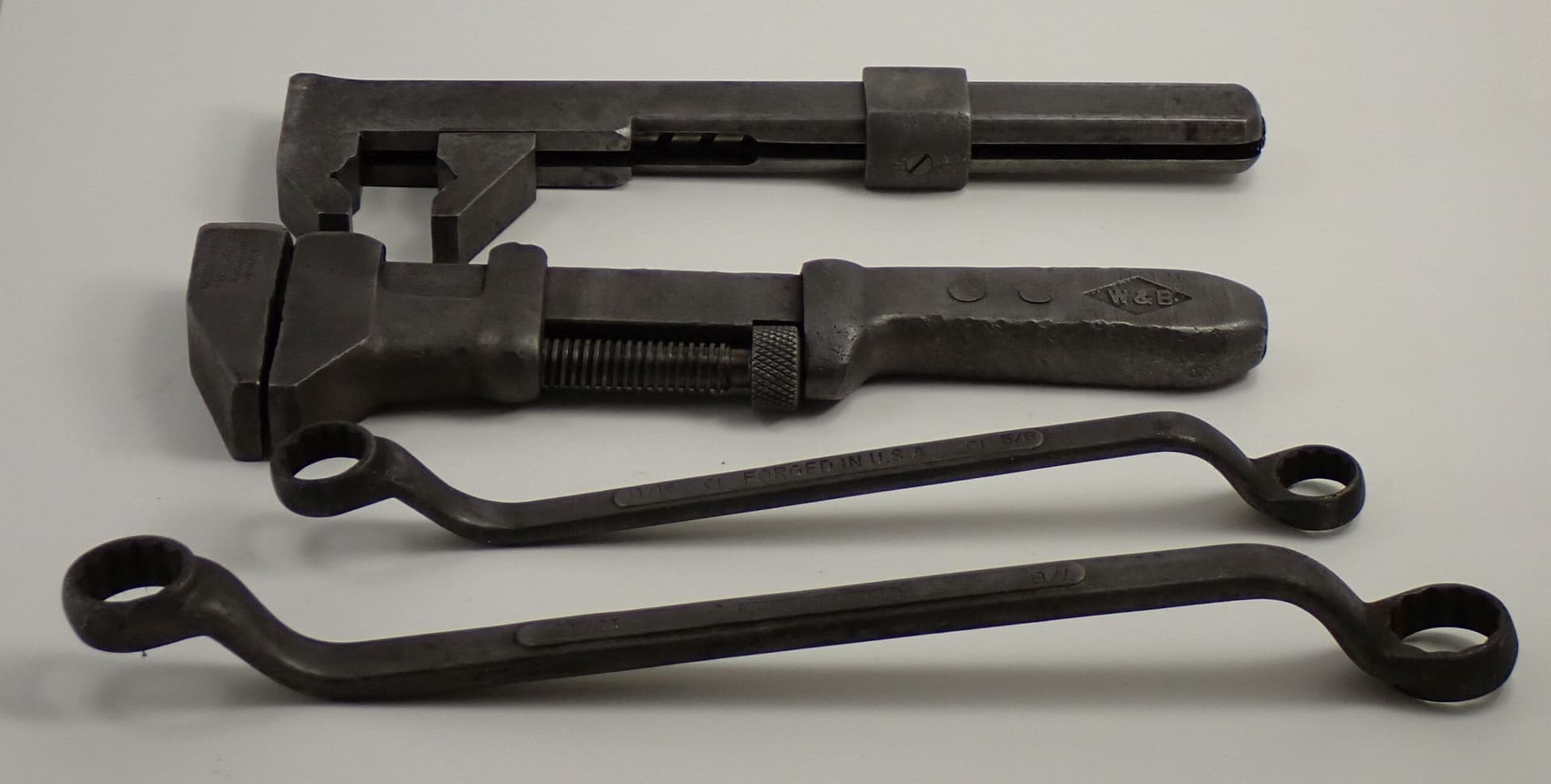
That line matters on a boat because false economy is easy to justify in the middle of a project. A cheap, badly pitted fastener that needs constant attention is not a bargain. The same goes for small parts that are critical to safety or need precise fit. If the corrosion is only superficial, convert and seal it. If the part is structurally compromised, retire it.
Why the method has real pedigree
This is not a trendy shop trick that appeared yesterday. The earliest reliable record of phosphate coatings used to prevent rust on iron and steel traces back to a British patent from 1869 by William Alexander Ross. Thomas Watts Coslett later filed a patent for iron phosphating in 1907, and a review article says the first widespread U.S. use came in firearm manufacture during World War II.
That history explains why the finish has always been associated with working metal rather than decoration. It also explains why ASTM still writes standards around phosphate protection for fasteners. The chemistry has survived because it solves a real problem, and it solves it in a way that still makes sense in a marine workshop.
The practical takeaway for sailors
Drew Frye’s background in chemistry and engineering is what gives this topic weight, and his broader sailing experience is why it lands for boat owners instead of lab rats. The message is straightforward: if a rusty tool or small ferrous part still has good bones, phosphate conversion coating can save it, protect it, and put it back in rotation.
That is the smart play for the sailor with a wet toolbox and a finite budget. Convert early, seal properly, and keep the good metal working. When the corrosion is too far gone, walk away without guilt. The win is knowing the difference before you spend time on a part that should have been replaced in the first place.
This article was produced by Prism’s automated news system from verified source data, official records, and press releases, then run through automated quality and moderation checks before publishing. The system is built and supervised by the people who set the standards it runs under. Read our full AI policy.
Did this article answer your question?