SEAFLO hose kit promises easier boat washdowns for UK sailors
SEAFLO’s hose kit is really about making washdowns so easy you actually do them. The payoff is less salt buildup, less locker chaos, and fewer excuses after a wet passage.
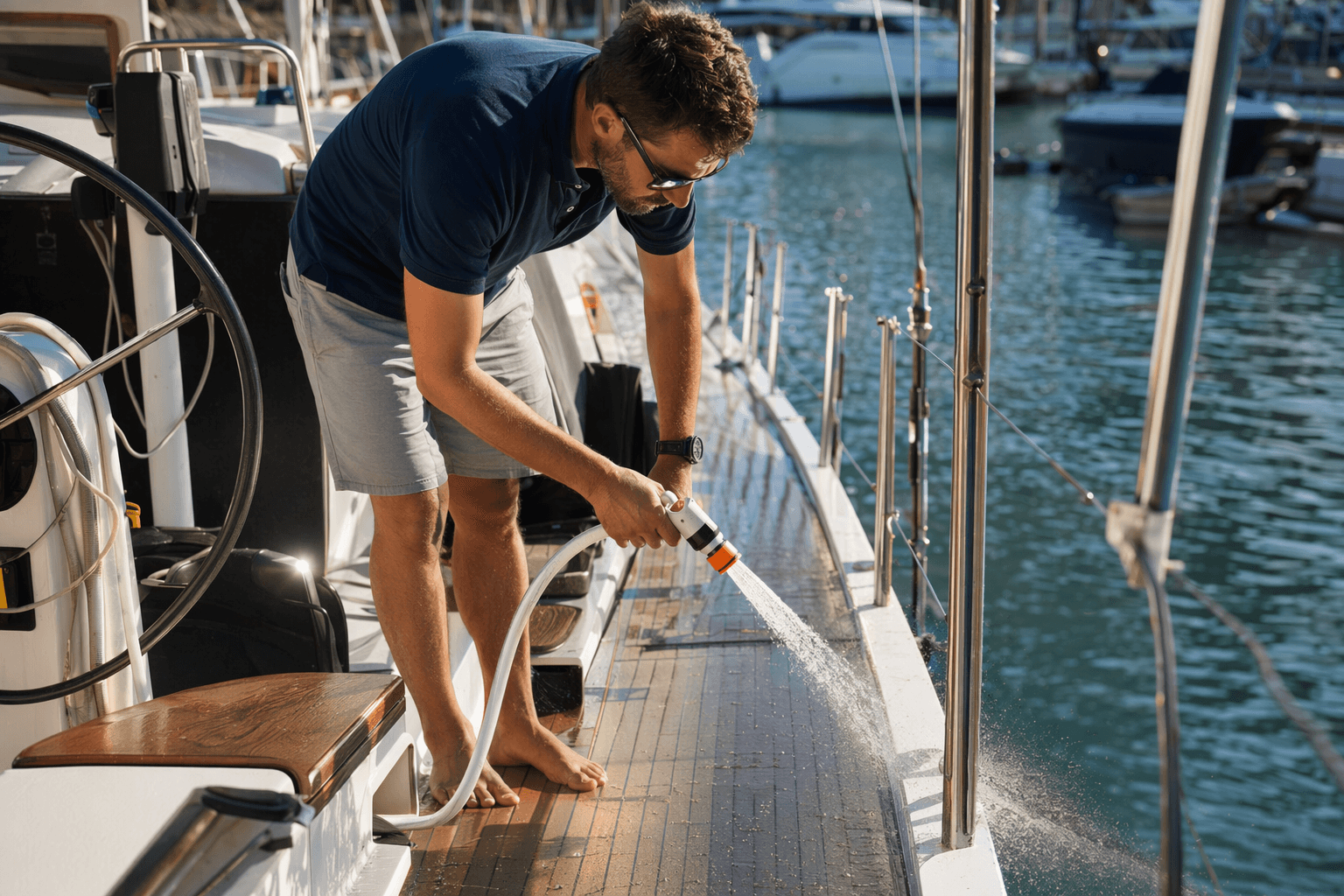
A rinse point you will actually use
Salt never waits for a convenient day. After a run through the Solent, a tidal river, or any other salt-heavy stretch, the real chore is not just the rinse itself, it is finding a hose, untangling it, and making the whole job feel worth the bother. That is the gap SEAFLO is trying to fill with the HW206001 hose kit: a compact washdown setup that stays ready, stows neatly, and makes routine cleanup less of a faff.
That matters because washdowns are one of those small maintenance jobs that snowball when they get skipped. If the gear is awkward, undersized, or buried in a locker, you put it off. If it is mounted where you can reach it fast, you are far more likely to rinse salt off decks, cockpit fittings, and hardware before grime and corrosion get a foothold.
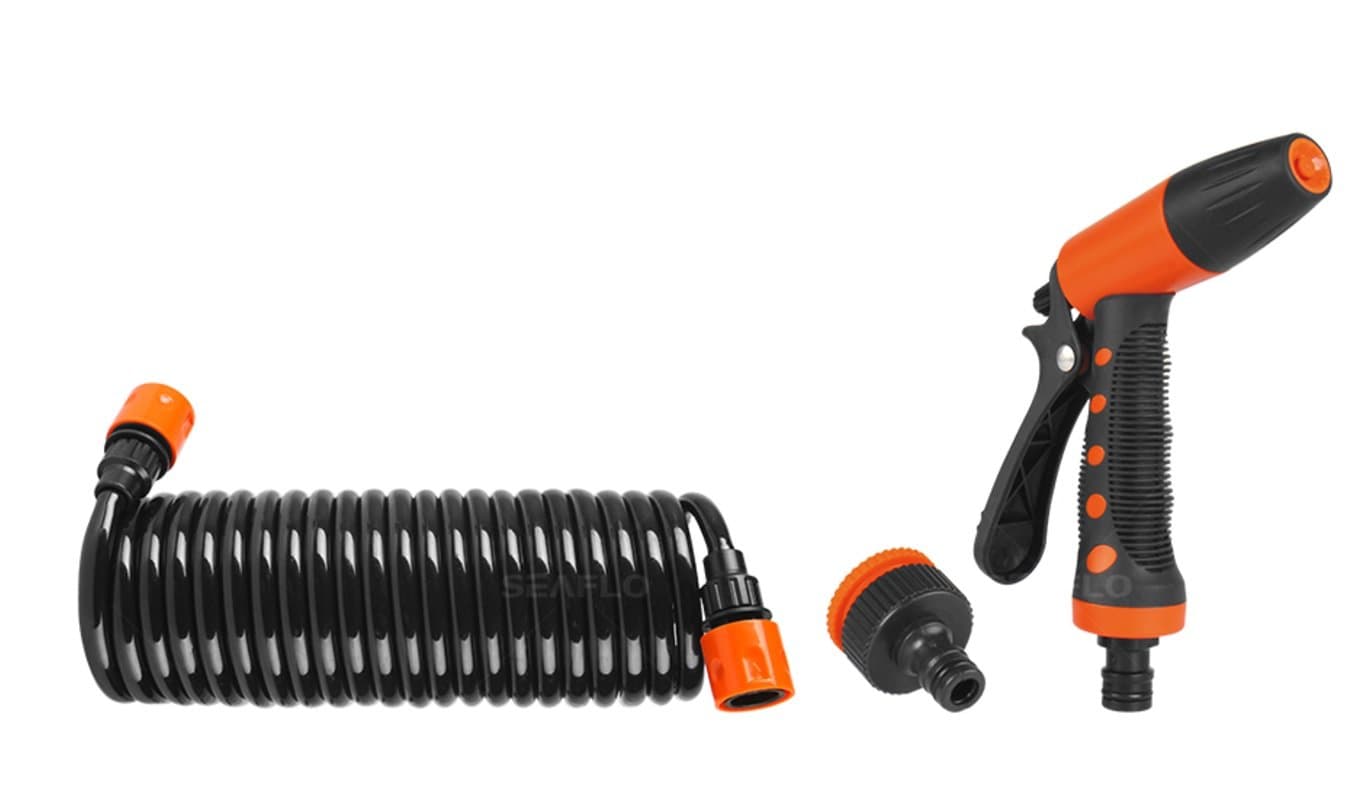
What comes in the SEAFLO kit
The portable washdown kit is built around a 20-foot, 6.5-metre coiled hose, a spray nozzle with an adjustable tip and contoured grip, and bronze fittings. SEAFLO says the hose is UV-protected and the system is designed for use in marine environments where salt and sunlight punish cheaper plastics and tired hardware quickly. The company also lists the kit for a pressure range of 0 to 8 bar, with adapters for 3/4 in FNPT, 1/2 in FNPT and 1 in FNPT connections.
That spec sheet is what makes this more than a random hose and nozzle bundled together. The coiled format is there to save stowage space and avoid the usual kinked, floppy mess you get from a generic hose shoved into a locker. Retail listings echo the same idea, describing a 20-foot UV-protected coiled hose, a spray gun, bronze hose fittings, and an adjustable spray tip that keeps the setup usable without a lot of fiddling.
SEAFLO’s wider washdown range points in the same direction. Its quick-connect washdown kit uses a recessed deck connector made of SUS316 stainless steel and a protective cap, which tells you the brand understands what marine corrosion does to exposed fittings. The company says it is ISO 9001 certified, has more than 200 employees, two production bases, and customers in more than 100 countries. That does not make the hose more useful by itself, but it does suggest this is not a one-off gadget from a brand that barely knows boats.
Why a better washdown setup pays off
The best argument for a hose kit like this is not glamour. It is habit. Mercury Marine is blunt about saltwater maintenance: an outboard or sterndrive used in saltwater should be flushed and rinsed after each use. Flushing clears corrosive saltwater from the cooling system, and rinsing removes salt residue before corrosion can start. That is the same logic behind washing down decks, cockpits, rails, and gear. If the process is quick, you do it more often.
Yachting Monthly has also laid out the basic corrosion trap clearly. Galvanic corrosion happens when dissimilar metals sit in a conductive liquid such as seawater, and the damage can be fast and expensive. That is why a hose you can grab in seconds is more than a convenience item. It can be the difference between regular salt removal and the slow, invisible kind of neglect that shows up later as seized fasteners, tired fittings, and ugly metalwork.
SEAFLO frames the kit for more than one type of boat, and that broad fit is sensible. A smaller RIB, a cruising yacht with a busy cockpit, or a larger sailing boat moored in a marina all face the same basic problem: the washdown gear needs to be simple enough that you use it after every trip, not just when the boat is already dirty enough to be embarrassing.
Where it beats the usual DIY improvisation
Most sailors already improvise. One boat uses a loose dock hose that lives wherever you last threw it. Another relies on a bucket, a sponge, and a bit of elbow grease. A third has a generic hose and a pile of adapters that seem to breed in the bottom of a locker. Those solutions work, but they come with the same familiar frustrations: tangled hose, mismatched fittings, awkward stowage, and a setup that takes longer to assemble than to use.
The SEAFLO kit earns its keep when it reduces that friction. The coiled hose is the headline because it cuts down on clutter and makes the pack easier to live with aboard. The contoured nozzle and adjustable spray tip help keep the rinse controlled, which matters if you want to wet down a cockpit without blasting water everywhere or standing there while the tap runs and you search for a fitting. That is where water waste creeps in, not because the hose is magical, but because a better setup shortens the path from intent to action.
It is also genuinely useful that the kit is presented as suitable for dockside installation and even home cleaning use. That flexibility widens the appeal, but the marine value is still the main story. On a boat, anything that can live neatly in place and work with the system you already have is worth more than another loose accessory rattling in a locker.
The fitting job is the real test
A compact kit only matters if fitting it does not turn into a half-day job. SEAFLO’s pitch says this one can be installed in under an hour with basic tools such as a screwdriver and pliers, and the sequence is straightforward.
1. Pick a mounting location close to the water supply.
2. Secure the bracket with stainless screws.
3. Connect the hose.
4. Attach the nozzle.
5. Test the system for leaks and spray control.
That is exactly the right order for a boatyard-sized task that should not become a project. The value here is not advanced plumbing; it is having a tidy, repeatable washdown point that does not demand a box full of special parts or a weekend lost to improvisation. If you have ever spent more time wrestling hose fittings than actually washing down the boat, the appeal is obvious.
The wider backdrop matters too
There is a reason washdown habits are getting more attention. The Maritime and Coastguard Agency’s MGN 612, published on August 20, 2019, covers good-practice maintenance, modifications, damage and repairs for yachts and powerboats. It applies to owners, skippers, designers, builders, surveyors, crew and certifying authorities, including pleasure vessels and small commercial vessels. In other words, routine upkeep is not just a nice-to-have, it sits inside a much broader safety and maintenance culture.
The marina side is shifting as well. The Yacht Harbour Association’s Clean Marina initiative, launched on September 15, 2021, focuses on washdown capture and filtration, drain interception, spill prevention and sustainable products. The Green Blue says controlling antifouling washings from shipyards and marinas is a legal requirement under the Environmental Permitting Regulations 2016. A neat little hose kit does not solve every runoff problem, but it fits neatly into a world where people are paying more attention to what gets rinsed off a boat, where it goes, and how much mess is left behind.
Bottom line
SEAFLO’s hose kit is not exciting in the way a new sail or a slick electronics upgrade is exciting. It is better than that, because it targets a job that every boat needs and most boats handle badly. If the kit really does give you a compact, corrosion-resistant washdown point that is quick to install, easy to stow, and ready when you come alongside, then it is not just another gadget. It is a small change that can keep salt, grime, and laziness from winning.
This article was produced by Prism’s automated news system from verified source data, official records, and press releases, then run through automated quality and moderation checks before publishing. The system is built and supervised by the people who set the standards it runs under. Read our full AI policy.
Did this article answer your question?


