Plan, Prep, and Sail the Great Loop's 5,000-Mile Circuit
Sailing the Great Loop's 5,000-mile circuit takes serious prep: here's how to choose your boat, handle mast removal, and tap the AGLCA's deep resource network.

Five thousand miles. That's the full circuit of the Great Loop, the inland and coastal cruising route that traces the perimeter of eastern North America through rivers, lakes, bays, canals, and coastal waters. It's one of the most ambitious passages available to recreational boaters, and the gap between dreaming about it and actually doing it comes down almost entirely to preparation.
Planning the route before you cast off
The first thing any prospective Looper needs to accept is that route planning isn't something you do the week before departure. The waterways, lock systems, tidal windows, bridge clearances, and seasonal weather patterns all demand structured forethought. The American Great Loop Cruisers Association, known as the AGLCA and operating through GreatLoop.org, recommends starting with their "Introduction to the Great Loop" seminar available on YouTube. As AGLCA puts it, "It will answer many of your questions and fill you in on what to expect on your Great Loop adventure." From there, signing up for the "Great Loop Planning Guide" email series gives you a structured timeline alongside tips and suggestions, letting you work through the planning process at your own pace rather than all at once.
Once you've absorbed the fundamentals, GreatLoop.org itself houses a wide library of resources to explore alongside those emails. And if you still have questions that the self-study route hasn't answered, the AGLCA offers something genuinely useful: the ability to schedule a 15-minute call directly with Kim Russo, AGLCA's director, for one-on-one answers tailored to your specific situation.
Finding the right boat
Choosing the vessel is where a lot of aspiring Loopers get stuck. The guidance from Bob Duthie's comprehensive Great Loop Boating Guide, published on Boats.com, is straightforward: "Start with the type of boat that meets the criteria above that can do the Loop safely - either a sailboat or a power boat." But finding that specific boat is where outside expertise pays off.
"You should consider contacting a boat broker to help you find the right boat for your purposes," the guide advises. "Look for a boat buyer's broker that is devoted to your needs. Seller's brokers work for the seller and are devoted to their needs." The distinction matters more than it might seem. A buyer's broker has a fiduciary orientation toward you, the purchaser, while a seller's broker is contractually motivated to close the deal on the seller's terms. Knowing which side of that relationship your broker is on shapes every negotiation.
What sailboats require on the Loop
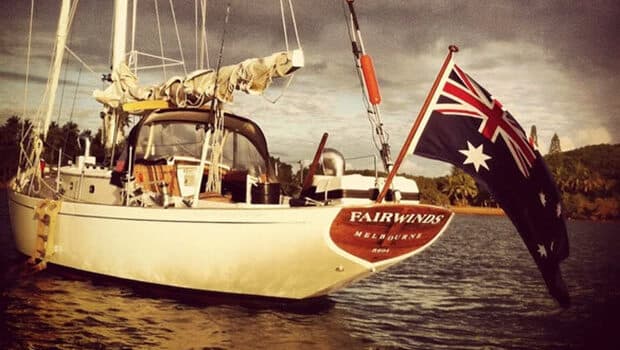
Sailors considering the Loop face a specific set of requirements that power boaters simply don't. According to Duthie's guide, "Sailboats are the slower option of course and must have an engine, carry a minimum of two people and have comfortable beds - as well as be able to deal with both cold and hot days." That last point matters: the Loop passes through dramatically different climate zones across its 5,000-mile circuit, from the Great Lakes to the Gulf Coast.
The most operationally significant constraint is one that catches newcomers off guard: "As a practical matter, sailboats must remove their masts from Chicago to Mobile Bay to get under the bridges." That's a substantial stretch of the route, covering the inland river systems between the upper Midwest and the Gulf, where fixed bridges make stepping the mast not optional but mandatory. Factoring in the cost, logistics, and timeline for mast removal and re-stepping at the appropriate points is essential to any sailboat-specific Loop plan.
Safety, towing, and the hard lessons of experience
The Loop is a long-distance passage, and things go wrong on long-distance passages. The guide is candid about this, including a first-person note on towing services: "We joined BoatUS Towing immediately and they got us out of trouble several times." Joining a towing membership before you depart, rather than after your first incident, is one of the clearest pieces of actionable advice in any Loop guide. The guide also notes that "there is no charge for the Coast Guard if there are no private rescue services," though the specific conditions under which that applies are worth verifying with the Coast Guard directly before assuming it covers your situation.
The single most emphatic piece of advice in the Boats.com guide concerns experience before departure: "NEVER just hop in your boat and head out without learning to operate your boat close to port first. Take several days living on the boat and cruising short round trips before setting out on the Great Loop." This isn't a formality. Handling a vessel in tight marina situations, learning how it behaves in current, understanding how your systems perform overnight while you're anchored, all of that is knowledge you can only build aboard your specific boat in low-stakes conditions. The time to discover that your bilge pump is unreliable or that you don't sleep well on a particular anchor set is not at mile 600 of a 5,000-mile trip.
Community learning: events and resources
The AGLCA has built a layered educational ecosystem around the Loop, and knowing which tier matches your current planning stage helps you use it efficiently. For those just starting out, Looper Lifestyle events are the entry point. "These events are held 2 or 3 times a year at various locations in the U.S. and Canada," according to AGLCA. The format is tight and practical: "These day and a half events provide an introduction to the Great Loop. The first day focuses on finding and buying your perfect Great Loop boat and the second day provides practical advice for planning and preparing for your own Great Loop adventure."
If you're already past the basics and working through route specifics, the Rendezvous events are the next step up. "If you are a little further along in your planning, you might want to consider attending a Rendezvous where you'll find presentations focused on the route, covering navigation and things to see and do, along with sessions on general boating topics."
Beyond live events, the AGLCA's digital resources cover a wide spectrum. Podcasts are organized by category so you can target specific topics rather than listening chronologically. The Great Loop Link newsletter archive is fully searchable, covering every issue ever published. The AGLCA's webinar library includes a Safe Boating webinar series, with many webinars available free to members. As the organization puts it: "There's a lot of information so go at your own pace but you'll no doubt find answers to your questions with one or more of these resources."
Before you go: a practical checklist
Pulling the core advice together into a pre-departure framework:
- Work with a buyer's broker, not a seller's broker, when shopping for your boat.
- Select a vessel, sail or power, that genuinely meets the Loop's safety and comfort criteria, not just your budget.
- If you're sailing, budget time and money for mast removal and re-stepping between Chicago and Mobile Bay.
- Join BoatUS Towing before you leave the dock.
- Spend several days living aboard and completing short round-trip cruises to build actual operational experience on your specific boat.
- Start your AGLCA education with the YouTube seminar, then work through the "Great Loop Planning Guide" email series and the GreatLoop.org resource library.
- Attend a Looper Lifestyle event if you're early in planning, or a Rendezvous if you're further along.
- If questions remain after all of that, schedule a 15-minute call with Kim Russo at AGLCA.
The Great Loop rewards thorough preparation precisely because the route itself is so varied. The same passage takes you through the narrow commercial traffic of inland river locks, the open exposure of Lake Michigan, and the mangrove-lined anchorages of Florida's waterways. No single skill or single piece of gear covers all of it. The Loopers who complete the circuit tend to be the ones who treated the planning phase as seriously as the voyage itself.
This article was produced by Prism’s automated news system from verified source data, official records, and press releases, then run through automated quality and moderation checks before publishing. The system is built and supervised by the people who set the standards it runs under. Read our full AI policy.
Did this article answer your question?