Reinsulating a Marine Fridge Freezer to Cut Energy Drain
A fridge freezer rebuild is really a power-budget fix: on Nine of Cups, better insulation cut the hidden drain that chews batteries and cruising range.
Why the box matters before the compressor does
A marine fridge is often blamed on the compressor, but the real thief is usually the cold box itself. On Nine of Cups, the 1986 Liberty, David Lynn found that the original box had 2 to 3 inches of foam, which was only marginal when new and had become pretty much useless after 14 years. That is the kind of failure that does not look dramatic at first, yet it quietly drives up battery use, shortens the time you can stay at anchor, and turns refrigeration into a permanent power-management problem.
Practical Sailor puts the physics plainly: fridge demand rises with ambient temperature, run time, box size, and insulation efficiency. In hot conditions, poor insulation can easily double energy demand. That is the part many owners miss. A fridge that seems merely “a little weak” is often forcing the whole boat to carry a larger electrical load every hour of the day.
What the original installation was doing wrong
Nine of Cups used a 12-volt system with the condensing unit tucked under a settee in the saloon. Copper tubing ran behind the galley sink and stove to a cold plate evaporator in the freezer, and thermostatically controlled fans moved cold air from the freezer into the refrigerator compartment. It was a classic spillover arrangement, the sort of setup that can work well when the insulation is sound and the controls are doing their job.
The problem was that the insulation was no longer sound. David found water in it and gaps between foam sections, which is exactly how a box slowly becomes a battery drain. Wet foam and voids do not just lose performance, they also create uneven temperatures, more compressor cycling, and more of those annoying little temperature chases that eat up time underway. In a boat where space is buried behind cabinetry and molded liners, the cold box can look normal from the outside while performing like an old Coleman cooler inside.
Why this kind of job becomes a rebuild, not a tweak
The headline lesson here is that reinsulating often means rebuilding. David planned to remove the countertop, the fridge and freezer compartments, and all the old insulation, then start over. He kept the evaporator, the condensing unit, and the temperature controllers because they were fairly new, which is exactly the sort of decision that saves money without compromising the result.
That is the first big call DIY owners face: whether the problem is the machinery or the box around it. If the hardware is still healthy, swapping compressors before fixing the insulation only treats the symptom. A good rebuild attacks the cavity itself, restores continuous insulation, and makes sure the cold volume is not bleeding heat through gaps, corners, and old wet foam. On a cruising boat, that is where the real efficiency gain lives.
The messy part nobody should underestimate
This was not a weekend cosmetic job. The saloon had to become a workshop, and the stove and sink came out for much of the process. The demolition phase alone took three days, which tells you how deeply a marine fridge can be buried into the boat’s structure and fit-out. Once the countertop and box were out, the old insulation was exposed as waterlogged, full of gaps, and no better than an old cooler that had been left to rot in place.
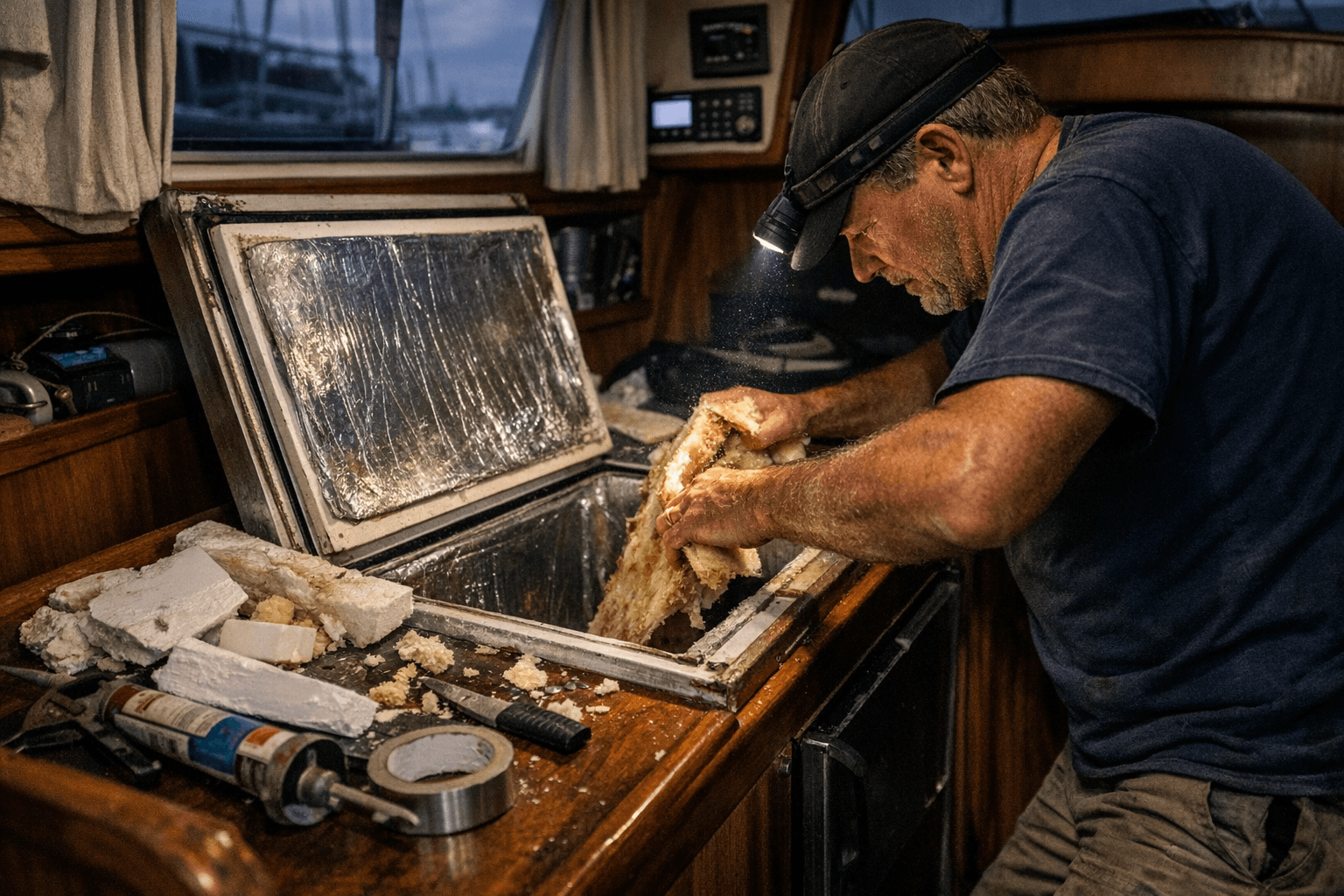
That level of demolition matters because it shows where the decision boundaries are. If you can reach everything easily, you are probably dealing with a service issue. If you have to clear the saloon, disconnect the galley, and strip the box back to its bones, you are in full refit territory. That is not a reason to back away from the project, but it is a reason to plan access, storage, and livability before the first screw comes out. Living without a refrigerator for the duration is part of the bargain.
What to prioritize when you rebuild
If you are deciding where to spend time and money first, insulation comes before almost everything else. A thick, dry, continuous thermal envelope gives you the biggest return for the least ongoing energy cost. That is why another Cruising World rebuild found a compressor running nearly 24/7 until wet, moldy foam and insulation voids were uncovered. The machine was not the root cause. The box was.
Material choice matters too. A Sailing Avocet build ran into open-cell foam and wet moldy remnants, then chose closed-cell XPS foam because it does not absorb water. That is the sort of detail worth copying. Closed-cell insulation gives you a better shot at keeping today’s repair from becoming tomorrow’s failure, especially in a damp, moving environment where leaks and condensation are always looking for a foothold.
Ventilation and controls still matter, but they work best after the box is fixed. The condensing unit under the settee needs enough air movement to reject heat, and the thermostatically controlled fans need to move cold air efficiently through the refrigerator compartment. Those parts help stabilize temperatures and reduce cycling, but they cannot rescue a box full of wet foam and gaps. The best control strategy in the world cannot overcome a bad thermal envelope.
Why the payoff is bigger than food storage
The reward for all that effort is not just colder milk. Better insulation means fewer compressor cycles, less battery draw, more stable food storage, and less time fiddling with temperatures at anchor or on passage. For sailors running solar or modest charging systems, that can be the difference between a fridge that behaves like a background load and a fridge that dominates the whole power budget.
This is also where the practical guidance pays off. David leaned on Don Casey’s revised This Old Boat, which includes updated refrigeration material, and that makes sense because the job is as much about system thinking as it is about carpentry. Box design, insulation thickness, access, controls, and airflow all interact. You are not just building a cooler. You are reshaping how the boat spends energy.
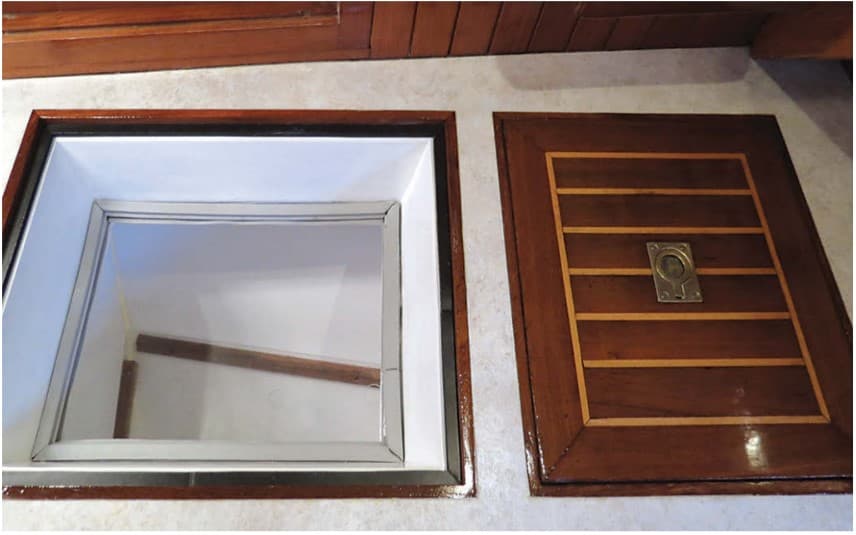
The best part is that a technically extensive rebuild can still preserve the boat’s original look. On Nine of Cups, the finished fridge and freezer still look much like the original because the hatch lids were reused. That is the ideal outcome for this kind of project: the cockpit and saloon stay visually familiar, while the electrical system stops paying the price for a hidden insulation problem.
This article was produced by Prism’s automated news system from verified source data, official records, and press releases, then run through automated quality and moderation checks before publishing. The system is built and supervised by the people who set the standards it runs under. Read our full AI policy.
Did this article answer your question?


