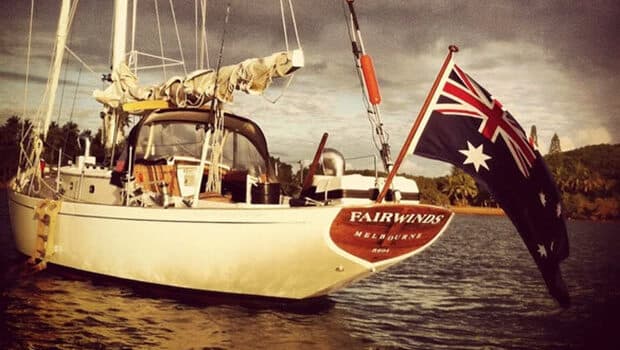
Rigging Doctor Couple Seals Old Windows, Installs Ocean-Rated Portlights on 1966 Alberg 30
Polyester doesn't bond to cured epoxy, a rule that shaped every laminate decision Herb and Maddie Benavent made sealing Windpuff's factory windows.
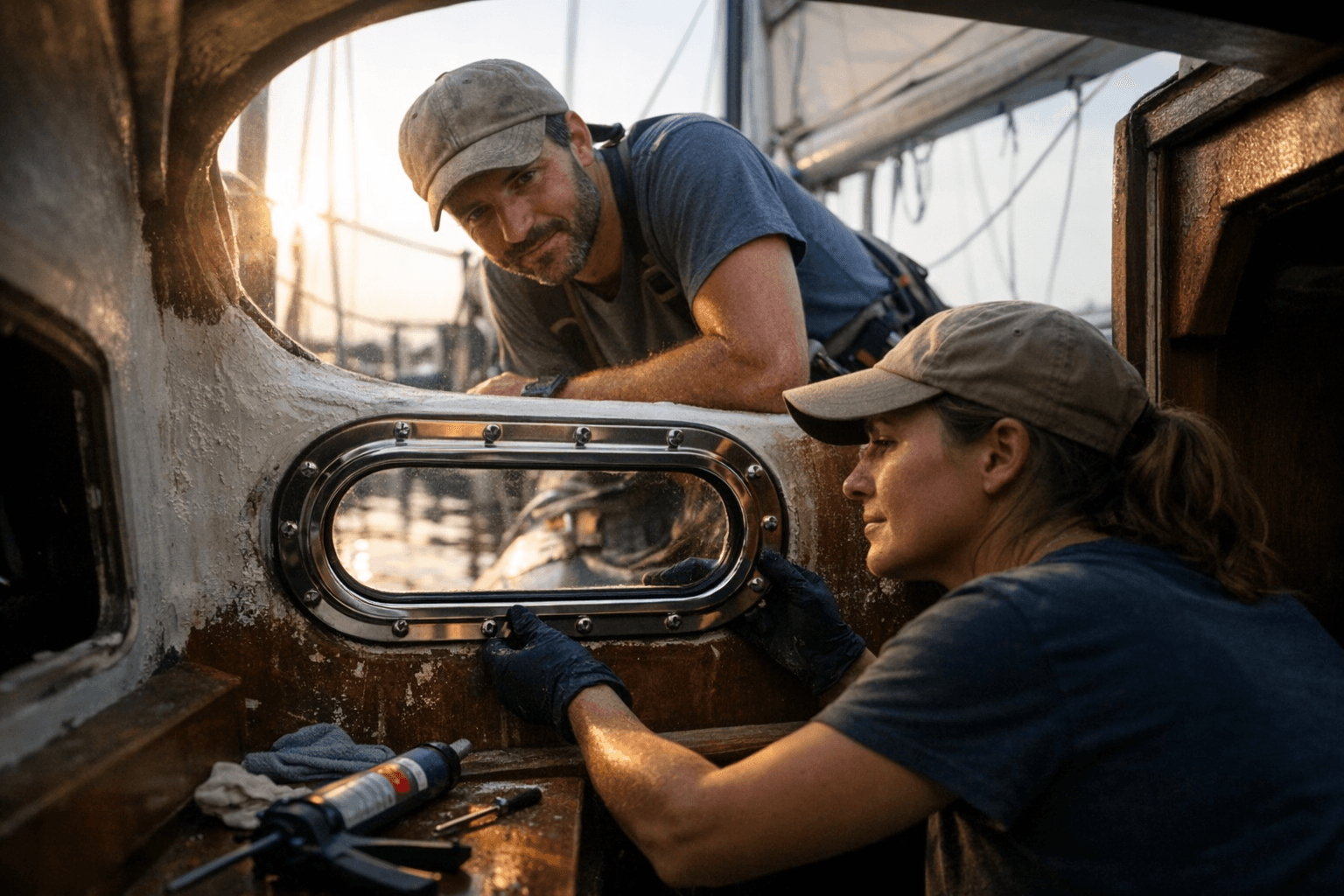
Treating an oversized, thin plexiglass portlight as a cosmetic problem is how a 1966 Alberg 30 ends up with a structural liability offshore. Herb and Maddie Benavent, the couple behind the Rigging Doctor YouTube channel, knew the factory windows on their project boat Windpuff were not ocean-ready, and they built a meticulous repair sequence to prove what it takes to fix that correctly.
The Benavents removed the original oversized plexiglass windows entirely, then permanently sealed the openings with polyester fiberglass plugs before fitting smaller, ocean-rated bronze portlights with 3/8-inch tempered glass. Every step of that sequence was dictated by one governing chemistry rule: "epoxy will bond to polyester, but polyester does not bond well to epoxy."
That constraint is what drives the entire material strategy. The 1966 hull is original polyester fiberglass. If Herb had used epoxy to build the interior plug, any subsequent polyester work on the exterior fairing would have no chemical bond to grab onto, leaving the repair structurally compromised from outside. Polyester laminating resin went into the plugs and the exterior fairing; epoxy was reserved for interior structural components where the sequencing permitted it.
The build workflow started with a temporary Formica template wedged into the window opening from outside to serve as a mold. From the inside, Herb glassed layers of chopped strand mat and 1708 biaxial cloth against the Formica, tabbing the plug directly into the surrounding hull frame so the new laminate became integral to the structure, not just a patch. Once cured, the Formica came out and exterior fairing with polyester gelcoat smoothed the repair flush with the hull.
Polyester's longer working time made it practical for large fairing runs across Windpuff's topsides, and its lower per-gallon cost mattered for a full refit budget. The tradeoff is greater shrinkage and brittleness compared to epoxy, which is exactly why Herb routed epoxy to the interior structural work where its superior adhesion earns the premium.
The decision point for older fiberglass cruisers runs like this: re-bed a portlight when the frame and surrounding laminate are sound and dry. Replace the portlight when the frame has cracked or the glass has degraded below offshore spec. Seal and rebuild entirely when the surrounding hull laminate has taken on moisture or the opening is structurally oversize for bluewater use, as Windpuff's original windows were. Catching osmotic moisture and delamination early avoids the more consequential failure: water intrusion under way, which compounds into trapped rot in cored sections or progressive crazing that masks deeper structural damage. Resin shrinkage in an improperly sequenced repair creates micro-cracks that invite exactly that cycle.
The Rigging Doctor's finished installation uses bronze portlights, the offshore standard long before Bill Alberg drew the 30 in the early 1960s. Windpuff's rebuild keeps that material philosophy intact while correcting the structural shortcuts the boat arrived with, and the polyester-first sequencing means the repair will accept future fairing work without compatibility surprises.
This article was produced by Prism’s automated news system from verified source data, official records, and press releases, then run through automated quality and moderation checks before publishing. The system is built and supervised by the people who set the standards it runs under. Read our full AI policy.
Did this article answer your question?