Sailboat Lithium Batteries in Winter: Safe Charging, Heating, and Design
New guidance and vendor claims clarify charging limits, heaters, and insulation strategies for lithium house banks to manage safety and performance in cold conditions.
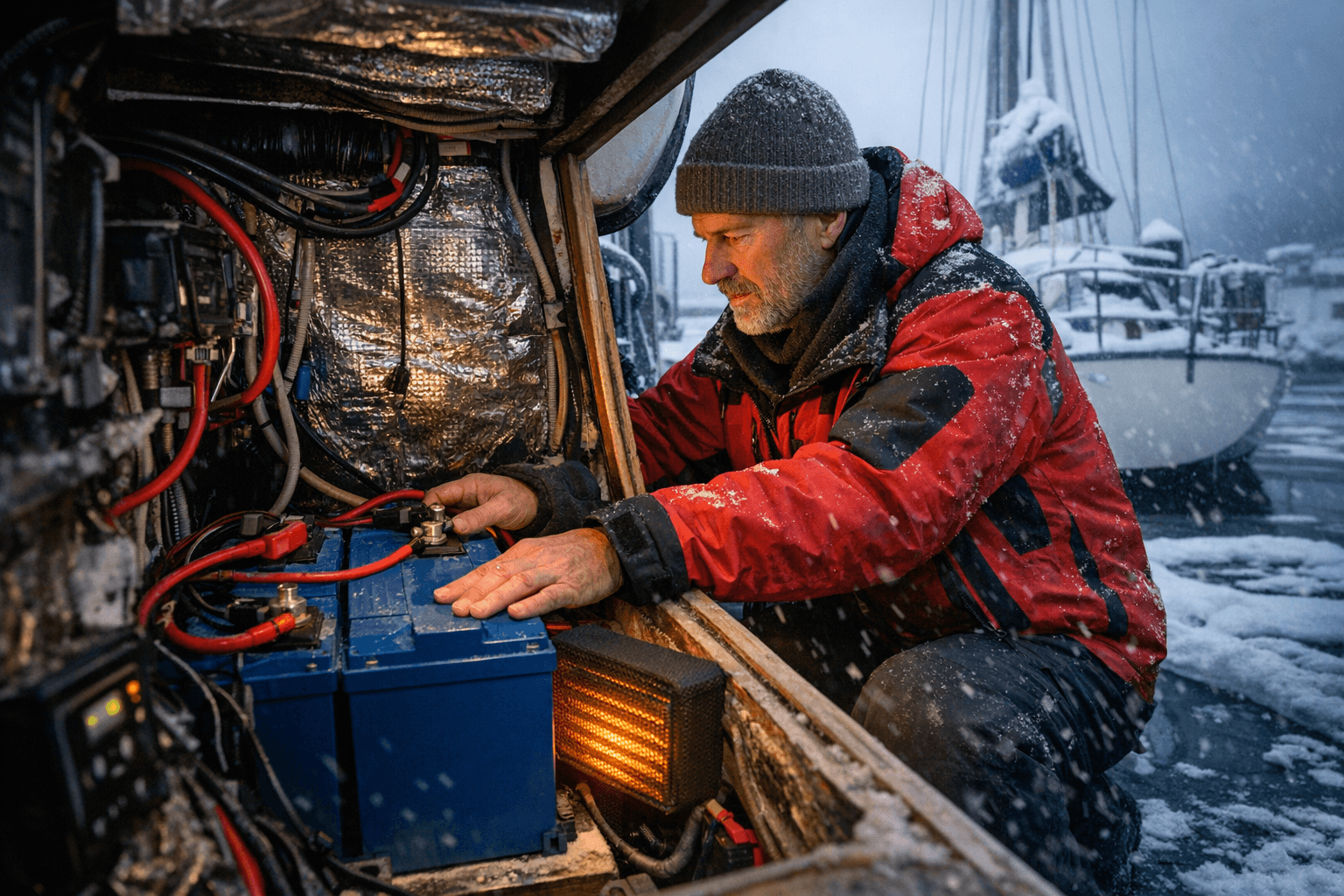
Lithium batteries are increasingly the go-to for sailboat house banks in cold climates, but their chemistry and charging behavior in low temperatures demand careful design and operating rules. Practical Sailor’s Drew Frye flagged the issue directly in a technical briefing: “Drew Frye’s Practical Sailor technical briefing (Feb 3, 2026) examines lithium battery behavior and safe system design for sailors who operate in cold climates. Key points: 1) Performance and safety tradeoffs, Lithium batteries offer major weight and capacity”
Cold slows the ions. As Renogy put it, “As mentioned above, when temperatures drop, the intercalation rate of lithium ions at the graphite electrode and the conductivity of the electrolyte within the battery decrease.” That slowdown raises internal resistance and can produce lithium plating, a degradation and safety risk. Battery-energy-storage-system defines the failure mode bluntly: “Lithium plating happens when lithium ions gather on the surface of the graphite anode instead of being absorbed into it. This reduces the amount of lithium available for energy transfer, lowers capacity, increases resistance, and can even lead to internal short circuits, a dangerous and permanent form of battery failure.”
For boatowners the practical takeaway is straightforward: change charging behavior with ambient temperature. The same site lays out specific limits: “Above 32°F (0°C): Normal charging is safe.” “Between 32°F and 14°F (-10°C): Limit charging current to 0.1C (10% of battery capacity).” “Between 14°F and -4°F (-10°C to -20°C): Limit charging current to 0.05C (5% of battery capacity).” “Below -4°F (-20°C): Do not charge unless your battery has a self-heating function or specialized cold-weather support.” Slower charging reduces plating risk but increases charge time, an important tradeoff for cruisers relying on limited generator or alternator runtime.
Thermal management options range from passive insulation to built-in heaters. Renogy describes a simple shop-floor solution: “Battery blankets are insulated blankets that are used to keep batteries warm in cold weather. They are designed to fit snugly over the battery to keep it from being exposed to the cold temperatures. They provide good insulation to reduce the exposure of the battery cells to the cold environment by trapping heat generated by the battery, while also protecting the battery from the elements.” Renogy also markets a self-heating LiFePO4 product and states it is “designed to not just survive, but thrive in temperatures as low as -41°F. This advanced battery features an automatic self-heating feature that begins at -41°F and stops at 50°F.” That vendor claim sits alongside a simpler vendor threshold: “low-temperature protection that kicks in when the charging environment temperature drops below 32°F.”
LiFePO4 chemistry retains a clear advantage in the cold. Lithiumhub puts it plainly: “We’re going to put it to you straight – lithium batteries (LiFePO4, not lithium ion batteries) fare far better in wintry conditions than other battery types, but even still you’re going to want to take care of them.” Its lifecycle numbers underline the economic case: “Lithium deep-cycle batteries are rated to last between 3,000 to 5,000 cycles. But lead-acid, on the other hand, typically lasts around 400 cycles.”
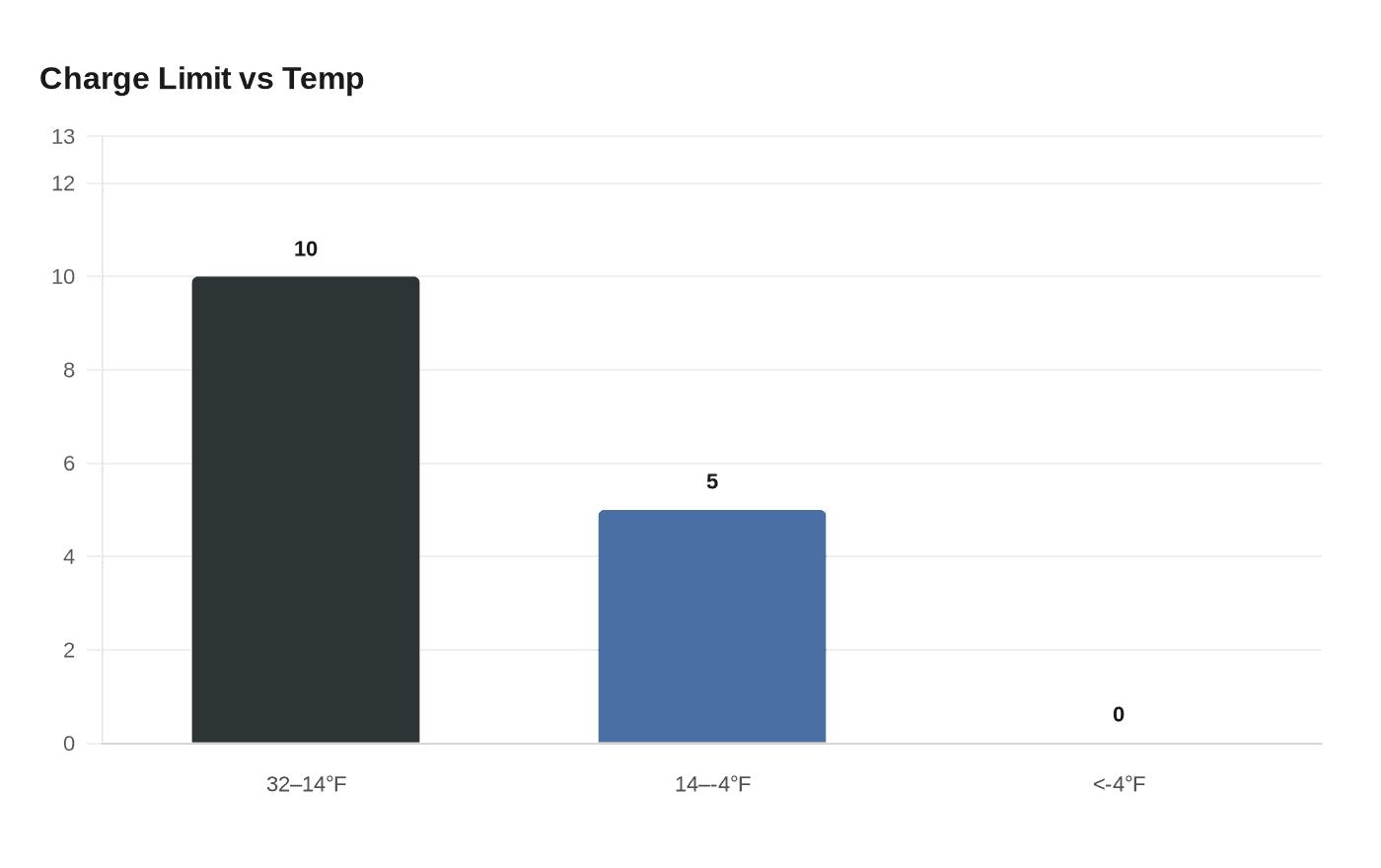
Those numbers and product claims are actionable for boatowners planning winter voyages or winter storage. Verify product specifications and heater control logic with manufacturers before you rely on an advertised -41°F activation, and treat vendor marketing as a starting point rather than a universal rule. Follow conservative charging limits when ambient temperatures drop, insulate and, where practical, add built-in or external heating under BMS control, and plan for more frequent top-up charging in winter to preserve usable capacity and cycle life. For sailors in cold waters, thoughtful system design now prevents a dead bank and an expensive rebuild later.
This article was produced by Prism’s automated news system from verified source data, official records, and press releases, then run through automated quality and moderation checks before publishing. The system is built and supervised by the people who set the standards it runs under. Read our full AI policy.
Did this article answer your question?