Sailboat systems that keep you safe, comfortable, and self-sufficient
The first failure on a sailboat is usually a clue, not a catastrophe. Learn to read the engine, plumbing, and electrical systems fast, and small problems stay small.
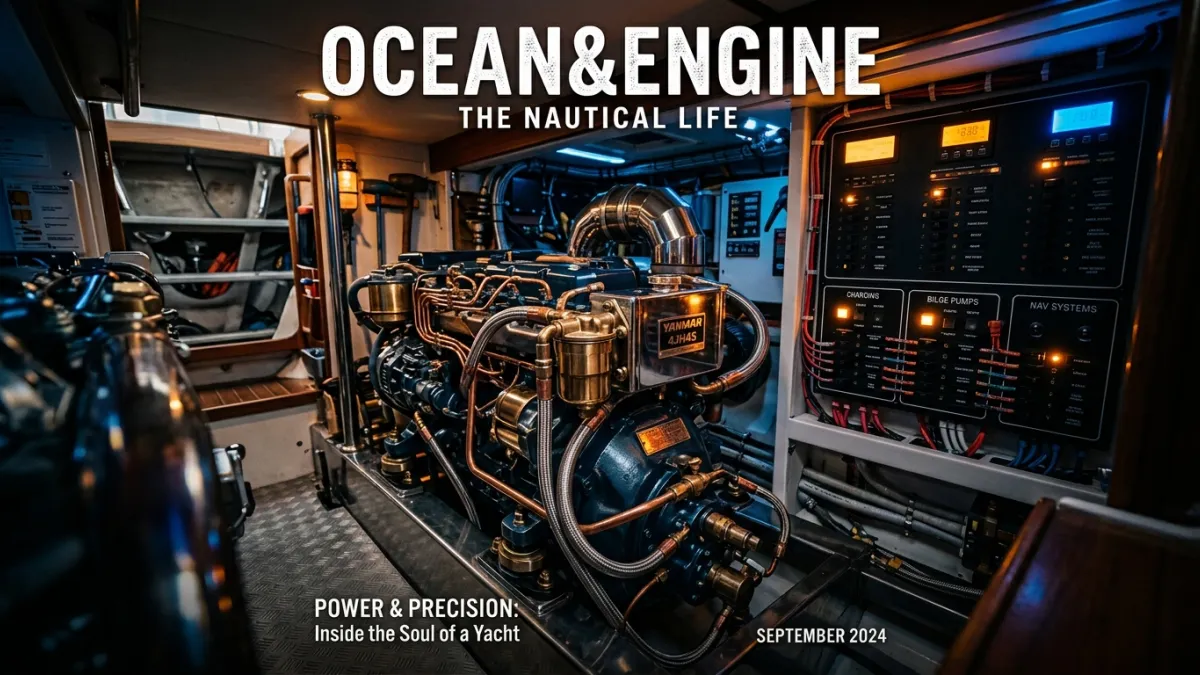
Read the boat below deck first
A sailboat is never just hull and rigging. The hull is the skin, the mast and Bermuda rig are the lungs, and the systems below are the heart, veins, and nervous system that decide whether the day feels effortless or expensive. That is the real ownership lesson here: reliability comes less from knowing everything and more from understanding the few interactions that trigger cascading problems.
If you want to triage your own boat well, start with the symptom, not the theory. A boat that will not move, will not charge, or cannot get you off a lee shore points you toward the engine. A boat that smells wrong, leaks, or makes life aboard feel miserable points you toward plumbing. A boat with flickering lights, dead pumps, or erratic electronics points you toward electrical. The trick is learning where each system hands problems to the next one, because that is where the expensive surprises usually begin.
Start with the engine when movement or charging is at stake
Even sailors who worship wind power need a dependable auxiliary. On many boats, that means an inboard diesel from Yanmar, Volvo Penta, or Westerbeke, paired with either a saildrive or a traditional shaft drive. It is not there only for motoring in calms. It also handles docking, charging batteries, and the moments when wind or weather turn on you and getting home becomes the priority.
That is not a trivial role. The United States Coast Guard says its Boating Safety Division works to reduce loss of life, injuries, and property damage on U.S. waterways, and its 2024 recreational boating statistics recorded 556 fatalities, 3,887 incidents, and 2,170 nonfatal injuries. The fatality rate was 4.8 deaths per 100,000 registered recreational vessels. For a sailboat owner, the message is plain: a healthy auxiliary engine is part of risk reduction, not a luxury upgrade.
The fastest way to keep the engine on your side is to learn its normal behavior. Know where the fluid checks are, how the raw-water seacock works, what the oil-pressure and temperature gauges look like when everything is happy, and what your exhaust note sounds like on a clean run. A healthy engine is one you can recognize by ear, so a change stands out immediately.
A few habits do most of the work:
- Service the engine annually.
- Change oil and filters on schedule.
- Inspect the raw-water impeller before it fails.
- Check the strainer for debris before overheating starts.
- Winterize on time, before a cold snap turns routine neglect into a major repair.
BoatUS says routine inspections, engine-oil changes, and fluid checks are among the best ways to keep a boat running smoothly. Its winterizing guidance says most boats can be winterized in an hour to a day, but freeze damage can be severe enough to require complete engine replacement. West Marine’s winterizing guidance points in the same direction: this is not a cosmetic task, it is the difference between a spring recommissioning and a teardown.
There is also a clear line between a quick fix and a proper repair. If the strainer is clogged, clean it. If the impeller is shedding rubber, the cooling system needs more than a glance. If the raw-water flow is restricted, a seawater-cooled engine can overheat fast. That is why marine-diesel guides keep circling back to the cooling loop: when flow is interrupted, the damage can move from nuisance to serious in a hurry. YANMAR USA tells owners to consult the operator’s manual for service tips and basic maintenance and to use authorized dealers and distributors for technical support, which is exactly the right instinct when the problem moves beyond a simple inspection.
When the problem smells, leaks, or turns a cabin into a chore
Plumbing is where comfort becomes obvious. Fresh water and waste systems do not always draw attention when they work, but they define whether the boat feels like a home or a puzzle box. A cruising boat depends on these systems for sanitation, odor control, and emergency livability, especially when you are living aboard long enough for small failures to become daily annoyances.

This is where diagnosis matters. A drip under a sink may be a hose clamp you can tighten today, but a cracked hose, a tired pump, or a sanitation line that has started to stink needs a proper repair, not a patch and a promise. The same is true for tanks and fittings: if the leak returns, the real problem was never the first wet spot. It was the path that let water or waste escape in the first place.
The ownership reality is simple. Plumbing failures are expensive not because the parts are glamorous, but because they eat time, morale, and confidence. A boat with dependable water pressure and clean sanitation feels easier to trust. A boat with plumbing issues feels like it is asking you to babysit it every hour.
When lights flicker or the batteries decide the day
Electrical is the nervous system of the modern sailboat. Battery banks, chargers, inverter-chargers, solar controllers, nav gear, pumps, and networked electronics now sit at the center of self-sufficiency at anchor and underway. If the engine is the muscle, electrical is the system that tells the rest of the boat when and how to work.
That is why standards matter. The American Boat & Yacht Council, founded in 1954, develops voluntary safety standards for recreational boat design, construction, repair, and maintenance. Its 2025-2026 supplement updated 14 standards and three technical information reports, including E-11 for AC and DC electrical systems on boats and E-13 for lithium-ion batteries. Those details are not background noise. They are a reminder that the wiring side of the boat is now a safety-critical discipline.
The United States Coast Guard sharpened that warning with Marine Safety Alert 14-25 on July 14, 2025, after a lithium-ion battery bank fire aboard an inspected passenger vessel was linked to loosely crimped lugs overheating. That is the kind of failure that starts as a small connection problem and ends as a major emergency. A loose lug is not just a loose lug when it carries the whole boat’s energy budget.
The practical triage here is straightforward. A single dead light or one stubborn circuit may be a breaker, a terminal, or a local connection. Multiple low-voltage symptoms, hot terminals, or batteries that will not behave the way they used to point to a deeper fault. If you are working around lithium batteries, that seriousness has to go up another level. Heat at a connection is not a cosmetic defect; it is an alarm.
This is also where Marine Electronics standards and installer training matter. The National Marine Electronics Association exists to improve marine electronics interface standards and training so systems can talk to one another reliably. That matters when your chartplotter, engine data, battery monitor, and charging system all need to make sense together. A sailboat that integrates cleanly is easier to trust than one patched together with guesses.
The small set of systems that really controls the whole boat
The best sailboat owners do not try to master every hose, wire, and fitting at once. They learn the few interactions that cause cascades: a cooling blockage that overheats an engine, a sanitation leak that makes the cabin miserable, a loose electrical lug that turns heat into danger. That is enough to keep most trouble from growing teeth.
If you know how to listen for the engine changing note, smell a plumbing problem before it spreads, and treat electrical heat as a warning, you already own the most important skills on the boat. Everything else builds from there.
This article was produced by Prism’s automated news system from verified source data, official records, and press releases, then run through automated quality and moderation checks before publishing. The system is built and supervised by the people who set the standards it runs under. Read our full AI policy.
Did this article answer your question?


