Catamaran build starts electrical panel, wiring every onboard system
One breaker panel decides whether a catamaran is easy to troubleshoot or a nightmare at sea. The smart move is simple: plan the layout now, before the first wire run locks everything in.
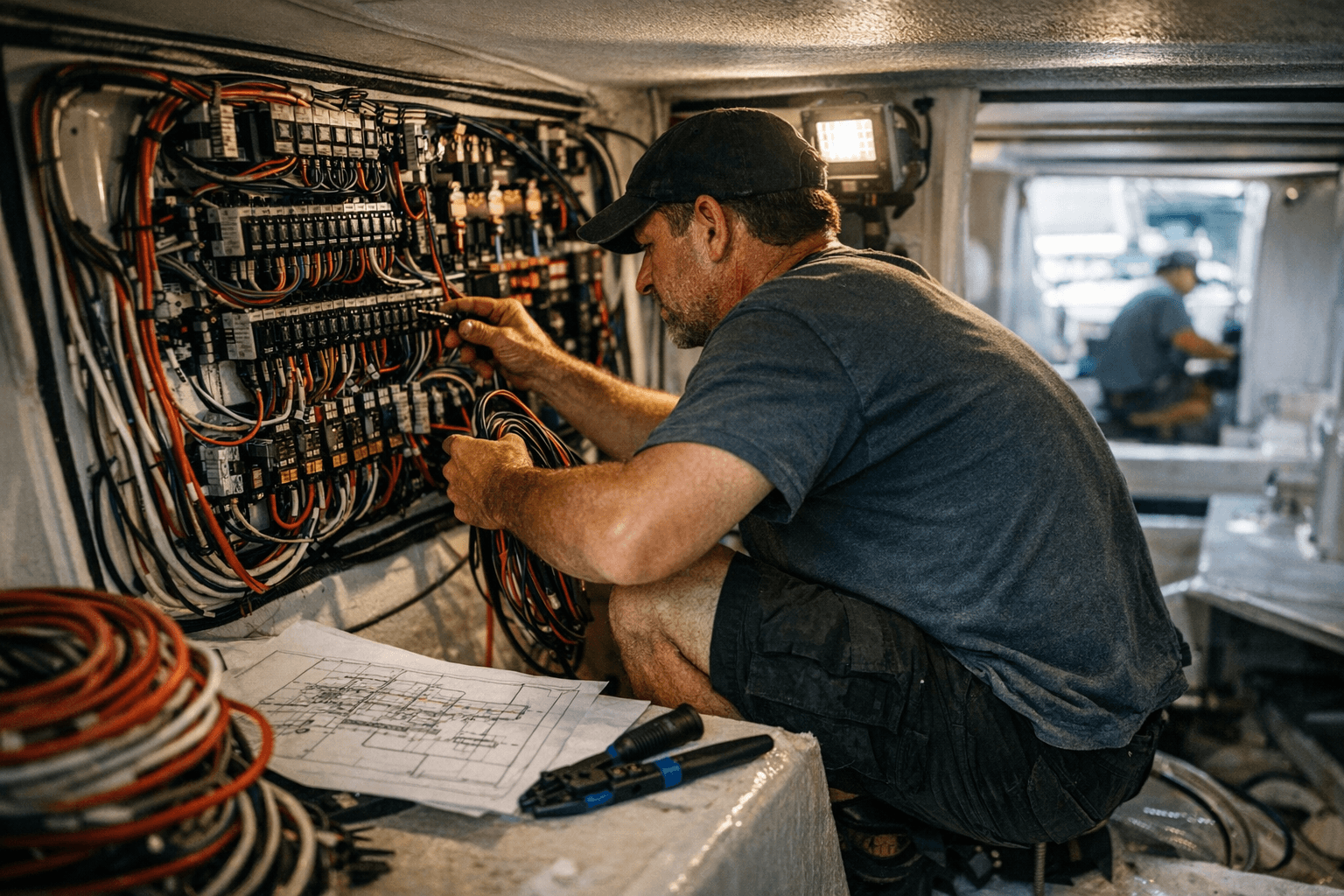
The panel is the whole boat’s nerve center
The most important electrical decision in a cruising catamaran often hides in plain sight: the breaker panel. On MJ Sailing’s homebuilt fiberglass catamaran in Kent Island, Maryland, the team has moved from installing the two Victron MultiPlus-II units into the cabinet that will hold the breakers, and that cabinet is being treated as the center of the entire power system. It will feed lighting, navigation electronics, pumps, and every other major onboard load, so this is not trim work or an afterthought. It is the point where the boat becomes a real electrical system instead of a pile of components.
That is why the stakes are so high. A clean panel layout saves time when something quits, keeps repairs safer, and gives you room to expand later without tearing the whole boat apart. A sloppy one can work beautifully on launch day and become a maintenance trap the first time you need to isolate a fault offshore.
Plan the layout like you plan the boat
Matt has spent years thinking through not just what each breaker will control, but where each breaker should live so the panel makes sense when the boat becomes a full-time home. That matters more than people admit. In practice, a good panel is not just a row of labeled switches; it is a map of how the boat actually gets used, with the most important loads grouped in a way that makes troubleshooting fast and obvious.
If you are building your own panel, copy that thinking before you start drilling holes. Put the circuits in an order that reflects daily use, emergency isolation, and logical cable routing. Keep related loads together, such as cabin lighting, nav electronics, and pumps, so you are not hunting through a maze of mystery breakers when one side of the boat goes dark. The goal is simple: when something fails, you should know where to look without opening a wiring diagram and a flashlight at the same time.
The gear choice sets the tone for the whole system
The panel work sits downstream from a major milestone: the installation of two Victron MultiPlus-II units. Victron describes the MultiPlus-II as a multifunctional inverter-charger with two AC outputs, built for professional marine and yachting use. It also uses PowerControl to help prevent shore-power or generator overload, while PowerAssist can boost AC power during peak demand.
That matters because the panel is not just distributing DC power to little convenience loads. It is part of a larger architecture that has to manage real AC demand aboard a cruising catamaran. When the inverter-charger and panel are planned together, you get a system that can balance loads intelligently instead of tripping itself into annoyance every time the kettle, charger, and a power tool show up at once.
Victron’s broader marine approach is built around reliable onboard power for sailboats that need energy even when the engine and generator are off. That is exactly the point here. The panel is the physical handoff between stored energy, inverter-charger management, and the everyday stuff people actually touch.
Labeling is not cosmetic, it is safety gear
A lot of amateur panels fail in the same dull way: they become hard to read, hard to trace, and hard to trust. Once that happens, every repair gets slower. The MJ Sailing build is headed into a stage where a large amount of wire will be run throughout the boat, which means the panel layout set now will shape every later choice about cable runs, circuit protection, and labeling.
This is where discipline pays off. Label every breaker so it describes the load in plain language, not a cryptic code only the builder remembers. Keep your circuit naming consistent between the panel, wiring schedule, and the actual device at the far end. If you ever have to troubleshoot at anchor, in the dark, or with water slapping the hull, a readable panel is worth more than a prettier one.
- Put critical loads where they are easy to isolate fast
- Leave space for future circuits instead of packing the panel edge to edge
- Match labels to real-world use, not workshop shorthand
- Keep similar systems grouped so fault-finding is quicker
A few practical rules make a big difference:
Build for service access, not launch-day applause
The hidden failure mode in a lot of DIY electrical work is building something that looks finished but cannot be serviced without dismantling half the cabin. That is the mistake to avoid here. A panel on a cruising catamaran needs physical access, room for your hands, and enough slack in the layout that you can change a breaker or inspect a terminal without turning the job into a surgery.
Think about the first serious fault you might face after launch. A loose connection behind a breaker, a failed pump circuit, or a mislabeled feed should be fixable without ripping out cabinetry. If the panel cabinet is deep enough, the wire routing is clean, and the breaker rows are organized, you can get in, diagnose the problem, and get back to sailing. If not, even a small repair becomes a multi-day headache.
That is why the cabinet itself is as important as the breakers inside it. The box has to support future access, not just the first installation.
The rules exist for a reason
This kind of work is not just a style choice. U.S. Coast Guard electrical regulations require vessel installations to be built and maintained to protect the vessel and people aboard from fire and shock hazards, and to minimize accidental contact with energized parts. ABYC E-11, the marine industry’s key consensus standard for AC and DC systems, is meant as a guide for the marine community, and the American Boat & Yacht Council reviews its standards at least every five years.
That backdrop explains why careful panel layout and disciplined labeling are more than good habits. They are part of building a boat that is safer to own and easier to keep alive when conditions are rough. On a cruising catamaran, the electrical panel is not a place to improvise your way through with whatever fits. It is a system that has to make sense to someone fixing it years later, not just to the person who wired it.
This is the point where the whole build turns a corner
MJ Sailing’s update is really about a transition. The project is moving out of component installation and into the part where the electrical architecture gets locked in for good. The team also credits community help, including people who bought wire from the Amazon wish list, which says plenty about how much bulk cable this stage is about to consume.
That is the real lesson in this cabinet: the first serious design choice in the panel dictates how easy the rest of the boat will be to live with. Get the layout right, and troubleshooting becomes faster, safety improves, and future expansion stays possible. Get it wrong, and every wire you run after this point will only make the mistake harder to undo.
This article was produced by Prism’s automated news system from verified source data, official records, and press releases, then run through automated quality and moderation checks before publishing. The system is built and supervised by the people who set the standards it runs under. Read our full AI policy.
Did this article answer your question?