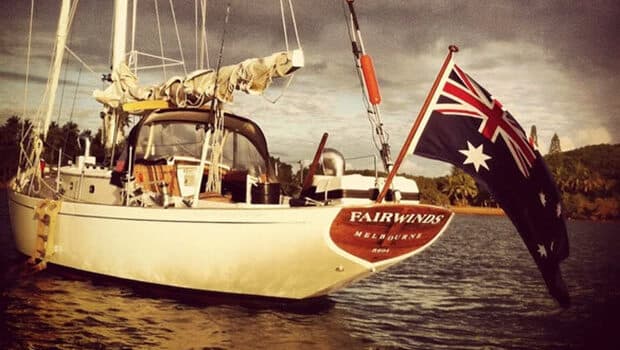
Sailing family turns 14 years aboard into a seamanship school
A 5,000-mile passage turned Thunderbird into a floating schoolhouse, where six children learned watchstanding, sail changes, and real offshore discipline.
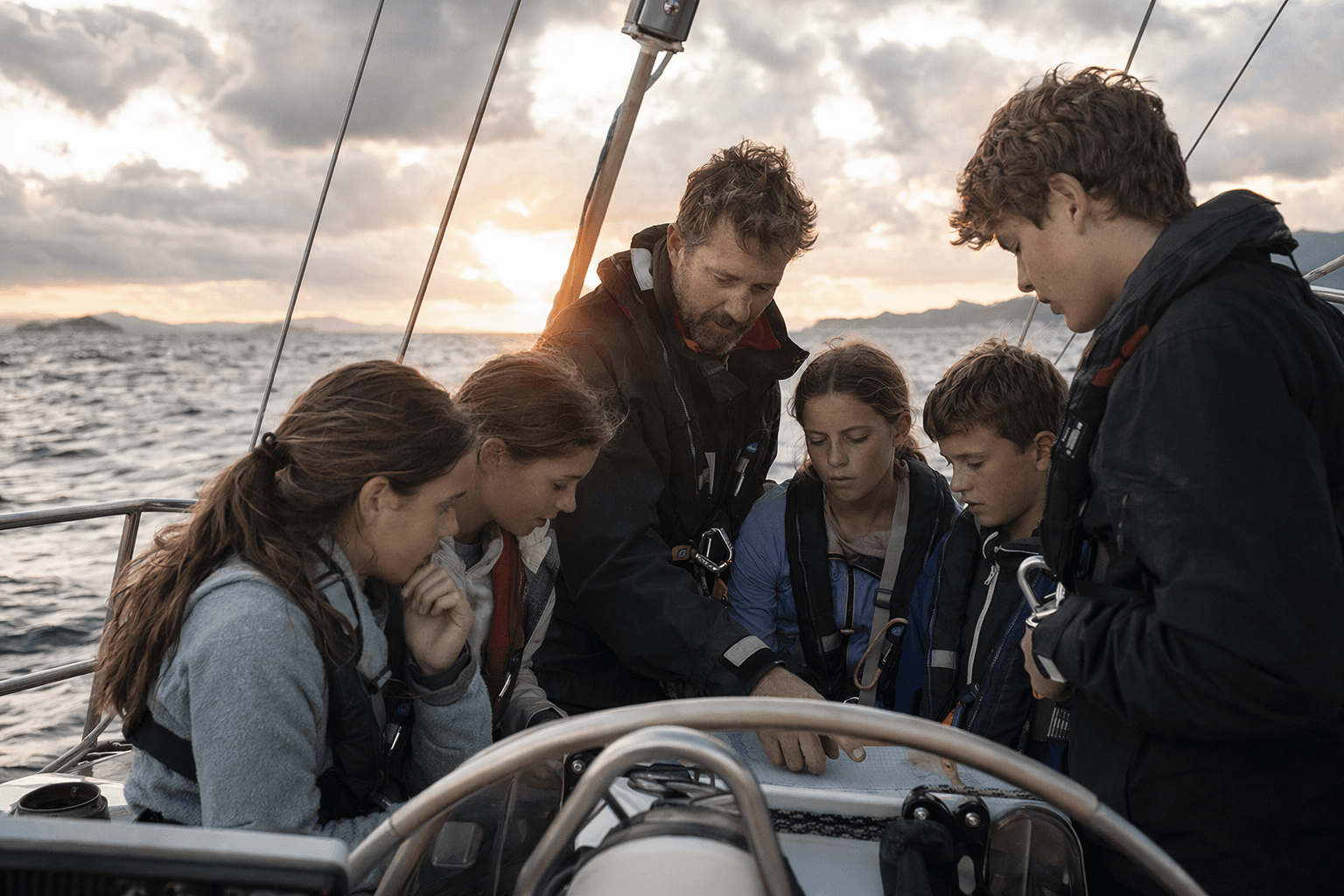
Fourteen years aboard has turned the Sao-Burwick family’s trimaran into something closer to an offshore apprenticeship than a cruising postcard. On Thunderbird, Somira Sao and James Burwick have raised six children into crew, not spectators, and that difference is the whole story.
A boat built around routine
The family’s own company material says the voyage began in June 2011 with their two oldest children, then grew into a life aboard their 50-foot Bosgraaf trimaran with six children. Cruising World has described Thunderbird as a 49-foot cruising trimaran in an earlier profile and a 50-foot trimaran in the later passage account, but the practical point is the same: this is a multihull set up for real work, not casual day-sailing.
That matters because a liveaboard boat only functions when the household runs on systems. The Sao-Burwicks have spent 14 years building a rhythm around steering, trimming sails, standing watch, changing sails, and managing risk. In a family setting, those are not “help out when you feel like it” chores. They are the habits that keep the boat moving and keep everyone safe.
From helping out to owning the watch
What makes this family stand out is not just that the children participate, but that they have moved from passive involvement to actual ownership of the boat’s routines. The later passage account describes the kids as more self-motivated and more mature in their understanding of responsibility, which is exactly what a good watch system is supposed to produce.
This is the seamanship-school effect that family cruising can create when the work is real. Cruising World has long pointed to education, confidence, and independence as common benefits of cruising with children, and homeschooling aboard can fold in the subjects that matter on the water: navigation, position-fixing, wind, and current. On a boat like Thunderbird, those lessons are not theoretical. They happen while the boat is moving, while the weather is changing, and while the crew has to make decisions that affect everyone on board.
The result is a household where children learn that seamanship is not a performance for adults. It is the daily structure of life at sea. That is how a boat becomes a classroom, and why the children aboard end up with a working understanding of the rules that actually govern offshore sailing.
The passage that made the lessons real
The 5,000-mile run from Uruguay north along the coasts of Brazil, French Guiana, Suriname, Guyana, Venezuela, and Trinidad before continuing into the Caribbean is the sort of passage that exposes every weak point in a cruising setup. It is also the kind of passage that turns classroom habits into lived skills. A family can talk about standing watch and sail handling all day, but a long coastal hop with weather, fatigue, and maintenance in the mix is where those habits either hold or fail.
Hurricane season shaped the itinerary, which is exactly how practical cruising should work. The family pushed north sooner rather than later, keeping the route aligned with weather reality instead of wishful thinking. That decision alone says a lot about the kind of seamanship being taught aboard: read the season, respect the forecast, and build the passage around risk management rather than romance.
The story also includes the sort of mechanical interruption every offshore sailor knows too well. A broken spreader bar on the trimaran forced a repair stop, and later the family stripped weight from the boat before heading back out again. That repair-and-relaunch rhythm is central to cruising life. Boats do not stay seaworthy by accident. They stay seaworthy because somebody spots the issue, deals with it, and then resets the boat for the next leg.
A later rig check at Ilha da Cotia, in Paraty, before a northbound voyage to the Caribbean, fits that same pattern. It is the kind of stop that separates competent passagemaking from hopeful wandering: inspect the rig, verify the gear, and only then point the bow toward the next stretch.
Safety, routing, and the maintenance loop
The family’s method lines up neatly with the wider safety logic of seamanship. The U.S. Coast Guard Boating Safety Division says its mission is to reduce loss of life, injuries, and property damage by improving boaters’ knowledge, skills, and abilities. That is not just a bureaucratic slogan. It is the same framework that makes family cruising work when children are part of the crew.
On Thunderbird, safety seems to be built into the routine rather than tacked on as an extra lecture. Watchstanding teaches awareness. Sail changes teach timing and coordination. Weight stripping teaches how boat handling changes when the load changes. Rig checks teach that prevention is cheaper than emergency repair. Put those pieces together and you get a family system that treats seamanship as a practical skill set, not a badge of experience.
The 2026 passage account also shows how quickly that mindset scales when a family has spent years living it. By the time they reached landfall, the crew was more synchronized, which is what happens when everyone aboard knows the job and understands why it matters. That kind of cohesion is hard-earned, and it is one of the strongest arguments for taking children seriously as working members of the crew.
What this model gives sailing families
For DIY cruisers, the Sao-Burwick setup is useful because it shows the mechanics behind the lifestyle:
- Make children part of the watch system early, then give them jobs that matter.
- Teach navigation as a working skill, with position-fixing, wind, and current tied to real passages.
- Treat maintenance as part of cruising, not a break from it.
- Route around seasonality instead of fighting it, especially when hurricane risk is in play.
- Expect confidence and independence to grow when responsibility is real and repeated.
That is the deeper lesson from Thunderbird’s 14 years afloat. A family can cruise for years and still be doing little more than traveling, or it can turn the boat into a seamanship school where the children learn to steer, trim, stand watch, and keep the machine alive. On this trimaran, the broken spreader bar, the rig checks, the weather call, and the northbound push all point to the same conclusion: the boat taught the children because the family built the voyage around work that had to be done.
This article was produced by Prism’s automated news system from verified source data, official records, and press releases, then run through automated quality and moderation checks before publishing. The system is built and supervised by the people who set the standards it runs under. Read our full AI policy.
Did this article answer your question?