Sailor Builds Offshore, Ocean-Ready Sails at Home, Saving Thousands
Build offshore-capable sails at home with a Kingmax sewing machine and a sail kit, as Practical Sailor’s March 3, 2026 how-to shows—big savings possible, but confirm strength and costs before you go offshore.
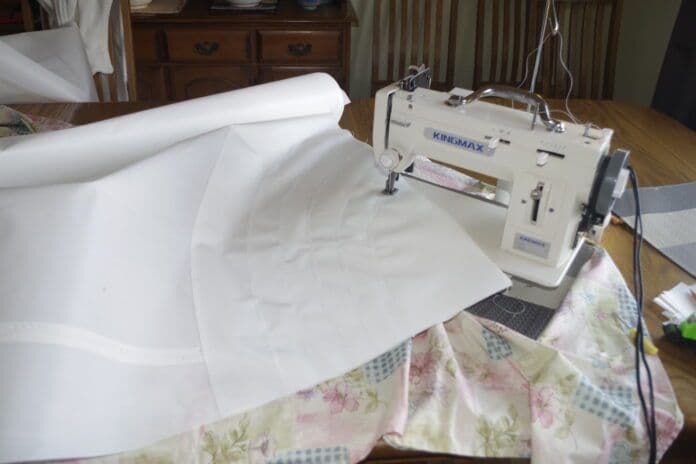
The most memorable line in Practical Sailor’s March 3, 2026 how-to is plain and bold: “The author has crossed oceans on sails he built in his living room—here's the step-by-step process, from choosing a sewing machine to fitting the last grommet.” That claim sets the tone: this is not a craft fair project, it is a how-to written by an experienced sailor who documents building robust cruising sails in a home workshop and then using them offshore.
Why this matters now The headline promise, “Save Thousands,” is the immediate benefit that draws readers in, and the piece backs that claim with a practical premise: “With a specialized sewing machine, sail kit and basic materials, you can make your own sails as well.” For DIY sailors who want to reduce sailroom bills and learn a skill that pays back over multiple rigs, the idea of building a mainsail or genoa at home is irresistible. At the same time, the author frames the work as serious: he writes in the first person about the emotional payoff, “One of the most satisfying experiences I have had is looking up at the sails and knowing I created what is powering my boat from some bits of cloth.”
What the Practical Sailor how-to covers The captured page explicitly promises a full sequence, “from choosing a sewing machine to fitting the last grommet,” which signals a complete workflow rather than a brief primer. The author supplies tooling and workflow context and answers reader questions, for example when a reader asked, “Which model Kingmax machine do you show in the article?” the author replied, “Thanks for asking, I should have included it. The Kingmax is a GA106-22Z.” That single model note is the clearest equipment specification available in the captured content and is a practical starting point for anyone shopping for a machine suited to heavy sailcloth.
- Sewing machine: Kingmax GA106-22Z is the specific model identified by the author.
- Sail kit: the article emphasizes buying a sail kit rather than sourcing individual parts only.
- Basic materials: sailcloth, thread, reinforcing patches, hardware and grommets are referenced generically in the article’s claim about materials.
- Workspace: the author literally built sails in his living room, signaling that a modest workshop can suffice for certain sizes and fittings.
A practical checklist of gear and prep
A step-by-step workflow you can follow The Practical Sailor piece is organized as a literal end-to-end process, and you can translate that into these sequential steps, which mirror the article’s scope: 1. choose a sewing machine suited to sailcloth, such as the Kingmax GA106-22Z the author showed; 2. select a sail kit sized for your boat and confirm included patterns and hardware; 3. lay out and cut cloth in a clean, well-supported workspace; 4. assemble panel seams and tape or stitch reinforcements; 5. sew on battens and set reinforcements around high-load areas; 6. fit finishing hardware, “fitting the last grommet” as the article phrases it; 7. sea-trial the sail and inspect for wear, then make iterative repairs and refinements.
- Hire a professional if the sail is for heavy-weather offshore cruising, is for a charter vessel, or if you lack confidence in structural reinforcements.
- Have a sail loft or qualified rigger inspect your finished sails before committing to long passages, particularly around seams, head and clew fittings, and grommet reinforcements.
- If you need certified materials or class-approved sails, expect to consult professionals; DIY work can be practical, but regulatory and safety limits still apply.
Decision points and when to call a professional
The captured article is explicit that the author used his sails offshore, but the excerpts do not include independent verification or inspector commentary. Treat these decision points as non-negotiable:
What the article does not provide in the captured excerpts The title claims savings, but no itemized costs or explicit dollar figures were captured. Likewise, the captured text does not show the author’s byline, build time estimates, stitch settings, or detailed measurements. That absence matters because the biggest question readers will have is how the “Save Thousands” math actually works. The Practical Sailor page does show robust reader engagement, including “2 COMMENTS,” and the author responded to equipment questions, which suggests follow-ups on costs and settings may exist in the full piece or the comments.
- Expect to invest in a capable sewing machine rather than a household model; the GA106-22Z is cited by the author.
- Buy a sail kit that includes patterns and hardware to avoid sourcing mismatched fittings.
- Schedule time for iterative testing: a sail patched and tuned after a shakedown will be more reliable offshore.
- Treat the finished sail as a structural component: routine inspections and conservative reefing plans reduce risk.
Tips and practical cautions drawn from the piece
Context on the Practical Sailor page The article sits in a broader Practical Sailor ecosystem, which the captured page frames with membership prompts and related content that may interest DIY sailors, such as “Inside Sail America’s Plan to Grow the Sport and the Industry,” “Lithium Batteries for Small Boats: A LiFePO4 Buyer’s Guide,” and “Six New Products for Sailors at the Miami International Boat Show.” The page also lists videos with headlines like “$40,000 for a 40 Foot Cruiser? The Bristol 40 Reality Check video from Practical Sailor” and a "Tartan 33 Used Boat Review" excerpt that reads, “The port-side settee is less than 5 ft. long, making it a child's berth at best. Outboard of it, a narrow pilot berth is comfortable and secure, and mercifully isn't jammed up under the side decks. (Photo courtesy of SailboatListings.com)” The site interface includes membership prompts such as “Join Practical Sailor” and “Already a member?” and standard comment cues, “LEAVE A REPLY Cancel reply” and “Log in to leave a comment.” Finally, the page carries the site’s cookie notice verbatim: “This website uses cookies and other tracking technologies to offer you a better experience, personalize content and ads, and analyze our site traffic. Before proceeding, you agree to our Terms and that you’ve read our Privacy Policy. Update Settings.”
A realistic wrap-up If you want a single takeaway from Practical Sailor’s March 3, 2026 how-to, it is this: an experienced sailor built offshore-capable sails at home and sailed them across oceans, and he lays out a practical, machine-to-grommet process for others to follow. The captured excerpts provide a usable start—machine model, workflow scope and direct enthusiasm—but the financial claim “Save Thousands” and the full technical details are not present in the capture, so confirm those figures and get a professional inspection before taking your DIY sails far offshore. The payoff is clear: as the author puts it, “One of the most satisfying experiences I have had is looking up at the sails and knowing I created what is powering my boat from some bits of cloth.” That satisfaction, balanced with rigorous inspection and conservative seamanship, is what turns a home-built sail into an ocean-ready tool.
This article was produced by Prism’s automated news system from verified source data, official records, and press releases, then run through automated quality and moderation checks before publishing. The system is built and supervised by the people who set the standards it runs under. Read our full AI policy.
Did this article answer your question?