Sailor Repairs Cracked Deck and Windlass, Saving Ageing Bavaria 38 Gear
A cracked deck under his Lofrans Cayman windlass was making the whole assembly shift — here's how José-Maria Molina fixed it for good.
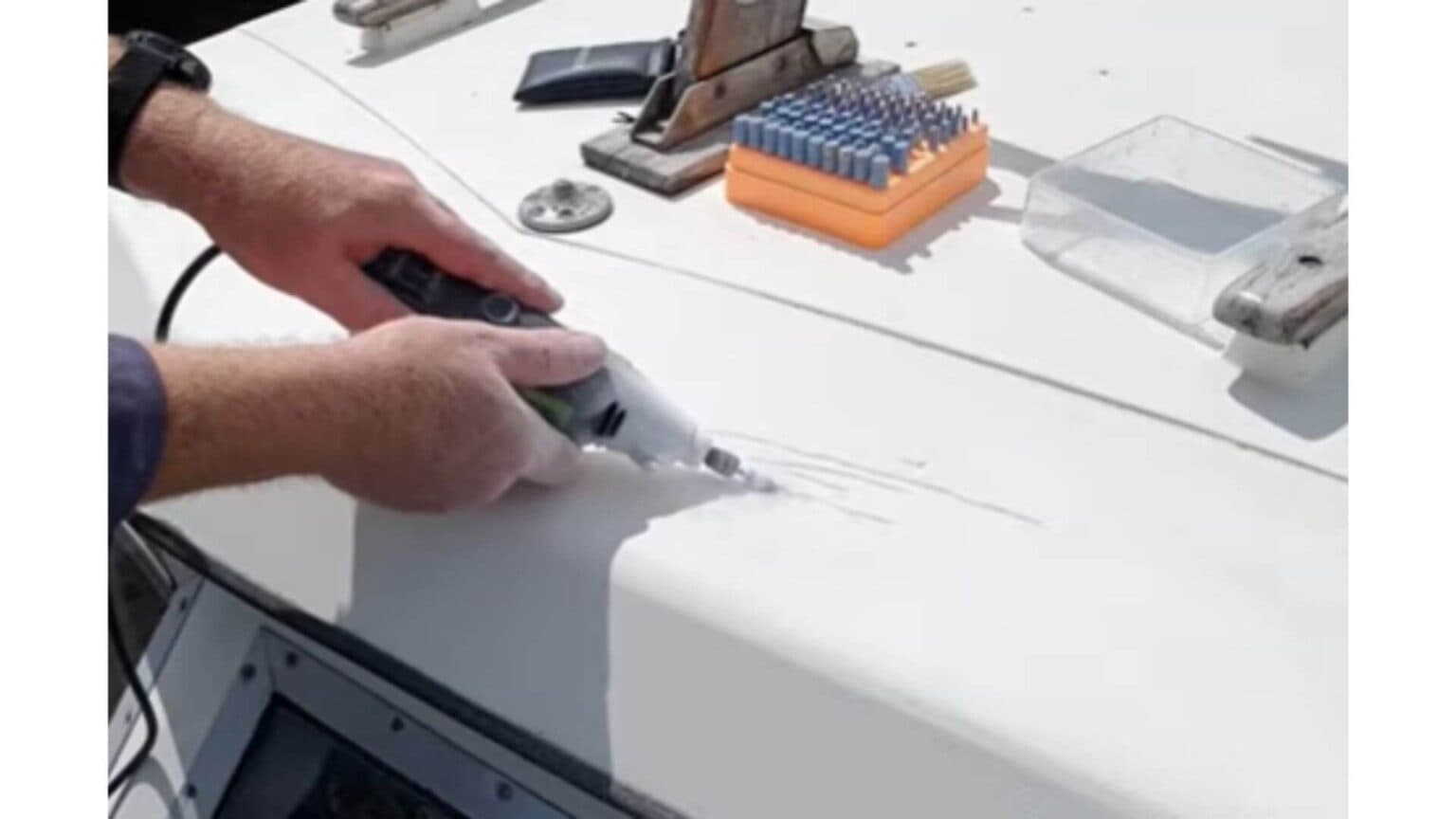
If your windlass rocks every time you raise the anchor, the problem probably isn't the windlass itself. For José-Maria Molina, owner of a 2004 Bavaria 38, that unsettling movement turned out to be a cracked fibreglass platform hiding underneath his 1,000W Lofrans Cayman — a defect that had likely been building since before he bought the boat in 2017. The repair he devised was methodical, affordable, and worth understanding in full, because this kind of structural creep is far more common on production boats of that era than most owners realise.
Spotting the Problem
Molina noticed the issue during his first summer of ownership. "Every time I raised the anchor, the whole assembly would move, making the deck feel unstable," he wrote. That instability is the kind of symptom that's easy to dismiss as a loose bolt or a minor cosmetic crack, but on a windlass platform the consequences of ignoring it compound quickly. A 1,000W electric windlass puts enormous cyclical stress on its mounting surface — every anchor retrieval is another load cycle against whatever structure sits beneath it.
With the windlass unbolted and lifted clear, the damage became impossible to ignore. The cracked fibreglass platform was plain to see, and the full extent of the deterioration only made sense once the weight of the Lofrans Cayman was no longer masking it. This is a useful diagnostic reminder: if you suspect a soft or flexing deck panel around any deck hardware, removing the fitting entirely is the only way to make an honest assessment.
The Repair Strategy
Molina's stated goal was to reinforce the base "in the simplest way possible," and the approach he took reflects exactly that discipline: no overcomplicated layup schedules, no wholesale deck replacement, just a targeted reinforcement that addressed the structural weakness directly.
The repair involved four distinct elements working together:
1. A shaped fibreglass plate, cut to match the original base geometry including its angle, with the bolt hole position preserved and the chain-drop opening into the anchor locker maintained exactly as on the original.
2. That new plate glassed onto the underside of the existing base, laminating it directly to what remained of the original structure.
3. A fabricated plastic base plate bolted to the underside of the windlass itself, providing a fresh, flat, uncracked bearing surface for the unit to sit against.
4. A stainless steel backing plate fitted beneath the deck to spread the windlass load across a wider area and add structural rigidity where the old panel had failed.
The original rubber gasket wasn't discarded. Molina cleaned it up and slipped it over the new plastic base plate, reusing the existing seal rather than sourcing a replacement. That's a small detail, but it reflects the kind of considered approach that keeps a repair both cost-effective and sympathetic to the original assembly.
Why Each Layer Matters
It's worth unpacking why this four-part approach works rather than simply glassing the crack and calling it done.
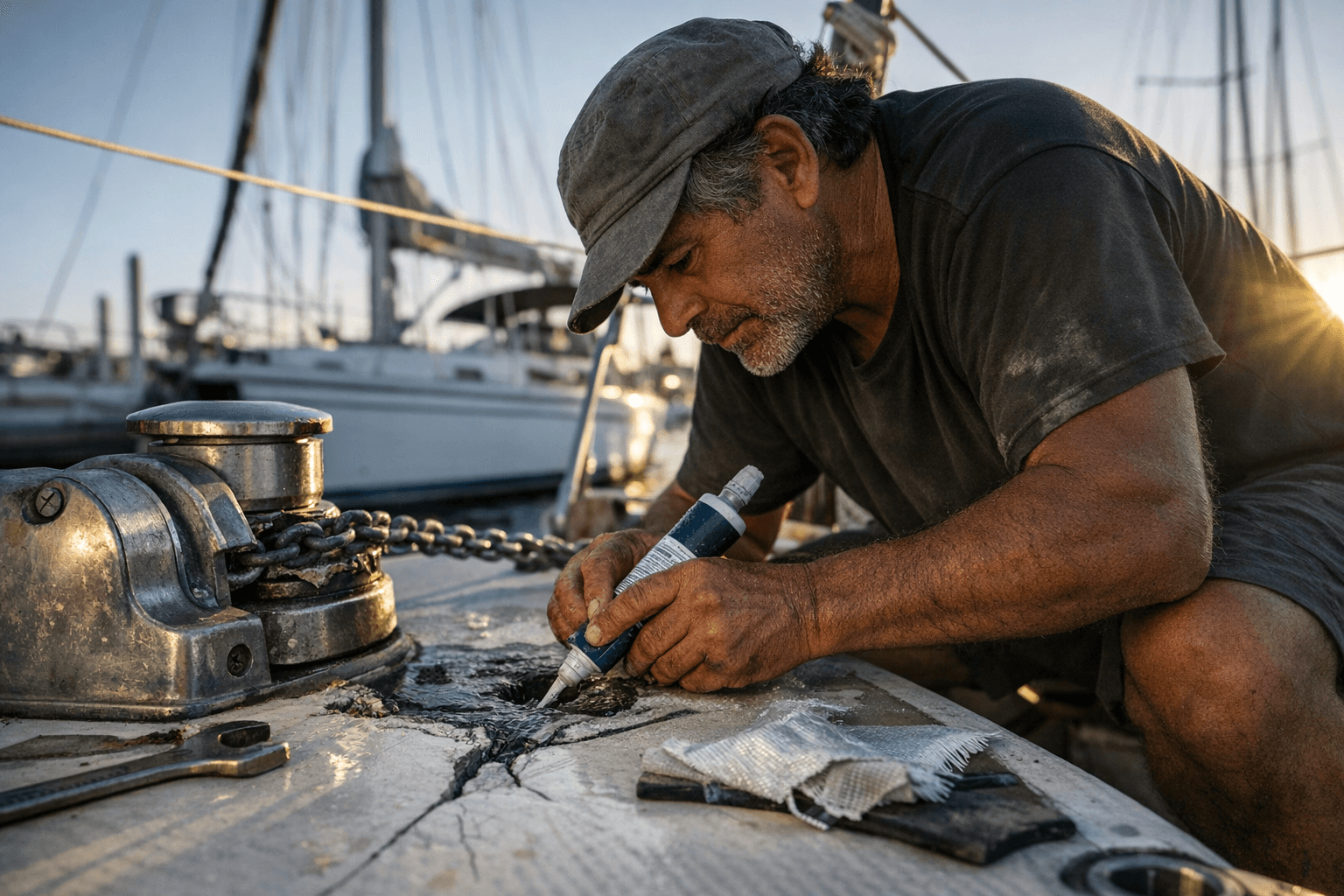
The fibreglass plate glassed to the underside of the existing base restores the structural continuity of the platform itself. A crack in a fibreglass panel doesn't just weaken that specific point; it allows flex to propagate outward along the laminate. Adding a bonded reinforcement plate distributes that load across a broader surface and prevents the crack from continuing to open under cycling stress.
The fabricated plastic base plate addresses a different problem: the windlass mounting interface. Even with the deck panel repaired, a Lofrans Cayman bolted to a restored but aged fibreglass surface still relies on that surface for alignment and load transfer. A fresh base plate gives the windlass a clean, stable platform and isolates it slightly from any residual flex in the laminate below.
The stainless steel backing plate is arguably the most important element for long-term durability. Through-deck fittings on production boats are frequently under-specified in terms of backing plate size, which is why deck panels around windlasses, cleats, and stanchion bases on boats of this age tend to develop exactly the kind of damage Molina found. A properly sized backing plate spreads the bolt loads across the inner deck skin rather than concentrating them at four or five small washers. It's the fix that should have been there from the factory.
Geometry Is Everything
One detail in Molina's account deserves particular attention: the care he took to preserve the bolt hole position and the chain-drop opening when cutting the new fibreglass plate. On a windlass installation, these aren't arbitrary dimensions. The chain must drop cleanly into the anchor locker without riding the edge of the opening; the bolt pattern must align precisely with the windlass foot. A reinforcement plate that shifts either of these even slightly can cause chain jamming or an uneven load path that defeats the purpose of the repair.
Cutting the new plate to match the original's angle is equally important. Bavaria's deck geometry in that area isn't flat, and a plate that doesn't sit flush will create point loads at its edges rather than distributing stress evenly across the laminate bond.
What This Repair Means for Bavaria 38 Owners
The 2004 Bavaria 38 sits in a segment of the production market where build quality was solid but where 20-plus years of use, UV exposure, and deck hardware cycling will eventually surface problems like this. Bavaria built a large number of these boats, and the Lofrans Cayman was a common fitment in that era. If you own one with its original windlass installation and have never lifted the unit to inspect the platform below, Molina's experience is a reasonable prompt to do so.
The repair as documented doesn't require specialist workshop facilities. The skills involved, fibreglass lamination, basic fabrication, and through-deck hardware fitting, are within reach of any sailor comfortable working in the forepeak. The materials, fibreglass sheet, a suitable plastic for the base plate, and a piece of stainless for the backing plate, are obtainable without specialist sourcing.
Practical Boat Owner's framing of the project as an example of affordable maintenance to prolong the life of ageing anchoring gear is accurate, but perhaps undersells what Molina actually accomplished: a structurally sound, properly engineered repair that addressed the root cause of failure rather than just the visible symptom. The Lofrans Cayman on his Bavaria 38 isn't just operational again; it's better supported than it likely was when the boat left the factory.
This article was produced by Prism’s automated news system from verified source data, official records, and press releases, then run through automated quality and moderation checks before publishing. The system is built and supervised by the people who set the standards it runs under. Read our full AI policy.
Did this article answer your question?