San Juan 24 review shows how to modernize a classic racer-cruiser
Brad Hite’s Crew’s Control shows why a San Juan 24 still works: the right upgrades make this quarter-tonner useful, not museum-bound.
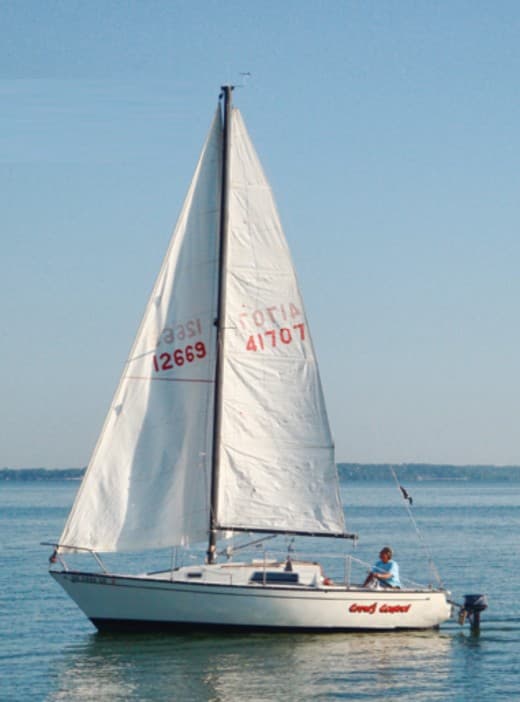
Brad Hite’s Crew’s Control, a 1977 San Juan 24 on Lake Erie, has shorepower, LED lighting, a proper vang, and decent deck hardware. It shows how a Bruce Kirby design can stay relevant without losing the quick, purposeful feel that made the boat famous in the first place.
Why the San Juan 24 still makes sense
The San Juan 24 was built to race, and that pedigree still matters when you look at one as a used boat. Clark Boat Company introduced it in 1973 after hiring Bruce Kirby to draw an International Offshore Rule Quarter Ton class boat, and the design went on to become one of the company’s biggest successes. More than 1,000 were built, and total production reached about 1,200, which is why the San Juan 24 still turns up in marinas, yacht club rows, and bargain listings.
At 24 feet LOA, 8 feet of beam, 3,200 pounds of displacement, 1,650 pounds of ballast, and a 4-foot draft, it is compact enough for the trailer-and-slip world but substantial enough to feel like a real keelboat. A PHRF average around 219 puts it squarely in the club-racing-and-weekend-cruising lane, not the disposable dinghy lane.
The Clark Boat Company backstory that still shapes the boat
Clark Boat Company did not arrive at the San Juan 24 by accident. Robert Clark’s company started in Seattle, Washington, and first built smaller dinghies before moving up to the San Juan 21, which became the first “San Juan” and a major success. By 1972, Clark had opened an East Coast plant at New Bern, North Carolina, which set the stage for broader production and helped the line spread beyond the Pacific Northwest.
The San Juan 24 came into the market as the grown-up version of that formula, a more serious quarter-ton boat with enough speed to matter and enough volume to keep it livable. After Clark Boat Company later went bankrupt, the molds and rights were split between West Coast and East Coast groups, with eastern production moving to the Tanzer factory in Edenton, North Carolina. Both successor production groups ceased operations in 1988.
What Crew’s Control gets right
On Crew’s Control, Brad Hite has added shorepower and LED lighting, installed Garhauer blocks and a custom vang, replaced the fixed portlight lenses, buffed the aluminum frames, added weep holes, installed roller furling and lazy-jacks, and refinished all the interior wood and exterior brightwork.
That list tells you where the money goes on a practical San Juan 24. Electrical upgrades make overnighting and dockside charging easier. Better blocks and a custom vang help the boat sail the way the hull was meant to sail. Roller furling and lazy-jacks reduce the friction that keeps older boats from getting used. The portlight work, frame buffing, and added weep holes matter too, because water intrusion and cloudy acrylic are the sort of small failures that make a tidy boat feel tired fast.
The hidden refit costs worth inspecting
A cheap San Juan 24 can turn into an expensive one if the buyer only looks at cosmetics. The Hite boat shows the areas that deserve a hard look before money changes hands: the electrical system, the deck hardware, the sail-handling gear, the portlights, and the finish work. If a boat still has old wiring, no shorepower, brittle lenses, worn blocks, or a sloppy vang setup, the refit bill starts climbing immediately.
The same goes for the parts most people call “detail work.” Aluminum portlight frames need attention if they are oxidized or corroded, and the drains need to work if you want to keep water from pooling where it does not belong. Interior wood and exterior brightwork are not just vanity jobs on a boat like this, because neglected finish often hints at a bigger maintenance backlog.
Who gets the most out of one
The best San Juan 24 owner is the person who likes incremental improvement. This is not a boat for someone who wants to launch it, ignore it, and expect it to feel new. It rewards an owner who can handle electrical upgrades, swap hardware, service furling gear, and keep wood and trim in shape.
It also helps if you enjoy a boat with a clear purpose. The San Juan 24 is a well-built, IOR-inspired racer-cruiser with a good pedigree and enough performance to stay interesting.
This article was produced by Prism’s automated news system from verified source data, official records, and press releases, then run through automated quality and moderation checks before publishing. The system is built and supervised by the people who set the standards it runs under. Read our full AI policy.
Did this article answer your question?