Siren 17 Restoration: Prepping a Small Hull for Fiberglass Lamination
Mix resin before the hull is ready and you're chasing the clock. Episode 4 of SneakAway Adventures' Siren 17 series shows what real prep looks like.
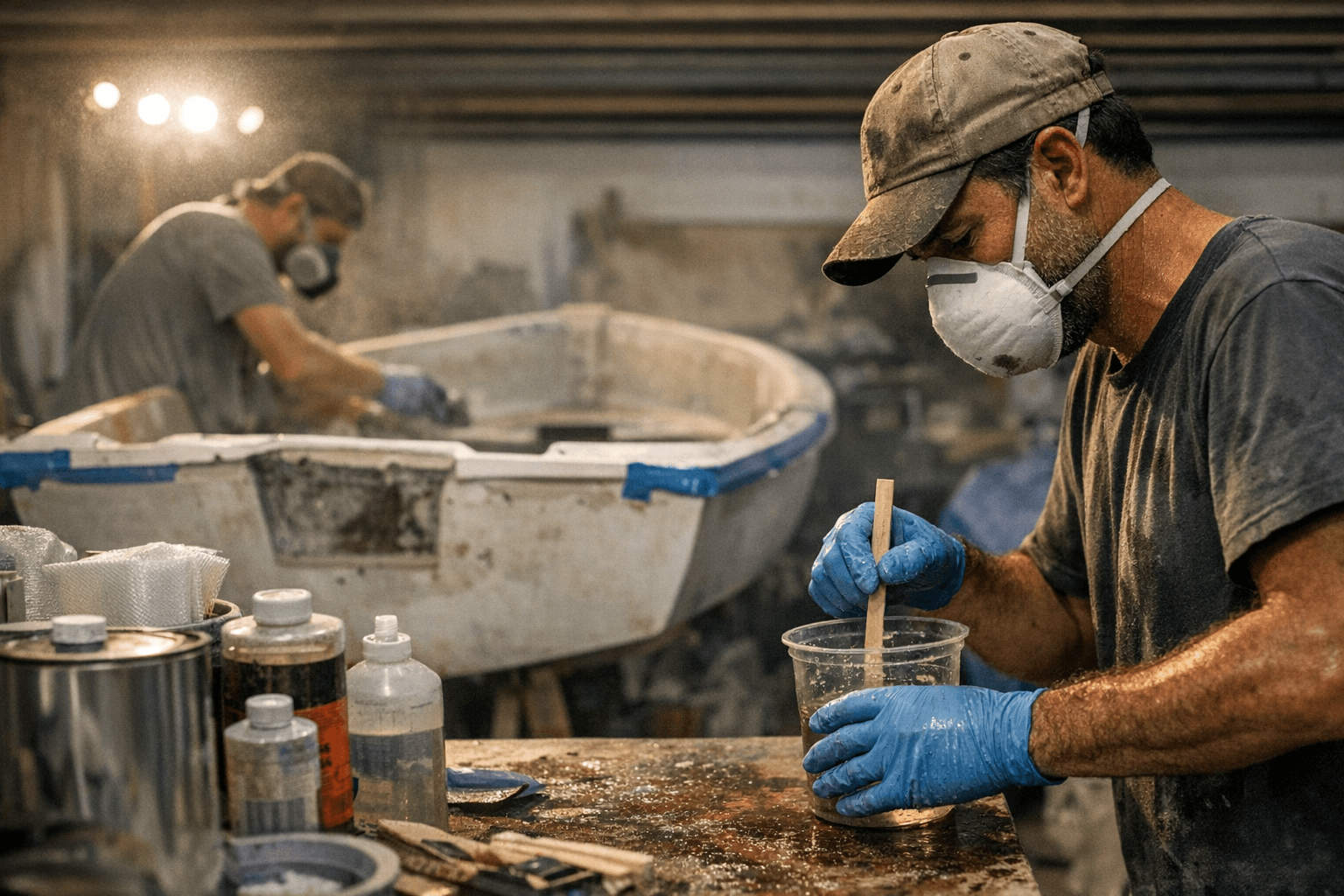
Fiberglass is a forgiving material until you treat prep as a formality. Mix resin before your bonding surfaces are clean, your cloth is cut, and your interior is protected, and you'll find yourself scrambling against open time with nothing properly in place. That single failure mode accounts for more blown lamination jobs than any wrong resin ratio or misread data sheet. Episode 4 of SneakAway Adventures' Siren 17 Sailboat Restoration series is essentially a 10-minute argument against rushing: a family-run channel out of British Columbia documenting the grinding, masking, cutting, and organizing that has to happen before a single drop of epoxy touches the hull.
The Reality of the Workshop
The barn workshop setting matters here. SneakAway Adventures isn't operating out of a professional boatyard with climate-controlled spray bays and industrial dust collection. They're working in a barn in British Columbia, which means the conditions they're managing, dust migration, temperature variation, and limited tooling, are close to what most DIY refitters actually deal with. The episode opens on exactly that reality: grinding dust, improvised lighting, and the organized chaos that defines a family project mid-stride. What it demonstrates is that a modest space can still produce sound structural fiberglass work when preparation standards stay strict throughout.
Grinding and Surface Prep
The surface work comes first, and it's where the episode spends a meaningful share of its runtime. The hosts show angle grinders fitted with backing pads working across the bonding areas of the Siren 17 hull, removing remnants of old hardware and opening up clean fiberglass substrate for the lamination ahead. Scoring and sanding the areas to be laminated isn't cosmetic; it's the mechanical key that gives new laminate something to grip. Skip it, or rush it, and the bond will fail at the interface no matter how clean the epoxy mix is.
Vacuuming and dust control run alongside the grinding throughout, and the episode frames them as continuous work rather than a final wipe-down. Fiberglass dust sitting on a bonding surface contaminates it. Dust in the air contaminates wet resin and freshly laid cloth. Less experienced hands often treat dust removal as a single step at the end; the episode shows why that instinct is wrong.
Hardware Removal
Before any grinding begins in earnest, hardware has to come off. The episode documents the removal of old deck and cabin fittings from the Siren 17, a step that consistently gets underestimated for time and effort. Fasteners corrode, sealant bonds, and fittings that look straightforward often require heat, penetrating oil, and patience. Getting hardware fully removed before prep work starts means grinding can reach every edge of the bonding zone cleanly, without the compromises that come from working around fittings left in place to save an hour.
Protecting the Interior
Cabin interior prep gets dedicated attention in the episode, and it deserves it. The hosts show the process of protecting interior surfaces, including peeling wallpaper and covering interior furniture, before lamination work begins. Epoxy spatter and fiberglass dust travel further than expected; materials that seem distant from the work zone end up contaminated if they're not shielded. Beyond aesthetics, epoxy on interior surfaces that weren't meant to be bonded can create unintended adhesion problems and complicate future work inside the cabin. The discipline of taping and covering before touching the grinder separates methodical refitters from people who end up running a cleanup project parallel to the refit.
Cloth Selection: Biaxial and Chopped Strand Mat
The episode makes a working distinction between cloth types for different stress zones on the Siren 17, and it's a distinction worth internalizing before ordering materials. Biaxial cloth, with its fibers running at opposing angles, handles directional load well, making it appropriate for structural zones like hull seams and high-stress deck regions. Chopped strand mat conforms well to complex curves and builds thickness where needed, functioning effectively as a transition layer between fabric types. Using the right cloth in the right location isn't a refinement reserved for professional builders; it's basic structural logic, and the episode shows the hosts working through those choices before any cutting starts.
Pre-Cutting Plies: The 10% Overlap Rule
If one habit defines the episode's practical advice, it's pre-cutting. The hosts cut and pre-lay all fiberglass cloth before mixing any resin, sizing each ply with a 10% overlap allowance built in. That overlap ensures the lamination schedule achieves full coverage without relying on hasty trimming or mid-session piecing while epoxy is curing in the pot.
Pre-cutting is the difference between a lamination session that feels controlled and one that devolves into wet-cloth improvisation. Once resin is mixed, the clock is running; every minute spent measuring and cutting cloth is pot life gone. Laying out all plies in sequence, staged and ready, allows methodical progress through the lamination rather than reactive scrambling.
Tools and PPE
The tools demonstrated are accessible: angle grinders with backing pads for surface prep, shop vacuums for continuous dust management, and basic measuring tools for cloth sizing. None of it requires professional boatyard equipment. What it does require is using the right abrasive at each stage and keeping the work area clean between steps rather than at the end.
Ventilation and personal protection run as a constant undercurrent throughout the episode. Working with fiberglass dust and epoxy in an enclosed barn makes respiratory protection non-negotiable: a properly rated respirator, nitrile gloves, and eye protection are the baseline for any lamination prep session. The dust generated by grinding fiberglass is a long-term respiratory hazard, not a nuisance to tolerate for the sake of moving faster.
Timing and Patience
The 8-to-10-minute runtime of Episode 4 compresses a significant amount of real work. The actual prep process it documents, from hardware removal through grinding, interior protection, and cloth pre-cutting, takes considerably longer in practice. One of the episode's quieter lessons is timeline calibration: experienced refitters budget prep time generously, knowing that grinding and masking expand to fill the care they're given. Rushing toward the lamination is precisely the pattern that produces substandard bonds and the rework that follows.
The SneakAway Adventures family's candid approach, acknowledging minor mistakes and how they addressed them, gives the episode credibility that polished tutorial content often lacks. A barn in British Columbia, an angle grinder, carefully pre-cut cloth, and the discipline to prepare fully before mixing: the Siren 17 project is a concrete reminder that structural fiberglass work is decided long before the resin pump moves.
This article was produced by Prism’s automated news system from verified source data, official records, and press releases, then run through automated quality and moderation checks before publishing. The system is built and supervised by the people who set the standards it runs under. Read our full AI policy.
Did this article answer your question?