Smart Locker Trays Turn Deep Boat Storage Into Usable Space
Deep lockers stop swallowing small gear when you turn the dead space up top into a tray system that keeps tools visible, sorted, and safe underway.
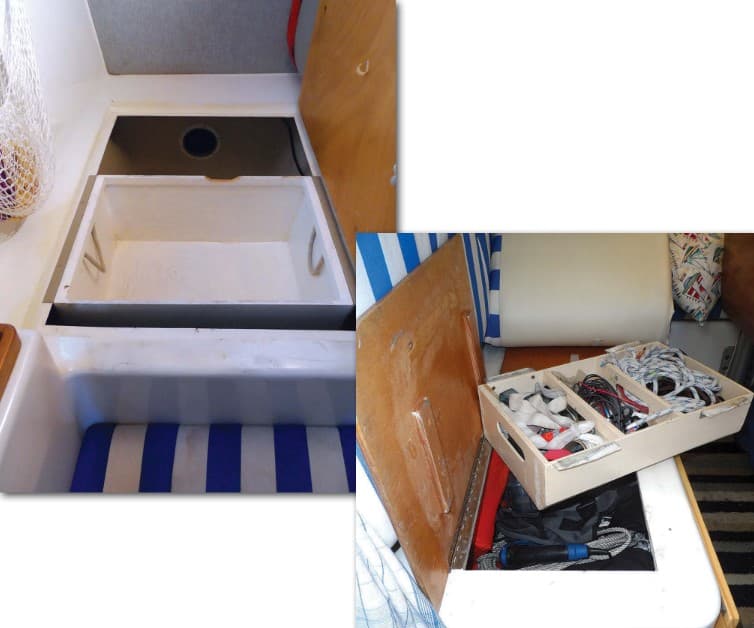
Why the upper locker space matters
The best part of this idea is that it fixes a problem every cruiser knows: deep lockers look generous until a light item slides into the back and effectively vanishes. On older boats, especially the ones with big, awkward storage spaces, the top of the locker becomes a black hole for spare parts, cruising supplies, and tools you meant to grab again tomorrow.
That is why this tray concept works so well. It uses the upper region of the locker, the part most boats waste, to keep gear where you can see it and reach it before the boat starts moving, heeling, or pounding through chop. The payoff is not just tidiness. Better storage cuts the time spent hunting for things, lowers the odds of crushing or soaking gear, and makes it less likely that something important gets forgotten at the bottom until next season.
The problem this solves on real boats
Good locker design is rare on cruising sailboats. In one cockpit-locker project, the storage space had become a tangle of shorepower cables, docklines, anchor rode, siphon hoses, water hoses, and fender boards. In another deep galley locker, the only access was from the top, which meant reaching the bottom required unloading or upending everything above it. A separate storage project pointed out that many forepeak and cockpit lockers are triangular, which is exactly the shape that sends gear sliding to the lowest point and leaves you digging for it later.
That pattern matters because it shows the issue is not just clutter. It is access. When a locker is hard to use, you do not need more loose bins. You need a structure that matches how people actually stow and retrieve gear on a moving boat.
Why trays beat a pile of bins
The tray solution is smart because it creates a second level inside the locker without turning the space into a permanent project. Good Old Boat describes the trays as organizing the upper regions of deep lockers, and that is the key idea. You keep the heavy, bulkier stuff below and give the light, easy-to-lose items a defined home above it.
The concept is adapted from a traditional seaman’s chest, which is a useful clue. Sailors solved this problem long before molded interiors and plastic organizers came along, and the old chest idea still makes sense on a modern cruiser: separate the small stuff, keep it visible, and stop it from disappearing into dead space.
A quick test before you drill anything
If you want to know whether a locker is a good candidate, do a simple check before you start fitting hardware:
1. Open the locker and look at how much of the space is only useful from the top.
2. Reach for the bottom without pulling everything else out. If that turns into a full unload, the locker is a candidate.
3. Watch what happens when the boat moves or when you shake the contents by hand. If small gear slides, disappears, or stacks into a mess, the locker needs structure, not just containers.
That is the point where a tray system starts to make sense. If the space is shallow and already easy to use, you probably do not need the extra layer. If the locker is deep, triangular, or awkward to access, the tray gives you usable volume where there was none.
Why the no-drill part is such a big deal
One of the strongest details in this project is that the trays can be added without cutting or drilling into the boat. That makes the upgrade appealing for owners who want to improve stowage without opening up a bigger fiberglass job or committing to permanent changes.
It also keeps the risk down. A low-risk, reversible retrofit is easier to live with than a mod that looks good in the yard and becomes a headache once the boat starts working underway. If you are trying to make an older boat feel more orderly without a rebuild, that matters.
The seamanship logic behind a simple storage fix
This is not just a household-organizer trick translated onto a boat. It fits the same seamanship logic behind the American Boat & Yacht Council’s safety standards and the International Maritime Organization’s Code of Safe Practice for Cargo Stowage and Securing, adopted in November 1991. Both are grounded in the same basic truth: motion creates hazards, and things that are not properly arranged or secured become problems.
That is why a locker tray deserves more respect than it usually gets. It is not about pretty storage. It is about preventing gear from shifting out of sight, hiding where you cannot reach it, or turning into a jammed-up pile when the boat rolls. On a cruising sailboat, that kind of organization saves time, protects equipment, and keeps the locker from becoming a surprise every time you open it.
What this means for your boat
If your lockers are deep enough to swallow small gear, this is one of those quiet upgrades that pays you back every time you go sailing. It makes the boat easier to live with, easier to provision, and less frustrating when you need the right part now, not after a full locker dump.
That is the real value of smart locker trays. They do not add space out of nowhere. They turn wasted volume into storage you can actually use, and that is a lot closer to a better boat than most flashy refits ever get.
This article was produced by Prism’s automated news system from verified source data, official records, and press releases, then run through automated quality and moderation checks before publishing. The system is built and supervised by the people who set the standards it runs under. Read our full AI policy.
Did this article answer your question?