Step-by-Step Deck Core Repair Shows Rotten Hatch Can Be Saved
A rotten hatch core does not always mean a yard bill. This Corsair F-24 repair shows how to judge the damage, work from the easier side, and save the original skin.
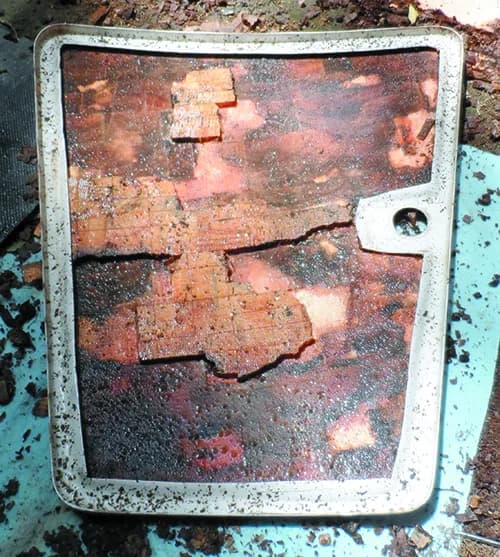
A hatch that bends underfoot is the warning sign every owner dreads, but the Corsair F-24 case shows why a soft deck core is not automatically a yard bill. The anchor-locker hatch still had intact skins when it came apart, and that single detail kept the job inside home-repair territory instead of turning it into a full structural rebuild.
The decision point: can the core still be saved?
The first judgment call is simple: if the skins are still intact, the repair is often worth attempting. In this Corsair Marine hatch, the factory had skimped on resin in the internal skin, leaving hundreds of pinholes that slowly became a moisture pathway. Over thousands of warming-and-cooling cycles, humid anchor locker air was pulled into the core, the balsa stayed damp, bacteria moved in, and the material decayed to the consistency of garden mulch.
That is the difference between a nuisance and a crisis. Cored fiberglass decks are common across sailboats, and once moisture reaches the core, the risks are not just softness underfoot. Water intrusion can lead to core rot, delamination, and a real loss of structural rigidity. Captain Frank Lanier, a 27-year Coast Guard veteran and Accredited Marine Surveyor with more than 30 years in marine and diving work, gives that diagnosis real weight.
What tells you the repair is still manageable
The best sign in the Corsair F-24 case was that the hatch bent noticeably under foot, but the skins had not yet cracked. That kept the repair realistic because the damage was severe enough to justify opening the panel, yet still contained enough to avoid a wider rebuild. If you can remove the hatch, isolate the wet section, and keep the surrounding laminate sound, the project often stays in the owner-repair zone.
The problem becomes more serious when the damage spreads beyond the local panel, or when the skins have started to fail. At that point, the job stops being about swapping out rotten core and starts looking like a larger laminate and structural repair. That is the moment when moisture spread, hidden delamination, and repair access should push the decision toward a shop or yard.
Choose the easier side before you cut
Practical Sailor’s big practical point is that deck-core work can be done from either side of the panel. Exterior access is often simpler because gravity helps, the old material falls away instead of onto you, and bonding in new core is straightforward. Interior work can hide the repair, but it may force you to remove liners and adapt the laminating process to the boat’s geometry.
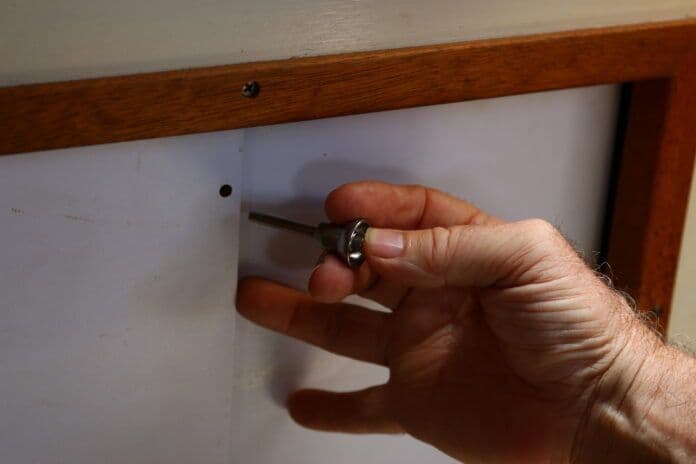
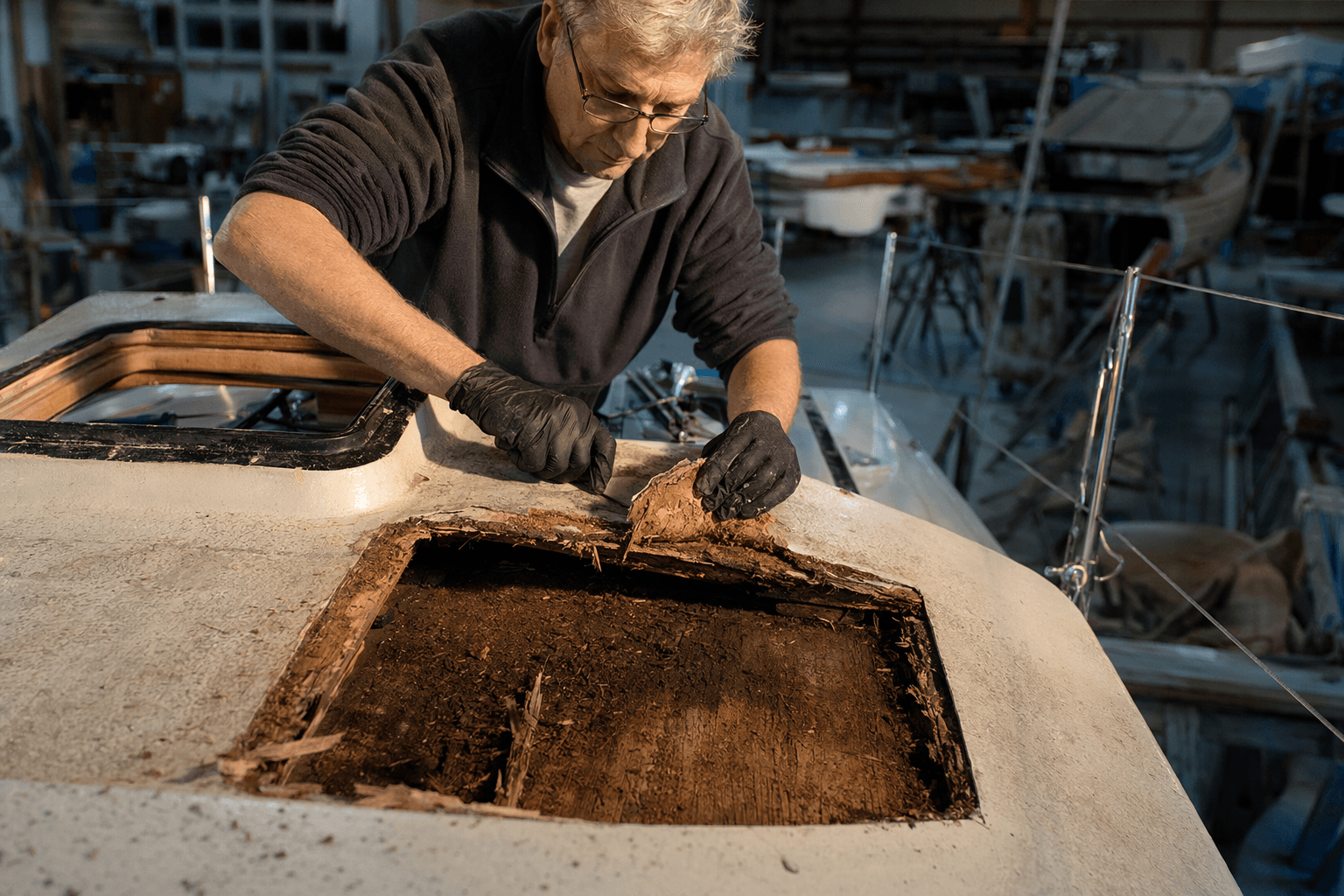
That choice matters because larger jobs usually favor working from above, while smaller jobs can go faster from inside depending on the shape of the deck and the way the structure is built. On the Corsair F-24 hatch, the panel was flipped and the outer skin was cut away with careful shallow passes from an angle grinder and a vibrating multi-tool. A drywall knife and pliers helped peel the skin back, and the write-up makes the useful point that if the skin is intact, it is worth saving because it preserves the nonskid pattern and the original curve.
The tools that keep a small repair from becoming a bigger one
The repair reads like a reminder that deck-core work is as much about restraint as it is about removal. Gloves need to be changed often, disposable brushes keep epoxy work clean, polyethylene spreaders help shape the adhesive, and a wire cup brush strips rotten core without chewing into the second skin. That last point is critical: once you destroy the inner laminate, you have turned a core replacement into a much more complicated glass job.
Once the damaged balsa is cleaned out, the new core is laminated in with epoxy resin and biaxial cloth. That combination is not fancy, but it is the backbone of a proper structural repair because it restores the skin-to-core bond and returns stiffness to the panel. A careful owner working with the right tools can make that joint strong enough to keep the hatch in service instead of turning it into scrap.
Why sealing is the real long-term fix
The Corsair hatch also points to the bigger lesson in deck maintenance: sealing is what keeps the next soft spot from forming. Practical Sailor has long stressed that proper sealing around hardware is essential, because water often enters through deck penetrations and works its way into the core. It also notes that manufacturers sometimes de-core high-load areas so fittings can be mounted without drilling into core, which means owners still have to protect the surrounding laminate when adding or replacing hardware.
That is where small mistakes become expensive. A patch that is repaired but not sealed correctly can let moisture return, and then the same cycle of wet core, flex, and delamination starts all over again. The money-saving move is not just to fix the rotten spot, but to shut the door on the leak path that caused it.
The broader repair picture from other hands-on jobs
Heather Francis’ Cruising World account from a Newport 41 foredeck in Kudat, Borneo, Malaysia, reinforces how common these discoveries are. In that job, the balsa came apart in 2-inch tiles, which is a reminder that end-grain orientation gives superior compression strength, but only when the core stays dry and bonded. The same repair also uncovered old electrical wiring buried in the core, a good warning that opening a deck can reveal more than soft wood.
Epoxyworks makes the same practical point from another angle: damaged balsa core can be repaired from the topside or below deck, and topside access may be easier if the boat is already getting new non-skid. WEST SYSTEM Epoxy backs that repair approach with guidance in both Fiberglass Boat Repair & Maintenance and Gougeon Brothers on Boat Construction, two reference books that cover cored laminate repairs and hardware installation. Together, those sources point to the same conclusion as the Corsair hatch: the right repair depends less on panic than on judging the moisture spread, the access you have, and whether the skins are still worth saving.
A rotten hatch core can look like the start of a major rebuild, but this step-by-step example shows how often it is still a controlled repair. If the damage is bounded, the skins are sound, and the sealing is done right, a soft spot can be turned back into a stiff, usable hatch before it ever becomes a structural problem.
This article was produced by Prism’s automated news system from verified source data, official records, and press releases, then run through automated quality and moderation checks before publishing. The system is built and supervised by the people who set the standards it runs under. Read our full AI policy.
Know something we missed? Have a correction or additional information?
Submit a Tip