Screen-Free Sailing Fades as Electronics Reshape Modern Seamanship
Electronics make sailing safer and easier, but they also hide new weak points. The fix is simple: keep the gear, and build a backup plan before one bad sensor stops the boat.

The cockpit is not off-grid anymore
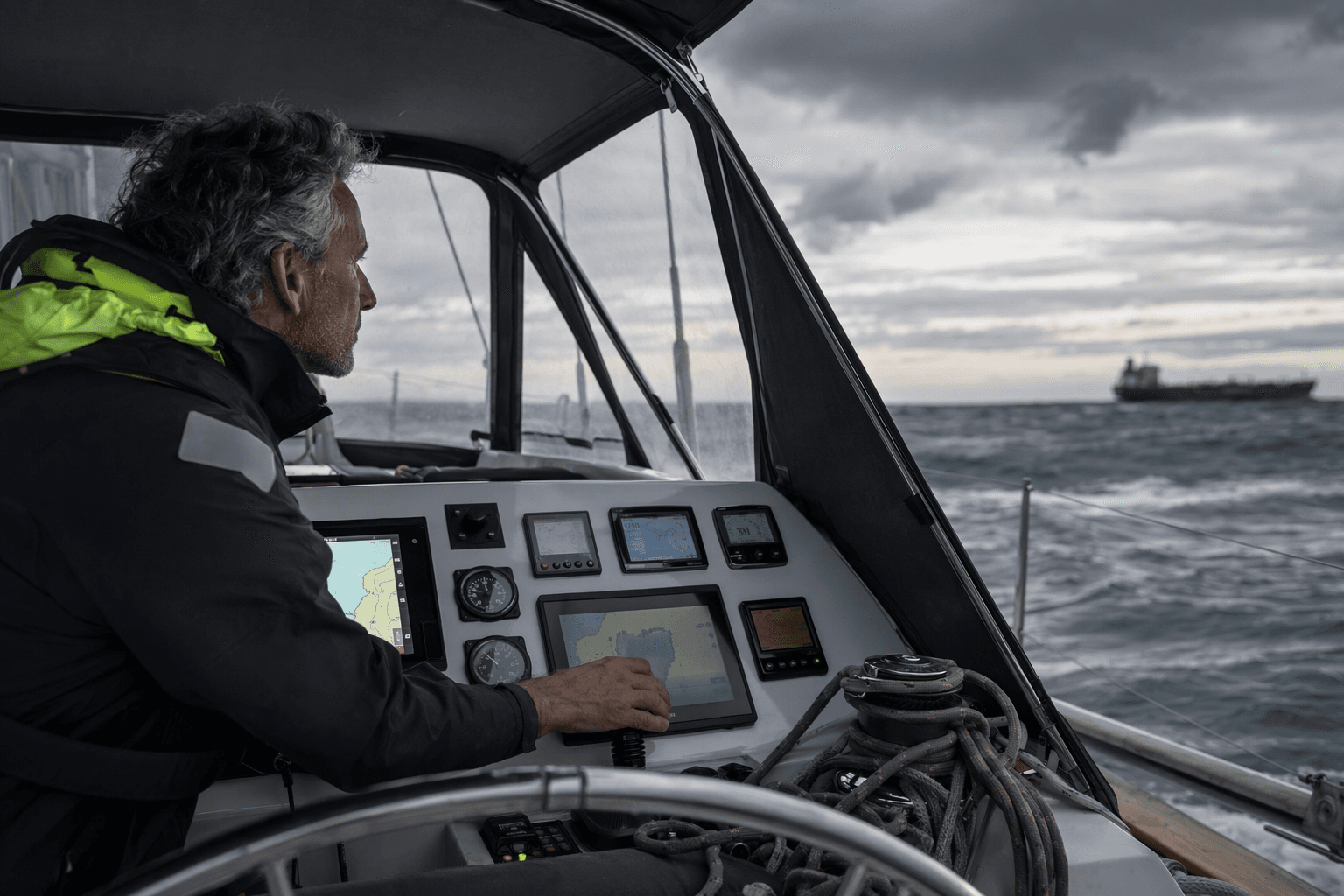
The hard truth is that modern sailing has made it very easy to forget how much of the job now runs through a screen. Chartplotters, autopilots, wind and speed instruments, and phone apps have become normal enough that they can feel as essential as the jib sheet in your hand. Latitude 38, the West’s premier sailing and marine magazine, says exactly that without sneering at the change: this is no nostalgia piece, it is a reality check for sailors who still want to get there safely and come back under their own power.
That matters because the old appeal of sailing was always partly about leaving the digital noise ashore. Small boats and dinghy sailing still deliver that clean, direct feeling, but once you move into cruising or serious day sailing, the electronics start earning their berth. They reduce workload, cut fatigue, and make long passages less punishing, which is why the modern boat is often a mix of feel, seamanship, and silicon.
When the gear earns its keep
There is a reason Simrad, part of Navico Group, talks up more than 75 years of experience building chartplotters, radar, autopilots, sonar technology, communications, satellite navigation, and multifunction displays. The company’s autopilot guide makes the pitch in plain language: an autopilot can lock a preset course, make small helm corrections, and lower workload and fatigue while improving situational awareness and safety. That is not marketing fluff when the crew is tired, short-handed, or trying to keep the boat moving in a long leg.
Raymarine sells the same basic promise from a slightly different angle. Its sailboat electronics push radar for dense fog or rain and Evolution autopilots for course keeping. In the real world, those are not luxury extras. They are the tools that make a night landfall less ugly, a fog bank less stressful, and a solo watch less draining.
The failure rarely starts where you are looking
The most useful part of the Latitude 38 piece is not the broad argument, it is the troubleshooting story. The crew was chasing a failing Simrad AP28 autopilot and a wind-direction indicator that had started misbehaving. They cleaned wire leads, replaced the rudder reference unit, reset the autopilot, and then climbed to the masthead to work on the anemometer. That is the sort of repair chain every DIY sailor recognizes immediately: one symptom becomes three, and each fix exposes another weak link.
This is where the National Marine Electronics Association’s autopilot guidance becomes more than theory. The heading sensor is the heart of an autopilot system, and heading is not the same thing as course. If that sensor chain is dirty, loose, or wrong, the symptoms can look random even when the problem is very specific. A bad display is annoying; a bad sensor path can make the whole system feel haunted.
The ugly detail here is that a clean-looking connection does not always mean a healthy one. Latitude 38 notes that even after the plug looked shiny, the anemometer problem got worse. That is the modern boat in miniature: wires, sensors, and networked components are all linked, so the fault you can see is often not the fault that matters.
Do not lose the old seamanship just because the screen is working
The counterweight to all this is not a romantic return to pre-electronics purity. It is keeping the old cues alive even when the screen is on. Telltales, those yarn or ribbon indicators on the sails, still tell you what the air is doing over the cloth. Practical Sailor has long treated them as standard gear, but also points out that they wear out and need periodic inspection and replacement.
That is the part too many modern sailors skip. Look at the yarns on the shrouds. Watch the ripples on the water. Read the jib shape. Feel what the boat is telling you before you stare at a display. The electronics can confirm what you already know, but they should not become the only way you know it.
Latitude 38’s nod to Lachlan MacLean working the wooden Bird boat Oriole along the Angel Island shoreline drives the point home. A boat that simple, moving through San Francisco Bay, reminds you that good seamanship still lives in the basic loop of wind, water, and trim. The gear can help, but it cannot replace the habit of looking.
The quiet convenience that adds another layer of dependence
The article’s mention of an Ewincher electric winch handle is a good example of where modern sailing gets interesting. Ewincher says its current handle weighs 2.2 kg, can deliver up to 90 Nm of torque, and works in electric, manual, and combined modes. It is also IPX6 water resistant and includes a winch-lock system. On paper, that is a very tidy solution for mast work and heavy cranking.
In practice, it is exactly the kind of tool that sums up the modern compromise. It makes hard jobs easier, especially when you are already tired or working aloft, but it also adds a battery-powered helper to a boat that already depends on a lot of batteries. That is not a reason to skip it. It is a reason to understand where convenience ends and vulnerability begins.
Build the backup plan before you need it
If you want a real low-tech resilience plan, build it around the systems that fail hardest when the boat gets busy. Do not wait for the autopilot to go sideways, the phone app to die, or the masthead sensor to act up.
- Navigation backup: carry a paper chart for the area you are sailing, keep a magnetic compass you trust, and practice reading the boat by eye. If the chartplotter goes blank, you should still know your heading, your set, and your next landmark.
- Sensor sanity: know the difference between heading and course, because that distinction is the key to diagnosing a bad autopilot chain. If the boat is hunting, the answer may be in the sensor path, not the drive unit.
- Communication backup: do not make your phone app the only plan. Keep a simple way to talk and a simple way to signal, and make sure the crew knows the basic words and hand signals before the conditions get messy.
- Daily-use backup: keep telltales in good shape, carry the tools to clean and inspect wire leads, and be ready to run gear in manual mode when the electric solution is not the right one. If you use an electric winch handle, know how to finish the job by hand too.
The real lesson is not that screen-free sailing is gone. It is that the modern boat now asks for two skill sets at once: the judgment to use electronics well, and the seamanship to keep sailing when they do not. That balance is what keeps a single bad sensor from becoming a single point of failure.
This article was produced by Prism’s automated news system from verified source data, official records, and press releases, then run through automated quality and moderation checks before publishing. The system is built and supervised by the people who set the standards it runs under. Read our full AI policy.
Did this article answer your question?