Unsupported Furling Extrusion Warps on Trailer, Delays Catalina 250 Launch
A warped furling extrusion turned a simple Catalina 250 WB launch into a rigging fight, proving that trailer support matters as much as the sail.
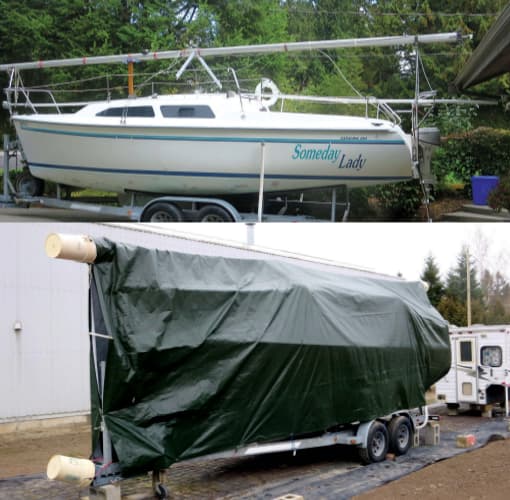
A small bend that can stop a launch
A furling headsail is supposed to make life easier on a Catalina 250 WB, not harder. On a trailerable boat that lists a dry displacement of about 2,400 pounds, with a 30.36-foot forestay and a mast height from DWL of 33.25 feet, every trip to the bow matters, especially in the Pacific Northwest where tide, current, and weather changes can turn foredeck work into a chore. That is why so many owners in this class choose roller furling in the first place.
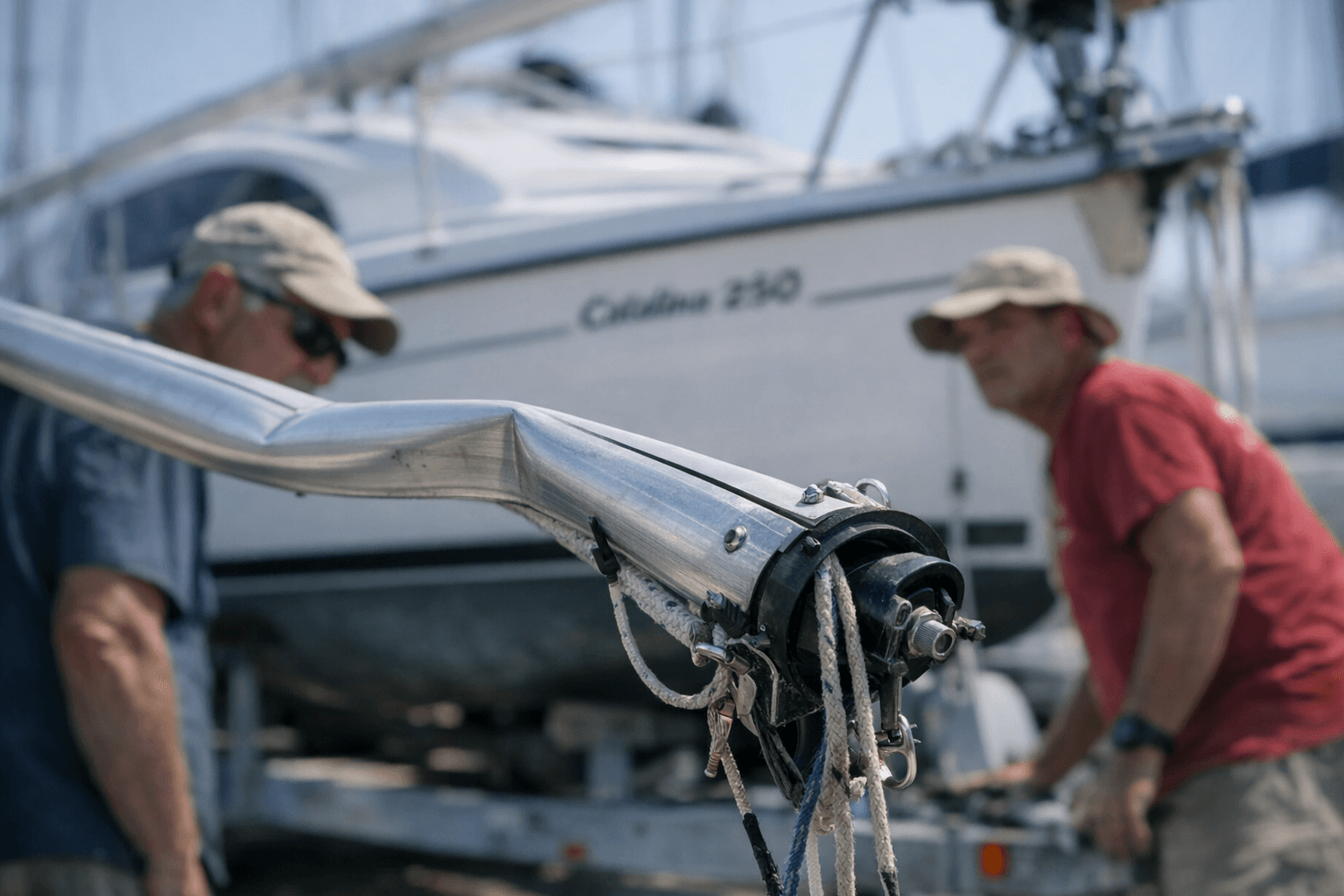
The surprise in this case was how little it took to turn convenience into delay. After two seasons sitting on a trailer under a tarp, the new furling extrusion had been left unsupported, tied to the mast and only partly propped by a PVC pipe. Heat buildup under the cover and poor support left the plastic foil bent and sagging. When launch day finally arrived, the distorted extrusion made it hard to connect the forestay, and the backstay turnbuckle had to be eased off almost to its limit just to get the pin in place.
Why a furler is not just another loose piece of deck gear
The mistake here is easy to make because the furler looks harmless when the boat is at rest. It is not a sailbag, a dock line, or a coil of running rigging that can be stuffed wherever there is room. A CDI Flexible Furler is designed to fit over an existing forestay so it can reef and furl the sail, which makes it a structural part of the headsail system as well as a convenience item. On boats under 40 feet, CDI says this approach has been one of the simplest and most affordable ways to manage a headsail, and the company says it has been providing furling systems for more than 40 years.
That is exactly why the damage matters. The whole point of furling on a small cruiser is to cut down on foredeck exposure and simplify sail handling, but that same hardware can be sensitive to storage conditions. Once an extrusion takes a bend or a sag, the problem does not stay cosmetic. It can show up at the worst possible moment, when the rig is going back together and every inch of alignment counts.
The straight, supported storage rule
CDI’s trailer guidance leaves very little room for improvisation. The extrusion should be strapped to the mast horizontally, supported at the end with a 2x4 or a PVC tube, and kept as straight as possible with no sag or twist. That is the whole logic behind a simple restraint system: prevent the foil from carrying its own weight in a way it was never meant to carry it. A furler that is held straight on the trailer is far less likely to kink, warp, or create the kind of launch-day frustration that follows a season of neglect.
The warning gets even sharper in the manual’s language. Laying the luff on the ground with weights will not work, can form kinks, and voids the warranty. CDI also backs the Flexible Furler with a 10-year limited warranty, which is a strong reminder that the company expects owners to treat the system like precision equipment, not disposable hardware. If the foil is not supported correctly, the damage is not just mechanical. It can become an expensive warranty problem too.
A simple off-season checklist helps keep the extrusion honest:
- Strap the furler to the mast horizontally instead of letting it hang free.
- Support the outer end with a 2x4 or PVC tube so the foil does not sag.
- Keep the extrusion straight, with no twist and no visible curve.
- Avoid piling weight on the luff or laying it on the ground.
- Inspect the foil before launch, not after the mast is already going up.
Why this matters beyond one bent extrusion
The reason this story resonates in the DIY sailing world is that furling systems have always been sold on safety and efficiency. Practical Sailor noted years ago that roller furlers “keep the crew off the bow,” and that is still the key promise for small-boat owners who want to reef and furl without turning every sail change into a foredeck workout. In its 1996 owner survey, CDI’s Flexible Furler ranked second, only 1 percent behind first place, and owners rated it ahead of Furlex, Harken, Schaefer, and ProFurl. That kind of standing did not come from gimmicks. It came from gear that reduced work where it matters most.
The flip side is that furlers can be unforgiving when the rig is out of tune or the hardware is allowed to take a load it was never designed for. Practical Sailor’s later furler coverage warned that halyard wraps and bad rig tune can cause poor furling performance and serious damage. Harken’s MKIV manual goes even further, warning that a halyard wrap can damage the unit and even cause the mast to fall. That is the larger lesson here: a furling system is only as forgiving as the way it is installed, tuned, and stored.
What the Catalina 250 WB example teaches trailer sailors
The Catalina 250 WB is exactly the kind of boat that tempts owners into practical shortcuts. It is light enough to trailer, small enough to rig by hand, and capable enough to reward a simple headsail system that trims time on the bow. But the same features that make it manageable also make it vulnerable to storage mistakes. A mast left under a tarp for two seasons can trap heat, and a furling extrusion left partly unsupported can become the weak link that delays the first sail of the season.
The fix is not complicated, which is why the story lands so hard. Use the manufacturer’s support method, keep the extrusion straight, and treat the furler like part of the rig, not leftover gear. The reward is more than a cleaner launch. It is a headsail system that still fits, still spins freely, and still delivers the cockpit-based convenience that made furling so popular in the first place.
A furling headsail earns its keep when the boat is underway. On the trailer, it needs a straightjacket of its own.
This article was produced by Prism’s automated news system from verified source data, official records, and press releases, then run through automated quality and moderation checks before publishing. The system is built and supervised by the people who set the standards it runs under. Read our full AI policy.
Did this article answer your question?


