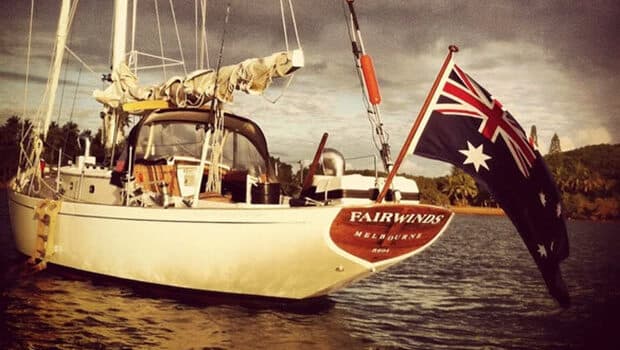
West Marine guide helps boaters choose the right life jacket
The right PFD is the one you’ll wear, not the one with the flashiest label. West Marine’s guide turns life jacket shopping into a real seamanship decision.

A life jacket has to pass two tests: the rulebook and the reality of sailing. West Marine’s safety guide pushes past the label chase and asks the question sailors actually live with: will this PFD stay comfortable enough to wear when the foredeck is wet, the dinghy ride is annoying, or the night watch turns ugly?
Start with the rules, then think about the boat
The Coast Guard requirement is simple enough on paper: a recreational vessel must carry a Coast Guard-approved wearable PFD for every person aboard. Boats over 16 feet also need a throwable flotation device, which is easy to forget until you are actually checking the locker before launch. Federal law also says children under 13 must wear an approved life jacket while a vessel is underway, unless they are below deck or in an enclosed cabin.
That is the baseline, not the finish line. A jacket can satisfy carriage rules and still be miserable to wear, and that is where a lot of sailors make the wrong call. West Marine’s guide leans into that gap, because compliance does nothing if the PFD is so awkward that it ends up lashed to the rail instead of on the body.
Why wearability beats brochure language
The Coast Guard keeps repeating the same blunt truth: the best life jacket is the one a boater will actually wear. That is not marketing fluff, it is backed by the numbers. The Coast Guard’s 2024 Recreational Boating Statistics report recorded 556 recreational boating deaths, the fewest in more than 50 years, yet 87 percent of drowning victims in accidents where PFD status was known were not wearing life jackets.
The wear-rate data tells the same story from a different angle. The 2024 National Life Jacket Wear Rate Observation Study found a national wear rate of 21.9 percent, which is a brutal reminder that ownership and use are not the same thing. You can have the right gear in the locker and still be one rough maneuver away from being the person who did not buckle in.
Foam still has a place, especially when movement matters
West Marine’s guide separates inherently buoyant foam jackets from inflatables, and that split matters more than most sailors admit. Foam jackets are the grab-and-go option: they are always ready, they do not depend on a cylinder, and they are often the better choice when you know you will get wet, climb around, or need instant buoyancy without thinking about a trigger. That makes them especially sensible for kids, dinghy work, or days when the boat plan involves a lot of getting on and off.
Inflatables are popular because they feel less bulky, and that is real value on a sailboat where shoulder room and torso clearance matter. But the comfort advantage only helps if the jacket is worn correctly and maintained properly. If you are choosing between a jacket that frees up your arms and one that you will shrug off by noon, the more comfortable option is usually the smarter safety tool, as long as it matches the conditions and the user.
Match the jacket to the job you actually do
This is where the guide gets useful for sailors instead of sounding like a generic safety pamphlet. A daysailer who spends most of the time in calm water has a different need than someone working the foredeck in spray or someone crossing offshore after dark. The jacket should follow the task: mobility for trimming and moving, visibility and buoyancy for harsher conditions, and enough comfort that you forget about it instead of deciding to take it off.
That logic matters for gray-area craft too. Stand-up paddleboards used beyond protected surf zones can fall under vessel rules and may require a PFD, whistle, and light at night. That is exactly the kind of detail sailors and harbor users trip over, because the waterline between “toy,” “tender,” and “vessel” is not always obvious until an officer or an incident makes it obvious for you.
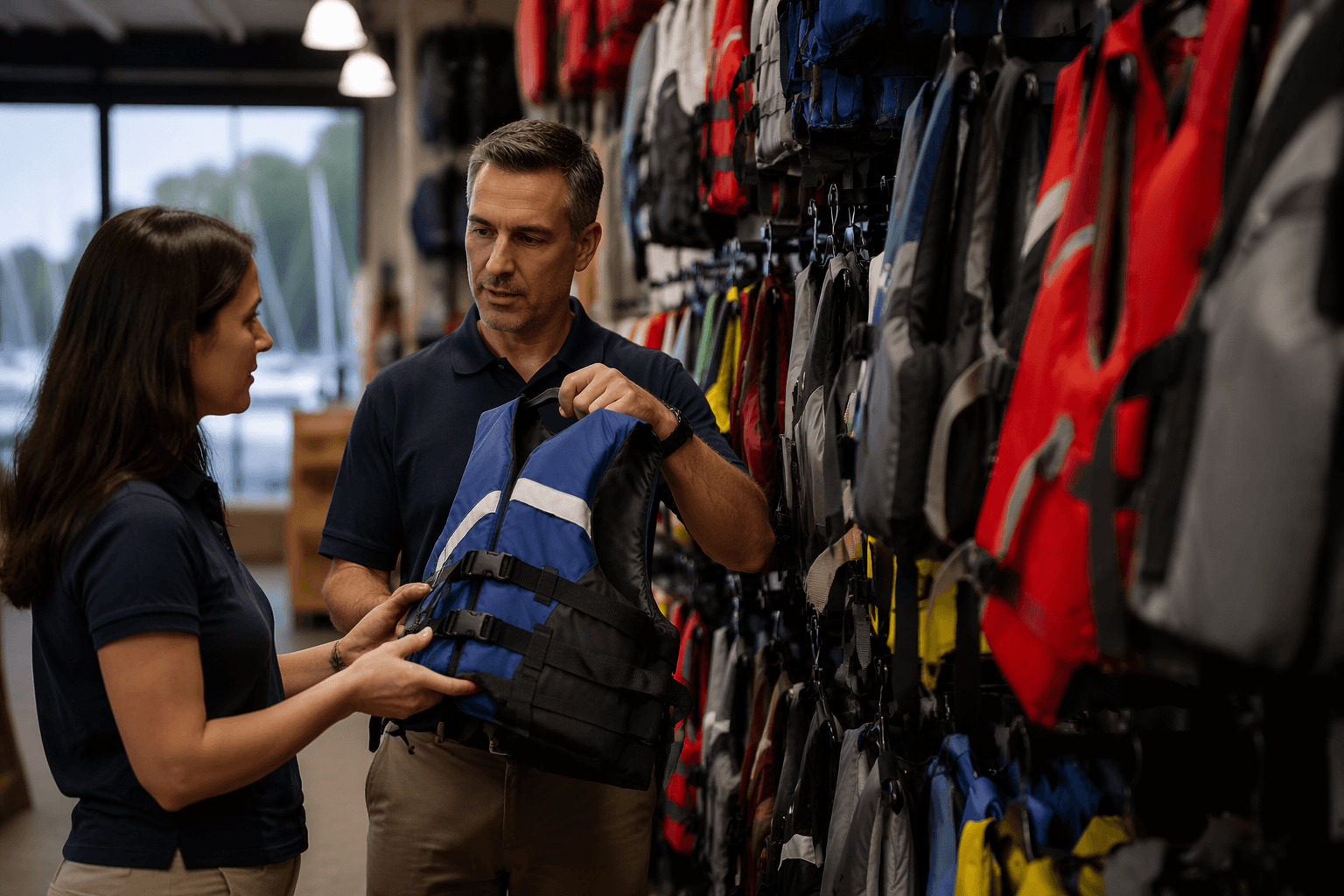
For sailors, the practical translation looks like this:
- Daysailing: pick a jacket that disappears under a harness or foul-weather layer and does not fight your arms when you are easing sheets.
- Foredeck work: prioritize low bulk, secure closure, and a fit that stays put when you kneel, crawl, or lean hard.
- Dinghy ashore: choose something light enough that you do not talk yourself out of wearing it for the short hop.
- Offshore at night: focus on the combination of buoyancy, fit, and visibility, because the water is less forgiving and the jacket needs to stay on when the deck gets chaotic.
The label system is changing, but the job is the same
The Coast Guard’s approval system is not frozen in time. Its Lifejacket Approval Harmonization final rule was published on December 6, 2024, became effective on January 6, 2025, and the Coast Guard began enforcing it on June 4, 2025. The rule created approval pathways for Level 50, Level 70, and Level 100 life jackets and replaced legacy standards, which tells you the labeling landscape is shifting even if the old tags are still all over boat showrooms and storage bins.
That matters because sailors still see Type I, II, III, IV, and V labels in the wild, and those older type-labeled jackets can still meet carriage requirements. The smart move is not to memorize every label from every era; it is to understand what the jacket is built to do and whether that design matches the way you sail. Labels matter, but only after fit, comfort, and actual use are checked off.
Fit is not a footnote
West Marine’s video instruction from a recognized safety expert drives home the part too many people skip: a jacket has to fit the body it is meant to save. A good test is simple enough to remember and hard enough to fake. The jacket should be snug, secure, and able to stay in position when you move, because a loose life jacket rides up, chafes, and gets abandoned.
That is the real seamanship lesson in the guide. A PFD that pinches, slides, or gets in the way is less likely to be worn when you are tired, wet, or annoyed, which is exactly when you need it most. For families, day sailors, and offshore crews, the right choice is the one that stays on through the sloppy parts of the day, not the one that only looks good hanging in the cabin.
When the foredeck is slippery and the watch is long, the best life jacket is still the one that feels normal enough to wear without negotiation. That is the point West Marine gets right: choose for the water you actually sail, and you are far more likely to have the jacket on when the moment stops being hypothetical.
This article was produced by Prism’s automated news system from verified source data, official records, and press releases, then run through automated quality and moderation checks before publishing. The system is built and supervised by the people who set the standards it runs under. Read our full AI policy.
Did this article answer your question?