West Marine winterization guide helps protect inboard engines from freeze damage
Freeze damage is often a springtime bill, not a winter problem, and West Marine’s guide puts fuel, antifreeze, fogging and oil in the right order to stop it.
West Marine’s winterization guide treats layup as the cheapest insurance you can buy for an inboard or sterndrive. The sequence is simple but unforgiving: clean up the fuel system, protect the cooling passages with the right antifreeze, fog the engine, then finish with oil changes and the other preventive jobs that keep a spring launch from turning into a repair season.
Start with fuel before the boat sits
The first move is to fill the tank with fresh gasoline and add a stabilizer before layup. That full tank does more than preserve fuel quality, especially with ethanol-blended gas in the mix. Less empty space means less moisture collecting in the tank, which cuts condensation and the water buildup that can make next season’s starting routine miserable.
That matters because water in the fuel system does not just sit there politely. It can lead to hard starting and clogged separators in the spring, exactly when you want the engine to light off cleanly and idle without drama. West Marine’s guide also recommends replacing the fuel filter-water separator element so the boat starts the next season with clean filtration already in place.
A careful owner can handle this part alone if the system is in good shape. Fill the tank, dose the stabilizer, replace the separator element, and then circulate the stabilized fuel through the fuel system so it actually reaches the parts that need protection. That last step is easy to skip, and it is one of the reasons spring fuel problems linger after a layup that seemed “good enough.”
Protect the cooling system from freeze damage
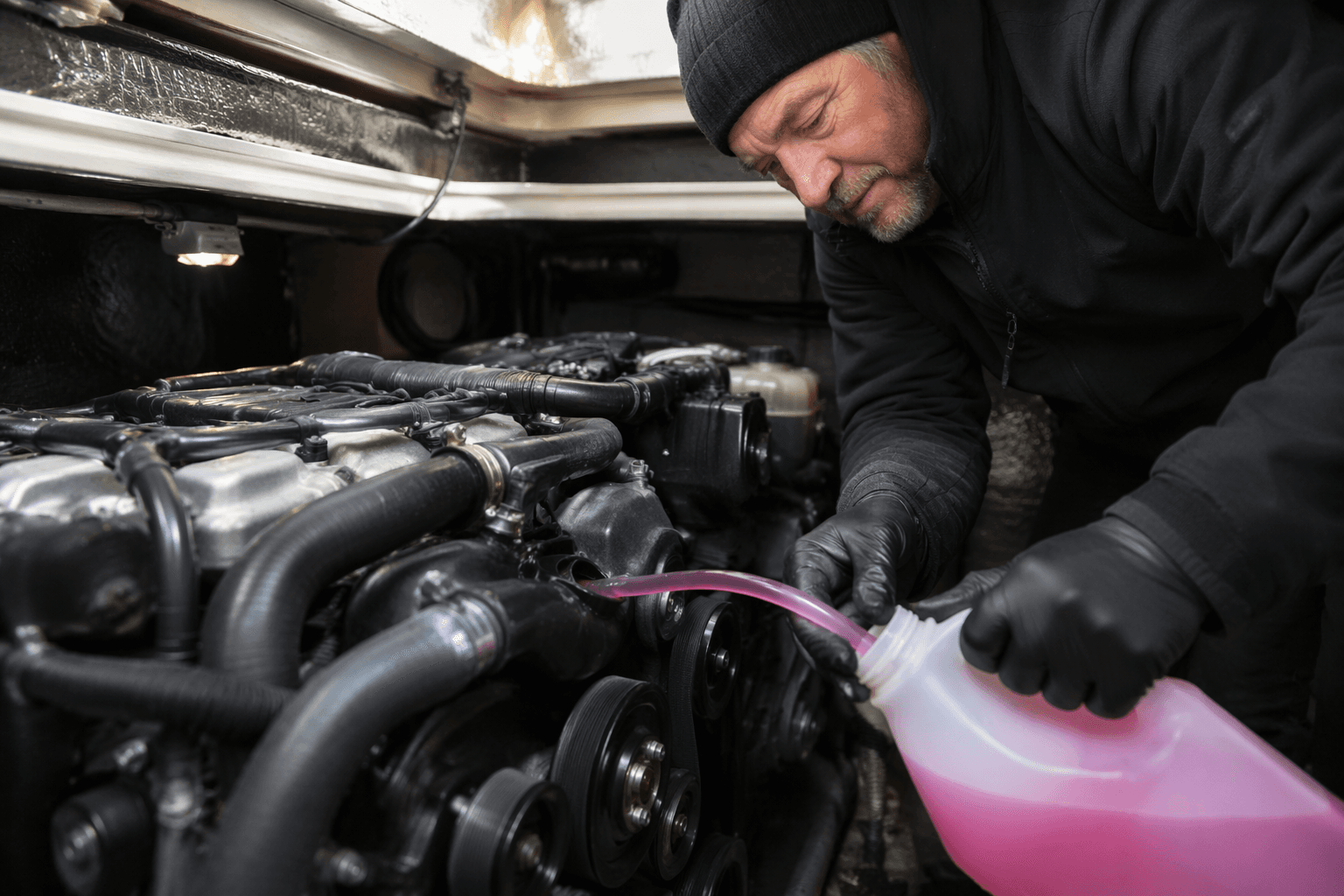
The antifreeze step is where winterization stops being routine maintenance and starts being damage control. West Marine stresses that antifreeze is there to protect engine blocks from residual water freezing and cracking the block. That is the expensive failure you are trying to avoid, and it is also why simply blowing water out of the cooling system with compressed air is not enough. Pockets of water can stay behind, and when hard freeze weather hits, those hidden pockets can do the damage.
The guide distinguishes between automotive antifreeze and non-toxic propylene glycol antifreeze. For raw-water-cooled marine engines, the non-toxic type is the right choice, not automotive antifreeze. The U.S. Environmental Protection Agency says propylene glycol antifreeze is much less toxic to aquatic organisms than ethylene glycol and is preferred for use in boats, which is exactly why it belongs in marine layup work.
If your cooling system is raw-water-cooled, the safest path is to either drain it completely at every low point or protect it with the correct propylene glycol marine antifreeze. That is a task many owners can still do themselves, but only if they are confident every low point is accounted for and the flow path is treated correctly. If you cannot verify that, or you suspect water is trapped in the system, it is time to bring in a mechanic rather than gamble on a cracked block in the spring.
Fog the engine while everything is open and accessible
Fogging is one of those jobs that is easy to postpone and hard to appreciate until rust shows up later. West Marine includes it as part of the core winterization sequence because it helps protect the engine internals during the months when the boat is idle. Alongside antifreeze, it is part of the guide’s broader message: winter layup is not just about keeping water from freezing, it is about keeping metal surfaces from deteriorating while the boat is sitting still.
This is another task a careful owner can usually handle without a yard bill, especially if the engine is already opened up for fuel and cooling work. The key is to treat it as part of the sequence rather than a separate chore. Winterization works best when the fuel system has already been stabilized and the cooling system has already been protected, because the fogging step is meant to lock in that protection before the boat goes quiet for the season.
Change oil and deal with the small jobs that become big ones later
BoatUS says changing oil before layup matters because residual acids and moisture left in the crankcase over winter can pit bearings and other vital parts. That is the sort of slow, hidden damage that does not show up until the engine is asked to work again, and by then the repair is no longer preventive maintenance. West Marine places engine and transmission oil changes near the end of the winterization sequence for exactly that reason, along with the other small protective tasks that make spring easier.
This is also the right time to do the little jobs that are easy to ignore while the boat is still in the water. West Marine’s overall message is that winterizing the power train extends engine life and helps avoid a hassle-free spring relaunch. In practice, that means finishing the layup with clean oil, a protected fuel system, and a treated cooling system so the engine is not waking up after months of sitting in stale, corrosive conditions.
If the oil looks contaminated, if the cooling system will not drain properly, or if you suspect water has already reached areas it should not have, that is not a DIY delay-and-hope situation. Those are the kinds of warning signs that justify calling a mechanic before the damage spreads.
Why this matters even outside snow country
BoatUS’s warning is blunt: winterization is not just for places that expect heavy snow. The group says the need applies even in regions where cold snaps are unpredictable, and it recommends winterizing if a boat will be laid up for even a few weeks unless you are in a consistently warm location such as Hawaii or the Florida Keys. That is a useful reality check for anyone who assumes a mild climate means a free pass.
The scale of the risk is what makes the routine worth respecting. BoatUS says a 10-year analysis of freeze claims found that more than three-quarters involved cracks in the engine block or exhaust manifolds because water remained in the engine or cooling system during a hard freeze. Those claims came from all over the country, not just from snow states, and the result can be a repair bill in the thousands or even a complete engine replacement.
That is why the best winterization plan is not elaborate, just disciplined. Treat fuel, cooling, fogging and oil as a sequence, not a checklist you half-finish when the weather turns cold. The spring payoff is simple: when the cover comes off, the engine should be ready to turn over cleanly instead of reminding you how expensive one missed step can be.
This article was produced by Prism’s automated news system from verified source data, official records, and press releases, then run through automated quality and moderation checks before publishing. The system is built and supervised by the people who set the standards it runs under. Read our full AI policy.
Know something we missed? Have a correction or additional information?
Submit a Tip