When replacing aging rigging, think swageless terminal fittings
Old swages don’t deserve automatic replacement. On an aging rig, swageless terminals can make inspection, service, and future DIY work a lot easier.
The decision hiding inside a rigging job
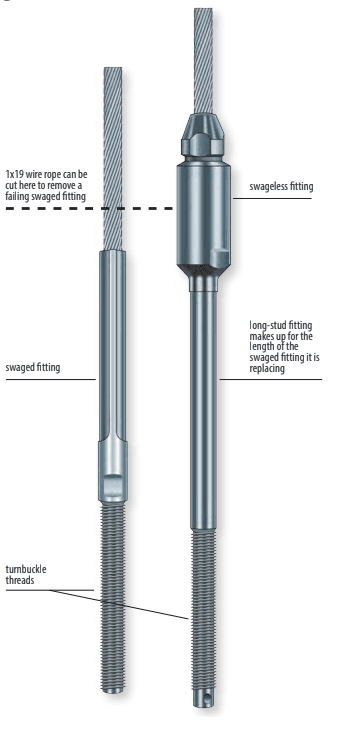
If you are staring at tired swaged terminals on an older boat, the real question is not just when to change the wire. It is what you want on the ends of that wire when the new standing rig goes in. Good Old Boat’s recent rigging piece makes the point plainly: most good old boats left the factory with swaged terminal fittings, but when replacement time comes, think swageless.
That is the useful shift in thinking for a DIY-minded owner. Standing rigging is a system, not a shopping list of wire diameters. The terminal at the end of a shroud or stay is where loads concentrate, where corrosion can hide, and where a bad decision can leave you paying a rig shop again every time something needs attention.
Why terminal style matters more than the old habit
Swaged hardware is familiar because it has been standard for years, and Seldén’s current product pages still list swage terminals. That alone explains why so many boats still wear them: they are the factory default and plenty of builders still specify them. But default does not mean best for an older boat that is trying to stay useful, inspectable, and affordable to maintain.
The Good Old Boat argument lands because it pushes you to choose the next termination style deliberately. If the rig is coming apart anyway, that is the moment to decide whether you want a setup that is easier to inspect, easier to service, and less dependent on specialized shop equipment. On a boat that may need future replacements one stay at a time, that flexibility matters.
Swaged terminals: familiar, clean, and still common
Swaged terminals still make sense in some builds. They are neat, widely available, and deeply embedded in the industry, which is why you still see them in manufacturer catalogs and on boats coming out of production lines. For many owners, the attraction is simple: they look like “real rigging,” they are what the boat had before, and every rigger knows the style.
The downside is just as practical. Once a swage is on, you are not really servicing it in the field. If you want to change the termination later, inspect it closely, or repair a single line without dragging the whole job back to a shop, the swaged route is less forgiving. That is exactly why a lot of older-boats maintenance conversations now start with whether you should repeat the factory arrangement at all.
Swageless terminals: inspectable, reusable, and built for owner work
Practical Sailor described swageless wire-rope terminals as inspectable, reusable, and installable with simple hand tools. That is the whole appeal in one sentence. You are trading the permanence of a shop swage for a termination you can open up, check, and in many cases reassemble without owning a swaging machine.
The magazine’s 2016 pull-test work compared Hi-Mod, Sta-Lok, and Norseman, and the broader message was not that one mechanical terminal magically solves rigging. It was that terminal choice is only one part of the durability equation. Corrosion resistance, fatigue resistance, correct sizing, tune, use, and metallurgy can matter more in real service than raw terminal strength alone.
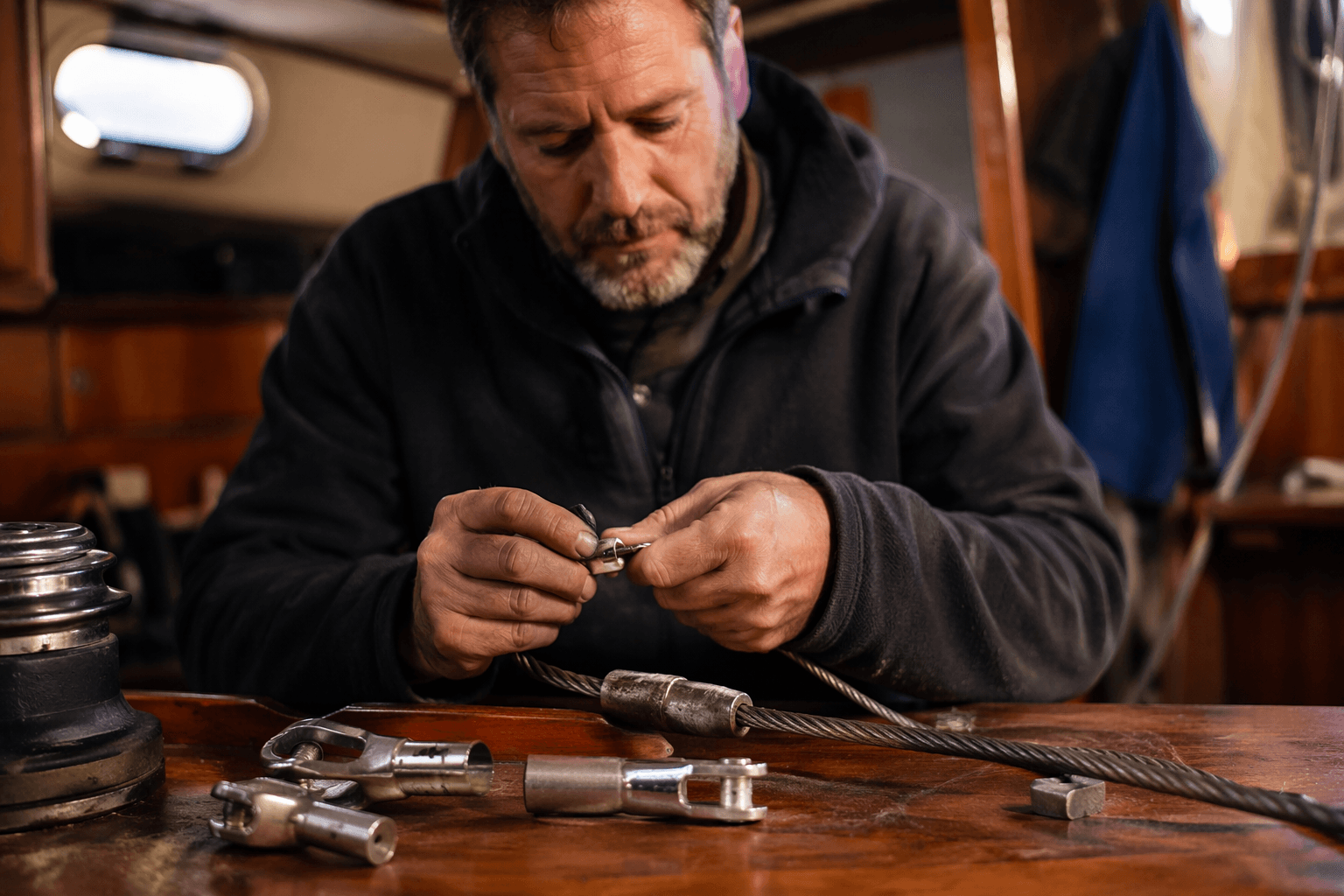
A 2026 Practical Sailor comparison narrowed the focus to screw-on rigging terminals and again put Hi-Mod, Norseman, and Sta-Lok against each other on reliability, installation ease, and long-term value. That is the right lens for an owner replacing aging rigging: not “which one wins on paper,” but “which one gives me the best mix of confidence, serviceability, and sane upkeep.”
What the safety guidance says to keep in mind
The U.S. Coast Guard’s NVIC 02-16, issued on April 13, 2016, is aimed at owners, riggers, surveyors, and inspectors. It is not subtle about responsibility: the owner, master, and crew have to monitor the condition of the vessel, and preventative maintenance is part of that job. The circular also points to a 2005 case in which a U.S. tall ship lost its entire rig because a single standing-rigging component failed.
That is the reminder that keeps this from becoming a style debate. Terminal fittings are not cosmetic. They are part of the safety chain that holds the mast up, and once they start aging out, inspection and documented maintenance matter as much as the metal itself. Tall Ships America’s rigging guidance frames the same issue for vessel owners, riggers, marine surveyors, and Coast Guard inspectors, which is a useful clue that the decision belongs in the maintenance plan, not just at the chandlery counter.
How old is too old for the old rig
Replacement timing is where the real-world pressure shows up. A 2025 sailing article put full standing-rigging replacement at about 15 years, with a thorough inspection starting around 10 years. A sailing association article added another hard edge to that timeline: some insurance companies require re-rigging if standing rigging on a used boat is older than 15 years.
That age window matters because terminal choice and replacement timing are linked. If you are already in the zone where the wire is due, you should not just order the same fittings and call it done. That is the moment to ask whether a swaged replacement simply repeats the old setup, or whether a swageless option gives you a better path for inspection, future maintenance, and owner-installed changes.
Where the DIY line really is
Swageless terminals are especially attractive because rigging suppliers market them for boat owners who want to do their own rigging work without specialized swaging tools. That does not mean the job is casual. It means the barrier to entry is lower, the future inspections are easier, and the owner is less boxed in by shop-only hardware.
For a DIY sailor, that is the practical test. If the boat is older, the rig is already on the replacement clock, and you want a termination that you can inspect and service yourself, swageless fittings deserve a hard look. When the old swages have aged into a maintenance problem, the smartest move is not to copy them automatically. It is to choose the end fittings that make the next decade of rig care easier, safer, and more realistic to handle on your own.
This article was produced by Prism’s automated news system from verified source data, official records, and press releases, then run through automated quality and moderation checks before publishing. The system is built and supervised by the people who set the standards it runs under. Read our full AI policy.
Know something we missed? Have a correction or additional information?
Submit a Tip