Why a Couple Chose a Herreshoff America for Easier Sailing
George and Kathy Damerel traded a 27-year Catalina 25 for a Herreshoff America, proving that simpler gear can keep sailing practical. The trick is knowing which features save work and which still need a refit.
Downsizing without giving up sailing
George and Kathy Damerel did not go looking for a smaller boat because they wanted less sailing. They went looking because they wanted to keep sailing longer. After 27 years with a Catalina 25, they decided the real enemy was the workload that had grown around the fun: spinnakers, genoas, heavy mast raisings, and everything else that turns a day sail into a project.
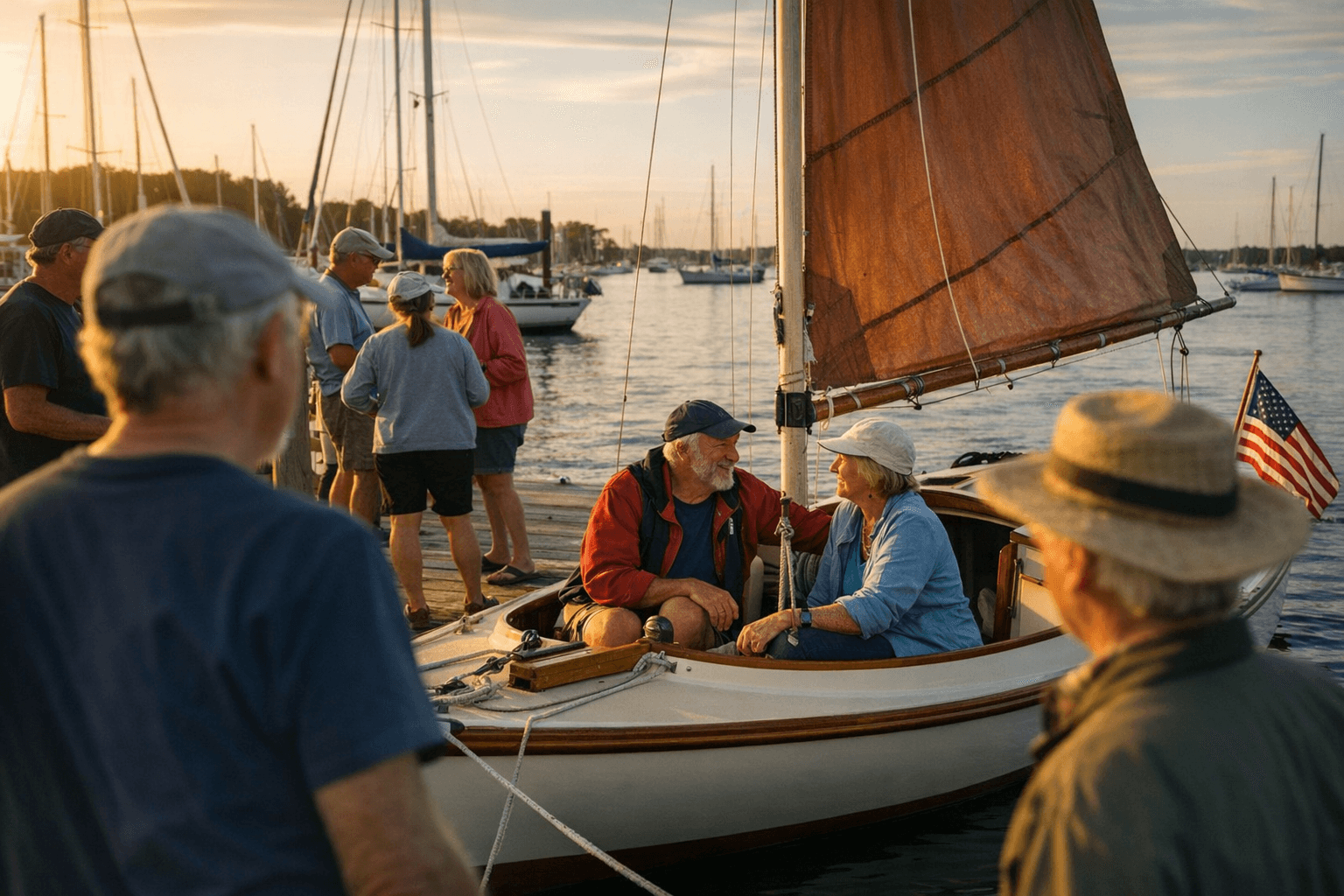
That is the part worth remembering if you are trying to make an aging cruising setup last. A smaller boat is not automatically a compromise. In the right case, it is a way to preserve the good parts of sailing while trimming the pieces that make you skip a launch day.
What the Damerels were actually shopping for
Their wish list is useful because it is specific. They wanted inshore seaworthiness, dry shelter with a head, room for friends and family, ease of use, trailerability, and, ideally, a Herreshoff design. That combination tells you exactly what kind of downsizing makes sense for DIY owners who still want to cruise, still want guests aboard, and still want to handle the boat without recruiting half the marina.
The Damerels found that mix in a 1974 Herreshoff America that needed significant TLC. That detail matters. This was not a turn-key bargain that magically removed all maintenance. It was a simpler platform with a better chance of matching the couple’s actual sailing life, which is a very different thing.
Why the Herreshoff America fit the brief
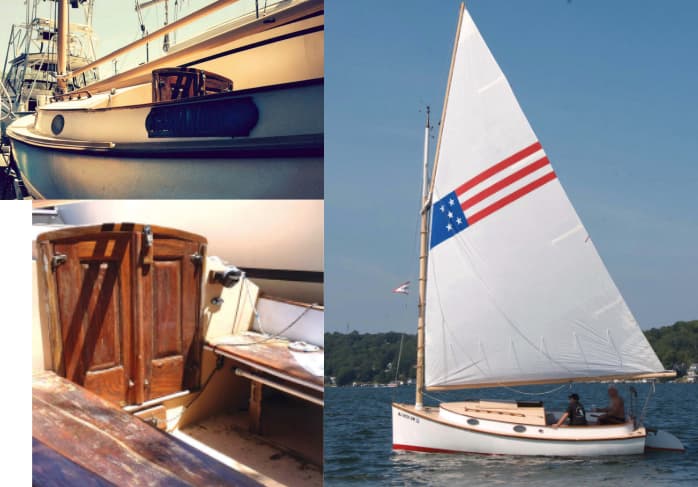
The Herreshoff America is an 18-footer with an 8-foot beam, and those numbers explain a lot of its appeal. It is compact, but not cramped in the ways that make small boats miserable to live with. Reference sources list it at about 18.16 feet LOA, 2,500 pounds displacement, 500 pounds ballast, 5.0 feet draft with the centerboard down, and 1.83 feet up. That shallow-draft flexibility is a big reason a boat like this stays useful instead of becoming a dock ornament.
It also has the right onboard layout for older sailors who still want simple overnighting. The boat carries a large cockpit, a two-berth cabin, and a Porta Potti. That is not luxury, but it is exactly the sort of practical comfort that keeps a small boat from feeling like a penalty box. The single sail keeps the rig easy to understand, and the outboard mounted in a cockpit well keeps propulsion accessible instead of awkward.
For owners who maintain their own boats, the fiberglass construction is part of the attraction too. A straightforward fiberglass hull is far easier to justify when you are the one doing the work, paying the bills, and deciding whether the next season should be spent sailing or sanding.
The features that actually reduce the burden
The Herreshoff America is not just “smaller.” It is simpler in the places that matter most.
- One sail instead of a pile of gear means less rigging to inspect, less canvas to maintain, and fewer decision points on the water.
- The centerboard gives you minimal draft when you need it, which makes launching, retrieving, and exploring skinny water easier.
- The outboard in a cockpit well is easier to reach than a hung-over transom setup that demands awkward stretching and contortions.
- The large cockpit gives you usable space without forcing you into a big, heavy cruiser.
- The two-berth cabin with a Porta Potti adds the overnighting basics without pushing you into a larger, more demanding boat.
That last point is the sweet spot for many DIY sailors. You are not trying to eliminate all maintenance. You are trying to eliminate the maintenance that does not buy you much in return.
What this kind of simplification still demands
A simpler boat is still an older boat, and older boats still need real work. The Damerels’ Herreshoff America needed significant TLC when they got it, which is another useful reality check for anyone tempted by the words “easy sailing.” Easy sailing is about handling and systems, not about pretending the project disappears.
The design does, however, invite hands-on ownership. Forum discussions describe the cockpit as self-bailing, and owners have talked about removing or altering the outboard well. That tells you the platform has a practical, tinkerer-friendly character. It is the kind of boat where thoughtful modifications make sense because the underlying concept is already straightforward.
Why the Herreshoff name still carries weight
Part of the appeal here is emotional, and part of it is design credibility. Halsey Chase Herreshoff adapted a 1904 catboat hull design from his grandfather Nathanael Herreshoff for fiberglass construction, which is a neat way of saying the boat keeps the old catboat soul without demanding old-boat habits. That balance is exactly what the Damerels were after.
The Herreshoff family’s catboat history goes back more than 50 years, with an 1859 boat called SPRITE referenced in historical correspondence. That lineage matters because it reminds you the America is not a gimmick. It sits inside a long design tradition that knows how to make a boat feel secure, direct, and manageable.
Halsey Herreshoff’s own pedigree adds another layer. The Herreshoff Marine Museum describes him as a four-time America’s Cup defender, and he founded the America’s Cup Hall of Fame in 1992. So when a Herreshoff America feels like a serious sailor’s small boat, that is not marketing fluff. It comes from a family name that has been shaping sailing for generations.
How to decide whether to refit, simplify, or switch
If you are staring at your own boat and wondering whether to keep feeding it upgrades, the Damerels’ choice gives you a clean filter. Do not ask only whether the boat is beautiful or historically interesting. Ask whether it matches the way you actually sail now.
- a single-sail setup that does not punish you for sailing short-handed
- shallow draft for easier launching and more flexible cruising
- a cockpit and cabin arrangement that supports day sails plus the occasional overnight
- a trailerable size that keeps storage and access realistic
- a fiberglass platform you can repair and improve yourself
A Herreshoff America makes sense if you want:
It is less compelling if you are determined to keep a big-boat sail plan and all the labor that comes with it. In that case, you are not downsizing for ease. You are just swapping one maintenance load for another.
The Damerels’ move lands because it treats restoration as a lifestyle decision, not just a hull decision. Sometimes the best project is the one that trims the path between trailer, dock, and sail until going sailing feels simple again.
This article was produced by Prism’s automated news system from verified source data, official records, and press releases, then run through automated quality and moderation checks before publishing. The system is built and supervised by the people who set the standards it runs under. Read our full AI policy.
Did this article answer your question?