Why a Proper Marine Fuse Box Can Prevent Boat Fires
A messy electrical panel can turn one short circuit into a fast-moving fire. A proper marine fuse box keeps the bad circuit from turning the whole boat into a heat source.
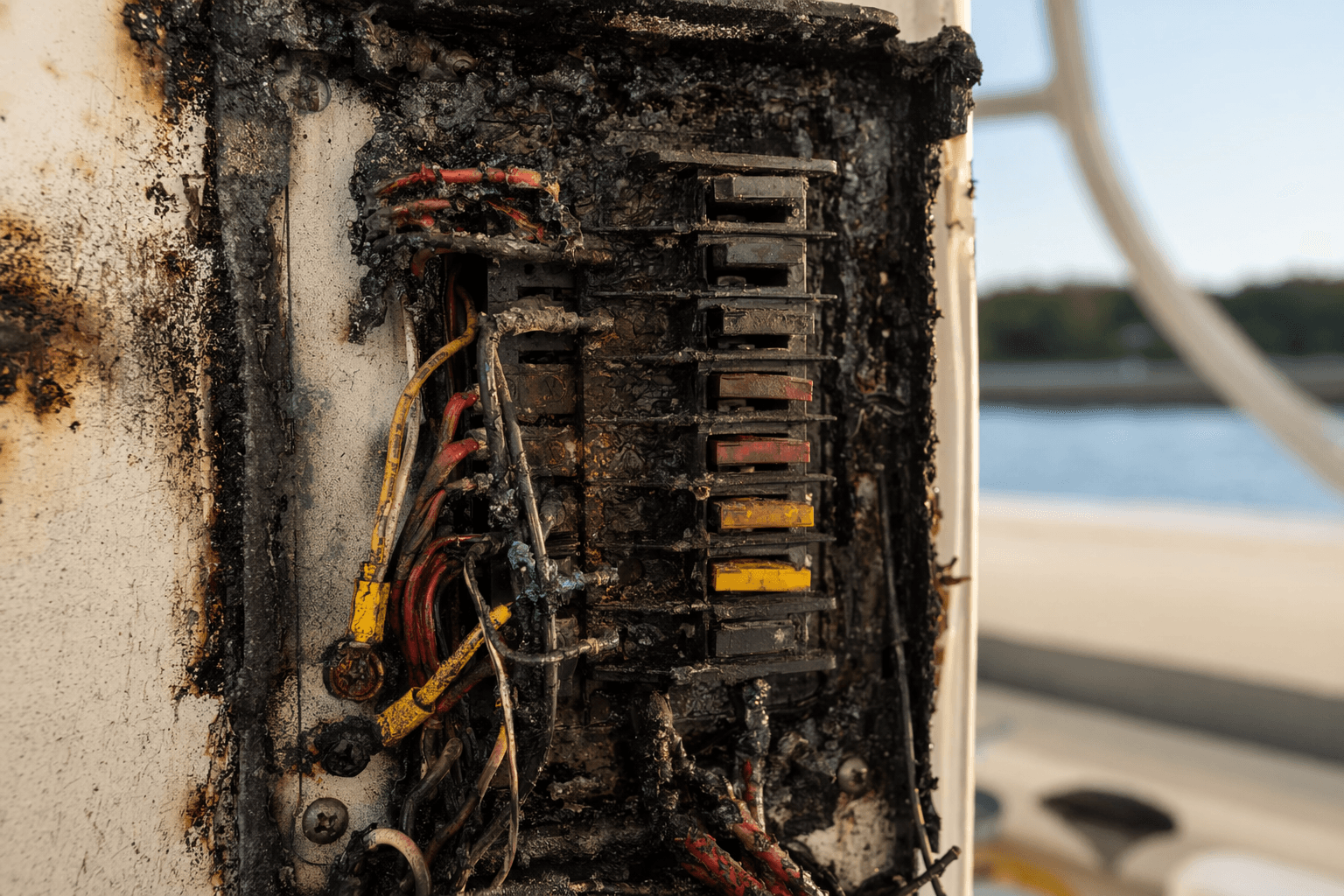
Fire starts where wiring gets crowded
On a boat, the danger is rarely just the spark. It is the cramped mix of wiring, panels, insulation, and stored gear that lets a small electrical fault turn into something far worse, fast. The warning from the Better Boat guide is blunt: an untidy electrical system can make a manageable problem spread before you even find it.
That warning fits the fire data the guide leans on, which summarizes BoatUS-related statistics through Boat How To. A large share of boat fires are electrical in origin, and many begin as short circuits in DC circuits. That matters because the DC side of a boat is where owners add accessories, extend runs, and splice in new gear until the wiring behind the panel stops looking like a system and starts looking like a knot.
A proper marine fuse box changes that story by giving each branch circuit a defined point of protection. Instead of letting a fault hunt through the boat looking for the weakest spot, the fuse box makes the intended circuit fail first. That is the difference between losing a fish finder and turning the feed wire itself into a hot element hidden behind a bulkhead.
What the fuse box is really doing
Think of the fuse box as a fire-control device first and an organization tool second. Its main job is not to make the electrical compartment look neat, even though it helps with that. Its real job is to limit fault current so a short has a controlled end point, not a long, hot one.
That safe-failure idea is where the guide lines up with ABYC thinking. The point is to protect the branch circuit with the correct interrupting capacity, so the protection can actually stop the fault without becoming part of the problem. If the fuse or breaker is not sized and specified correctly, the system loses the very thing that is supposed to contain the heat.
This is why a centralized fuse box is so valuable on a sailboat. When the chartplotter, cabin light, or bilge accessory has its own protected branch, the failure stays local. The owner loses one load, not the whole feed wire running behind a panel or inside a rigging tube.
Why old add-on wiring is such a trap
The worst-looking systems usually did not start that way. They got there one accessory at a time, with add-on wiring, buried inline fuses, and improvised taps layered into whatever space was left. On older boats, those shortcuts are often inherited as if they were normal, when they are really just unfinished problems waiting for heat.
The guide’s most useful warning is that corrosion turns these shortcuts into hazards. Resistance rises, heat builds, and a hidden bad connection can go from annoying to dangerous without much drama at all. If you have ever opened a panel and found a maze of mystery wires, you already know the real issue: confusion hides faults.
That is why the practical test is so simple. If you cannot identify what powers each accessory quickly, the system needs cleanup. When a fish finder, radio, light, or pump is fed through a mystery path, the boat loses the protection that should have been built in from the start.
The inspection-first lens you can use this weekend
The smartest way to approach the job is to inspect before you add anything new. Start at the fuse box and trace each branch circuit until you know exactly what it serves. If the path includes unlabeled taps, random inline holders, or old splices tucked out of sight, treat that as a warning sign rather than a detail to work around.
- undersized protection that may not stop the fault the way it should
- messy expansions that leave extra wires dangling or bundled without a plan
- unlabeled circuits that force guesswork every time you open the panel
- buried inline fuses that hide the real protection point
- improvised taps that make it impossible to know how current is actually flowing
A weekend inspection does not need to be complicated, but it does need to be honest. Look for the common amateur mistakes the guide highlights:
The value here is not just safety theater. A tidy, labeled system makes troubleshooting faster, which means problems get fixed before they become heat sources. It also makes it far easier to see whether the fuse box itself is doing what it is supposed to do: protect each branch circuit cleanly and predictably.
Why this matters on sailboats, skiffs, pontoons, and cruisers
The boat type changes the number of circuits, not the need for disciplined protection. A small skiff may only carry a few accessories, but those circuits still deserve the same care as the larger systems on a cruiser. A pontoon packed with lighting and electronics can get just as messy as a sailboat with a cabin full of gear.
That is the point of making the fuse box a core part of the electrical system instead of an afterthought. It keeps the system understandable, which is not just a convenience. In a tight marine space, understanding is part of fire prevention because it helps you spot the wrong kind of shortcut before it turns into a hot wire behind a panel.
For DIY owners, the payoff is practical and immediate. A proper marine fuse box gives each accessory a clear place in the system, keeps fault current contained, and reduces the chance that a short in one circuit spreads heat where it does not belong. That is the kind of upgrade that pays for itself not with polish, but with the quiet confidence that the next electrical problem is more likely to trip a circuit than ignite a boat.
This article was produced by Prism’s automated news system from verified source data, official records, and press releases, then run through automated quality and moderation checks before publishing. The system is built and supervised by the people who set the standards it runs under. Read our full AI policy.
Did this article answer your question?