Why Annapolis Sailors Need Specialist Chandlery for Critical Hardware
The cheapest marine part is rarely cheap once it fails offshore. Annapolis sailors stay ahead by matching critical hardware to brackish water, load, and tight marina geometry.

Why the wrong part costs more than the right one
The first place a specialist chandlery earns its keep is in the parts that fail hardest: stainless fasteners, electrical connectors, sealants, hose, and rigging hardware. Those are not the purchases where “close enough” stays close enough for long. A bolt that is a little too short, a connector that is not meant for marine exposure, or a fitting that only looks right can turn into corrosion, leaks, heat damage, or an ugly failure when the boat is loaded and moving.
That is the real argument for walking into a chandlery that understands boats instead of a general store that only sells things shaped like boat parts. A good marine counter is not just handing over inventory. It is matching the exact part to the exact use case, which matters most when the part is constantly immersed, highly loaded, or both.
Why Annapolis makes precision matter even more
Annapolis is not a place where gear gets an easy life. The city’s Harbormaster oversees navigable waters that include parts of the Severn River, Back Creek, Spa Creek, and Weems Creek, a busy web of waterways where traffic, dock geometry, and everyday maneuvering punish sloppy maintenance. Add the fact that Annapolis actively markets itself as America’s Sailing Capital, and you get a waterfront where the standard for “good enough” is much higher than a casual boater might expect.
The water itself raises the stakes. The Chesapeake Bay Program says most of the bay is brackish, with salinity above 0.5 parts per thousand but below 25 parts per thousand, and NOAA’s Chesapeake Bay Operational Forecast System tracks salinity nowcasts and forecasts for the bay. That variability matters because brackish water still drives corrosion, especially on hardware that lives near spray, splash, or continuous immersion.
What specialist chandlery knows that a generic retailer usually does not
A specialist chandlery brings three things that save money over time: technical advice, reliable inventory, and enough product depth to avoid forcing a mismatch. That means the clerk can steer you away from the shiny part that looks right and toward the hardware that actually fits your load, your substrate, and your environment.
For Annapolis sailors, the material conversation is not academic. Independent marine-supply guidance identifies 316 stainless steel as the preferred saltwater grade because of its corrosion resistance, while 304 and similar grades are less suited to harsh marine exposure. In the same way, silicon bronze still matters in places where corrosion resistance and marine compatibility are more important than the cheapest price tag. On a boat, the wrong alloy does not just age poorly. It becomes a maintenance problem that spreads.
Fawcett Boat Supplies has made that kind of judgment part of its identity since 1948. PropTalk reported in 2018 that the business was still independent and locally owned and operated, founded by Arthur and Mary Fawcett and later owned by Bernard Jammet. That history matters because a shop that has spent decades serving Chesapeake Bay boatyards, rigging experts, cruisers, liveaboards, and weekend boaters builds a different kind of memory bank than a store built around turnover alone.
The hardware categories that deserve the most scrutiny
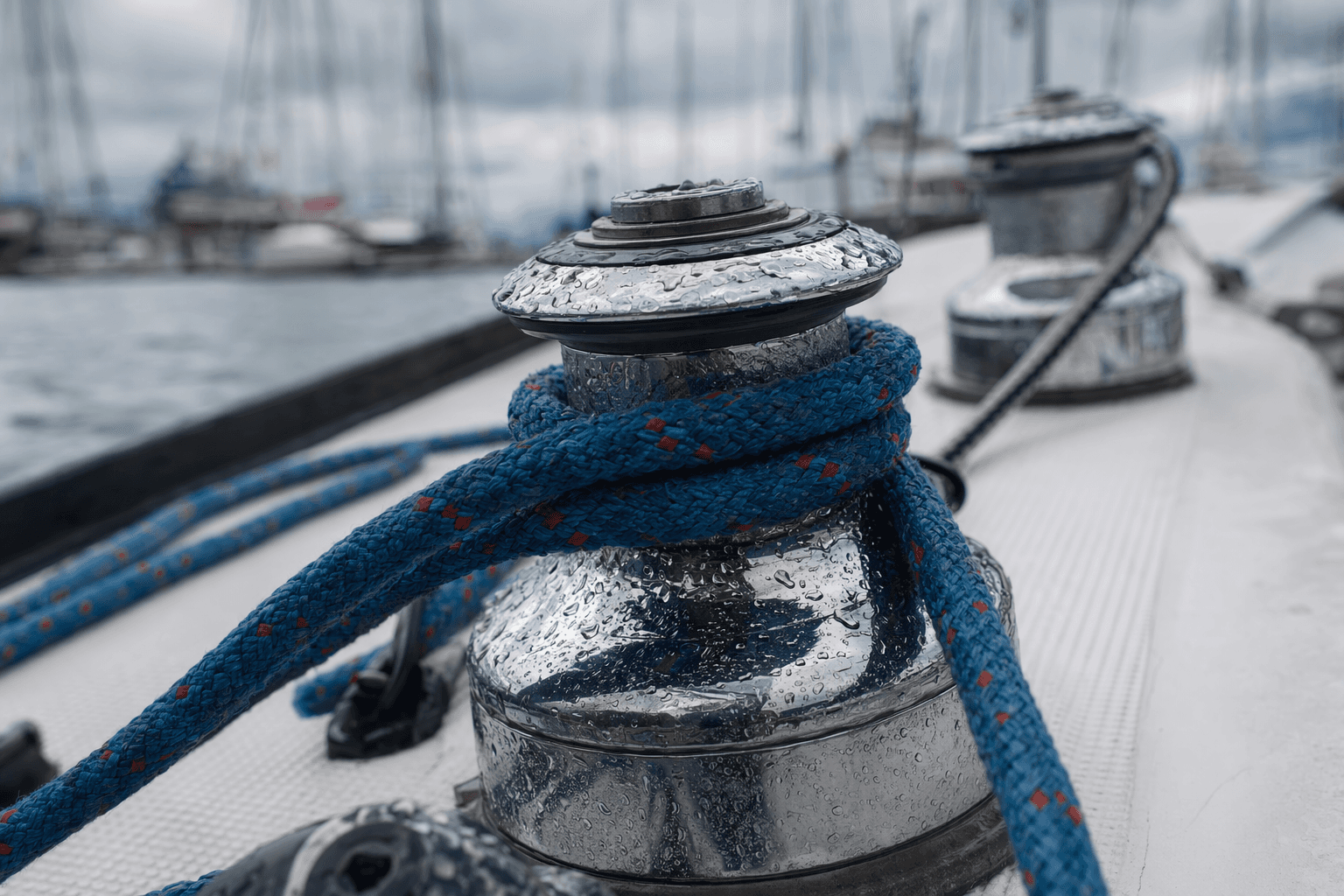
Rigging systems, deck hardware, marine hoses, and through-hull fittings are the parts that deserve your closest attention because they are the most failure-prone. They are either constantly taking load, constantly exposed to water, or both. If you are recommissioning after a layup or refitting for the season, these are the places where the wrong substitution can cost you an afternoon, a haul-out, or worse.
A specialist chandlery helps you look past appearance and into function. That is where questions about thread pitch, thread engagement, wall thickness, hose diameter, bend radius, corrosion resistance, and working load stop being nitpicks and start being the difference between a clean install and a future problem. On a boat, fit is not cosmetic. Fit is safety.
Questions to ask before you buy
The best in-person counter conversation is specific and a little obsessive. Ask the person behind the counter to help you verify the part against the actual job, not just the old sample in your hand.
- Is this 316 stainless steel, or something less corrosion-resistant?
- Is the fitting appropriate for constant immersion, splash zone use, or dry interior use?
- Does this hose match the application, diameter, and pressure or suction load?
- Is the connector marine-grade and suitable for salt and vibration?
- Is the sealant compatible with the material and the location, especially below the waterline?
- Is this rigging or deck hardware sized for the real working load, not just the visual footprint?
- Will this replacement match the existing system without forcing an unsafe compromise?
Those questions sound simple because they are. The answer should not be.
Why certified standards and real experience matter
The American Boat & Yacht Council says it develops globally recognized standards for boat design, construction, repair, and maintenance, which is exactly the kind of framework serious DIY sailors want behind their decisions. ABYC also offers a Marine Corrosion Certification course for marine professionals with at least 3 to 5 years of practical experience, a reminder that corrosion knowledge is a skillset, not a guess.
That is why a chandlery with deep technical staff becomes more than a store. It functions like an engineering partner for the owner who is fixing a pump, replacing a through-hull, or chasing down a hardware problem before the season starts. The right conversation can prevent the kind of mismatch that only shows itself after launch, when a bolt is too short, a pump moves the wrong volume, or a fitting does not truly match the load.
Annapolis as a proving ground
The 2025 Annapolis Sailboat Show, held October 9 to 12 at City Dock, underscored how large and serious the local market remains. The official exhibitor list showed a broad field of marine brands and suppliers, which is part of why Annapolis still functions as a practical hub for sailors who want advice as much as products. When the town is full of boatyards, riggers, weekend owners, and racers, the value of a specialist counter becomes obvious fast.
That is the larger lesson from Annapolis hardware shopping: the boat does not care whether the part was easy to buy. It cares whether the part was right. In a brackish harbor, in crowded marinas, and in a region that lives and breathes sailboats, specialist chandlery is not a luxury. It is the safest way to keep a small purchase from becoming an expensive failure.
This article was produced by Prism’s automated news system from verified source data, official records, and press releases, then run through automated quality and moderation checks before publishing. The system is built and supervised by the people who set the standards it runs under. Read our full AI policy.
Did this article answer your question?


