Why sailors still rely on hand-bearing compasses at sea
A hand-bearing compass is still the cheapest reliable tool for collision checks, anchor watches, and plotting a real fix when screens mislead or fail.
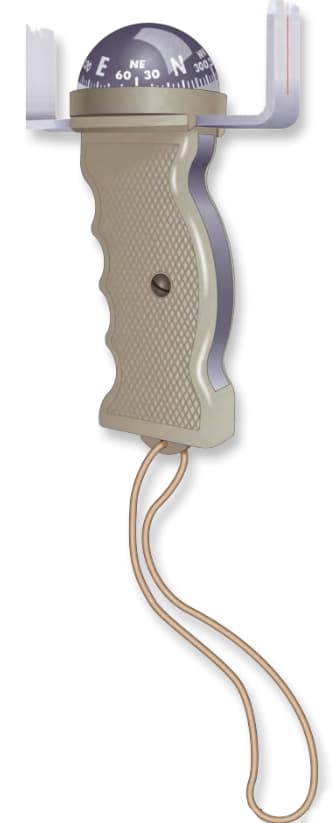
A hand-bearing compass earns its place on deck because it does one job fast, clearly, and without asking the boat for power. When the chartplotter lags, the phone app is unreadable in glare, or the electronic compass makes you second-guess what you are seeing, a simple bearing tool still tells you whether the situation is changing or staying fixed.
What the tool really is
Don Launer starts with the plain definition that matters offshore: a hand-bearing compass is a portable sighting compass used to take a bearing, or azimuth. That sounds basic because it is basic, and that is exactly why it keeps working when more elaborate gear gets in its own way.
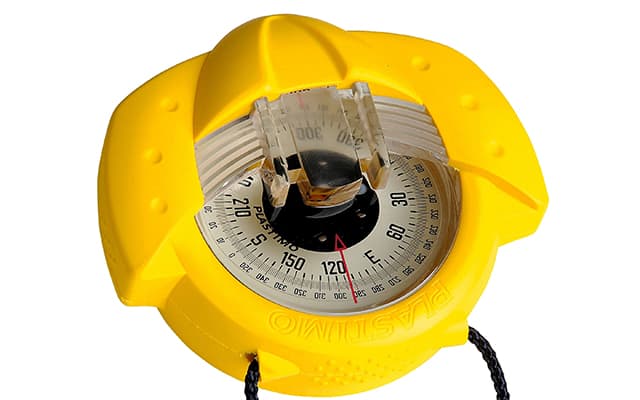
On boats, the two common styles are easy to spot. The gun-sight type is held at arm’s length and lined up through sights. The hockey-puck style sits closer to the eye and gets its nickname from its shape. Many include lights for night use, and some float, which makes them especially sensible for ditch bags, dinghy work, and small-boat redundancy.
Where it beats electronics
The hand-bearing compass is not just nostalgia in a plastic case. It is useful when you need to make a quick judgment about collision risk, when you are keeping an anchor watch, and when you are building a line of position. Those are all moments when a clean, repeatable bearing matters more than a fancy display.

The collision case is the clearest. COLREG Rule 7 says risk of collision is deemed to exist if the compass bearing of an approaching vessel does not appreciably change, and the U.S. Coast Guard Navigation Rules Handbook repeats the same principle. That means the bearing of the other boat is not trivia, it is the core of the decision. If the number is holding steady while the target grows larger, you are not “maybe” on a collision course. You are in the middle of a real one.
Anchor watch works the same way. U.S. regulations require a proper anchor watch and procedures to detect a dragging anchor under 33 CFR 164.19, and the Coast Guard also points to radar guard rings, GPS anchor watch, echo sounder alarms, and regular inspection of anchoring gear as ways to catch dragging early. A hand-bearing compass gives you a low-tech cross-check: pick a shoreline object, take a bearing, and see whether it moves. If it moves, so does the boat.
How to use it without fooling yourself
This is where a lot of casual users go wrong. A hand-bearing compass is only as honest as the spot you hold it in. Don Launer notes that if you expect to use it for lines of position, you need to determine deviation at various locations aboard while swinging ship. In plain boat terms, the place you stand can change the reading, and the highest reachable point on the boat is often the best place to get the least error.
That matters because handheld compasses are not immune to deviation. Sailors often think deviation is only a steering-compass problem, but the same magnetic mess can influence a portable compass too. If you need an accurate plotted fix, you need to know the error at different spots aboard and correct for it before you trust the bearing on paper.
Variation is the other piece that trips people up. NOAA says magnetic declination, also called magnetic variation, is the angle between magnetic north and true north, and that it changes over time and with location. That means a bearing taken with a hand-bearing compass is not automatically ready to plot as a line of position. You still have to apply variation when you use that bearing on the chart, and a navigation course source makes the same point directly for hand-bearing compass work.
Why seamanship training still teaches it
US Sailing’s Coastal Navigation standards still require students to demonstrate use of a hand-bearing compass, understand relative bearings, and correctly apply variation and deviation. That is not old-school theater. It reflects the fact that good seamanship still depends on being able to look up, take a bearing, and know what the number means.
The same idea shows up in the wider rules of carriage. Under 46 CFR 28.230, each vessel needs an operable magnetic steering compass with a deviation table at the operating station. That is a different compass, but it reinforces the same lesson: magnetic error is real, and mariners are expected to account for it rather than hope it goes away.
The practical gear choices that make sense
If you carry a hand-bearing compass, pick one that fits the way you actually sail. The gun-sight style is easy to use at arm’s length, while the hockey-puck style tucks closer to the eye and can feel more natural in a tight cockpit. If you sail at night, a lighted model saves you from improvising with a headlamp and a shaky grip.

Binocular-mounted options are worth a look too. The Victoria and Albert Museum notes that Offshore Instruments Limited’s Bino Compass is a miniature long-range bearing compass designed for use with 40mm or 50mm marine binoculars. That is a neat bit of kit because it lets you scan the horizon and take a bearing without juggling separate tools.
There is a good reason this idea keeps coming back. Ritchie Navigation’s history notes that in the 1960s acrylic domes and high-strength plastics replaced glass domes and metal castings, which is a reminder that marine compasses have always evolved toward lighter, tougher, more practical gear. The form may change, but the need for a dependable bearing tool has not.
The low-tech backup that keeps the boat honest
A hand-bearing compass is cheap seamanship insurance. It keeps navigational habits sharp, gives you a redundant bearing when electronics are slow or dark, and helps you confirm what the chartplotter is claiming instead of trusting it blindly. On a good day, it backs up your electronics. On a bad day, it becomes the thing that keeps the situation understandable.
That is why this little tool still belongs within reach, not buried in a drawer. The modern cockpit can be crowded with screens, alarms, and overlays, but when you need to know whether a ship is closing, whether the anchor is holding, or whether your fix makes sense, a clean bearing still cuts through the noise.
This article was produced by Prism’s automated news system from verified source data, official records, and press releases, then run through automated quality and moderation checks before publishing. The system is built and supervised by the people who set the standards it runs under. Read our full AI policy.
Did this article answer your question?