Wireless engine cut-off systems add man-overboard tracking for sailors
Wireless cut-off systems do more than kill the engine. For sailors, the real upgrade is MOB location and recovery, if you can handle the extra complexity.

The real shift is not the kill switch. It is what happens after the engine stops.
A tethered lanyard has always solved one problem: if the operator goes overboard, the engine dies. That matters, but it only gets you to the first step. Practical Sailor’s safety review makes the sharper point that wireless cut-off systems now push beyond simple shutoff and into man-overboard response, with some packages logging the event, saving a waypoint, and helping the crew navigate back to the person in the water.
That is the part worth paying attention to if you run a sailboat with an outboard or spend time in busy coastal water. Once the boat is moving and the clock is running, knowing where the casualty went over is a very different level of protection than merely stopping the prop.
What changed when the rule came down
The U.S. Coast Guard’s operator-use requirement for engine cut-off systems took effect on April 1, 2021. It applies to covered recreational vessels with 3 or more horsepower that are less than 26 feet in length. The Coast Guard also says the link must be attached to the operator, the operator’s clothing, or the operator’s personal flotation device.
That rule came after earlier federal law in 2018 required manufacturers to install emergency engine cut-off switches. The difference is important: the 2018 law pushed the hardware onto boats, while the 2021 rule pushed actual use onto operators. In plain sailing terms, that moved ECOS from a tucked-away safety feature to something you have to think about every time you get underway.
For DIY sailors, that matters because sailboats with outboards often create awkward ergonomics for a traditional cable kill switch. If you need to move around to trim, handle lines, or shift position at the helm, a cable can become a nuisance. That is one reason wireless options have started to look less like gadgetry and more like a practical retrofit.
What wireless systems actually buy you
The newest systems are not just red coiled tethers with a different end. Practical Sailor notes that six systems now do more than the old lanyard, and that is the real story. A wireless package can still shut down the engine if the operator falls overboard, but it can also add a second layer of response: MOB detection, waypoint marking, alarms, and wearable tags that are not physically tied to the helm.
Garmin’s OnBoard is a good example of where the category is headed. Garmin announced the system on October 16, 2025, as a wireless Man Overboard and engine-cutoff solution. The system uses wearable tags that can be worn on a wrist band, clipped with a carabiner, or attached to a key-ring float. Garmin says the tags can be designated as captain or passenger tags, and the system can pair up to 8 tags with a compatible chartplotter.
That last detail is the part sailors should care about most. A cut-off switch is a binary device: on or off. A wireless MOB system is trying to be part of the boat’s navigation and recovery workflow. Garmin says OnBoard saves a waypoint on the chartplotter and sounds audible alarms if it detects an MOB. That is not just convenience. It is a way of shortening the gap between “someone is overboard” and “the crew has a usable fix on where to turn back.”
Garmin also says OnBoard can integrate with chartplotters or apps, and the product won the Safety & Security Aboard category in the 2025 DAME Design Awards at Metstrade in Amsterdam on November 20, 2025. That award does not prove the system is perfect, but it does show where the industry thinks the safety conversation is going: toward linked systems, not standalone tethers.
Where the old tether still earns its keep
The traditional lanyard has one advantage the wireless systems cannot erase: it is simple. There is no pairing, no tag management, no battery to think about, and no app workflow to relearn in the middle of a bad day. If the operator gets thrown from the helm and the tether is attached, the boat stops. That basic behavior is still hard to beat.
Wireless systems can absolutely add redundancy, and many owners will be smart to leave the original tethered switch in place and functional. That gives you a backup if a tag goes missing, a battery is flat, or a system behaves the wrong way. It also means you are not forced into an all-or-nothing upgrade. You can keep the old mechanism as a last line of defense while leaning on the wireless side for the richer MOB features.
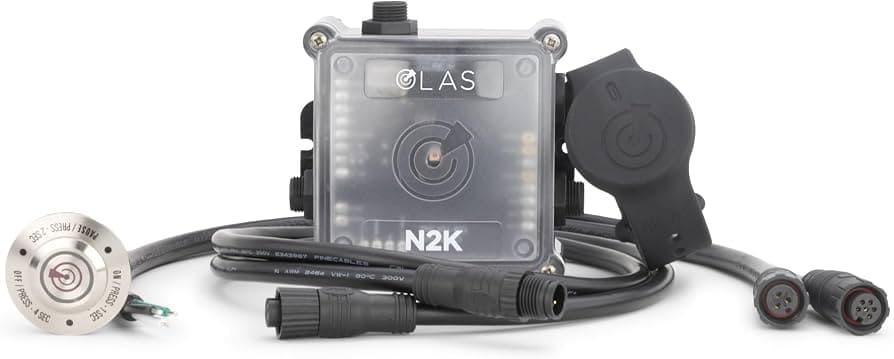
But there is a trap here: a more advanced system can create false confidence if you treat it like magic. Wireless gear introduces new hardware, batteries, pairing steps, and system-specific limits. If you do not understand what happens when a tag drops offline, when a chartplotter is not compatible, or when the alarm logic changes between captain and passenger tags, you have merely traded one kind of maintenance for another.
Who actually benefits from the upgrade
This is the retrofit that makes sense for sailors who already think in layers. If you run an outboard on a sailboat, move around the cockpit a lot, or sail with crew who may not be tethered to the helm in a neat powerboat posture, the wireless approach starts to earn its keep. It is especially attractive when you want the engine shutoff to be part of a broader onboard safety network rather than a stand-alone switch.
The best fit is the owner-operator who will actually test the system before trusting it. That means pairing the tags, checking the chartplotter integration, learning which tag is treated as captain, and confirming that the audible alarm is something you can hear in the real noise of your boat. It also means deciding whether the system’s convenience is worth the added complexity on your specific boat.
For offshore use or busy coastal waters, the difference between “engine stopped” and “MOB marked on the plotter” can be the difference between a long search and a direct turn-back. That is the clearest argument for wireless systems: they do not just protect the prop, they help you recover the person.
The old red lanyard still belongs in the conversation because it is simple and proven. But once you have seen what a wireless system can do, the question is no longer whether the engine shuts down. The real question is whether your cut-off setup gives you enough information to get back to the person in the water before the situation turns from urgent to unrecoverable.
This article was produced by Prism’s automated news system from verified source data, official records, and press releases, then run through automated quality and moderation checks before publishing. The system is built and supervised by the people who set the standards it runs under. Read our full AI policy.
Did this article answer your question?


