How to train your dog to shed hunt safely and slowly
The fastest way to wreck a shed dog is to rush the work. Start with recall, leave it, and short, controlled antler games, or don’t start at all.
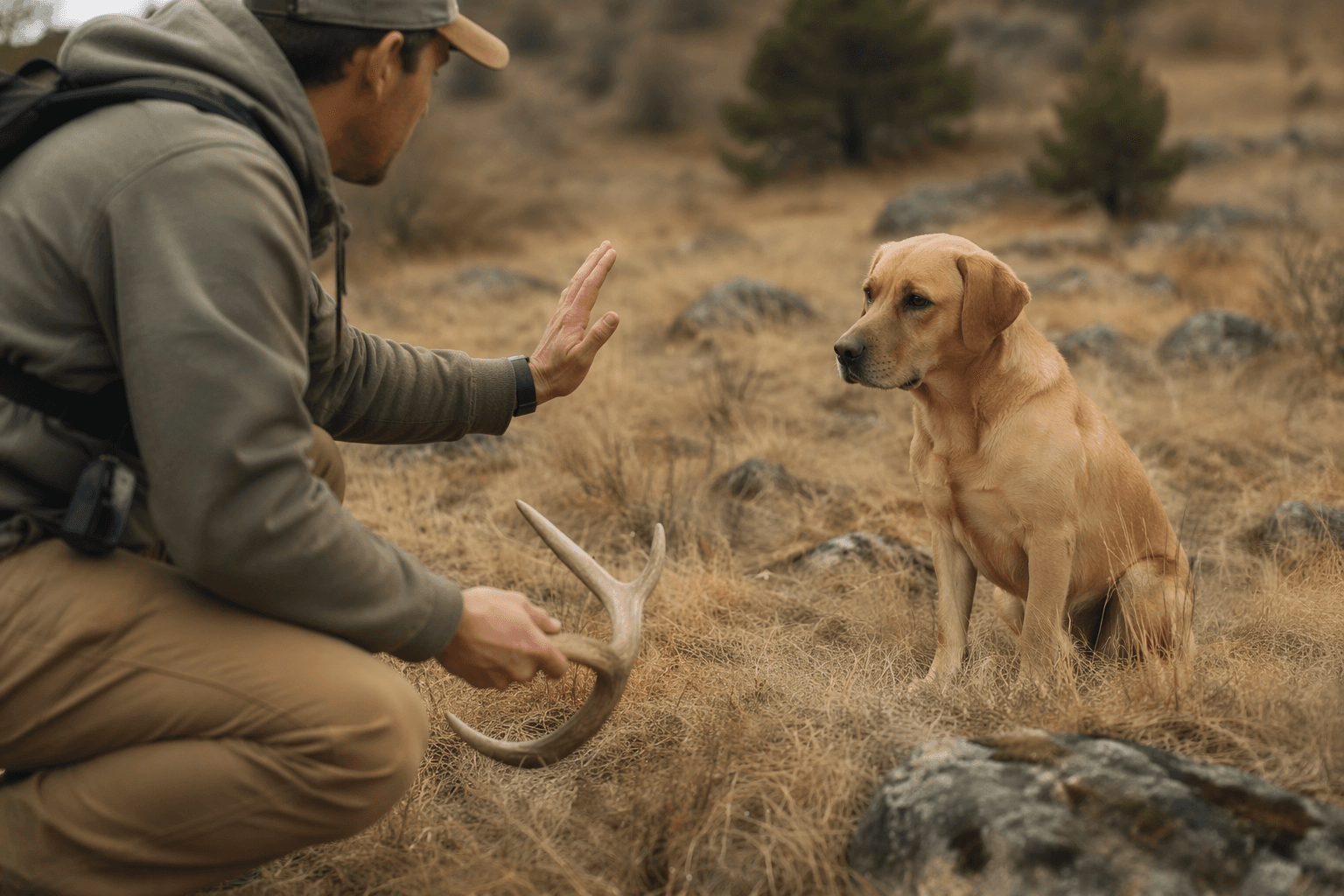
A shed dog is built on control first and nose work second. The quickest path to a sloppy, unsafe hunter is to drag a young dog into the timber before it can come when called, hold a stay, or ignore a bad temptation on the ground. The smarter route is slower, more boring, and much more effective: obedience, then scent work, then carefully managed field time.
Start with obedience, not antlers
The Shooting Gears guide takes the right stance from the jump: before a dog ever starts searching for antlers, it should already know recall, sit, stay, leave it, and heel. That order matters because shed hunting is full of distractions, from tracks and birds to bones, old chew finds, and rough country that can pull a dog off task in a hurry. If those commands are not solid at home, they will not magically tighten up once the dog is running scent in the field.
This is where a lot of beginners blow it. They get excited about the find and forget the dog has to be managed, not just motivated. A dog that cannot stop on cue or return cleanly when called is not ready for antlers, no matter how hard it wants to hunt.
Use reward-based training that the dog actually understands
The American Kennel Club’s basic training guidance lines up with that philosophy: positive reinforcement means rewarding the dog for what it does right. In plain English, that can be treats, toys, praise, or games, but the reward has to matter to the dog, not to the handler. If a dog lights up for a tug session and shrugs at kibble, use the tug. If food works, keep it simple and consistent.
That reward-first approach is especially important for recall and “leave it.” The AKC treats recall as a safety-critical skill, and calls “leave it” potentially lifesaving. In shed work, those commands are not optional polish. They are the difference between a focused partner and a dog that eats garbage, grabs something sharp, or blows through a hazard because it got overexcited.
Keep the first antler sessions short and controlled
Once obedience is dependable, introduce antlers in the safest, least dramatic way possible. The guide favors controlled antler introduction and short scent games, which is exactly how you avoid creating a dog that only works when the session turns into a free-for-all. Start small, keep the setup predictable, and make success easy enough that the dog can win without guessing.
Real antlers are not chew toys. The guide warns that they can have sharp edges, so early sessions need close supervision and no unsupervised chewing. That matters more than most people think, because bad chew habits can turn a promising retriever into a mouthy dog that treats every find like a snack instead of a retrieve.
A practical sequence looks like this:
1. Let the dog see and smell the antler in a calm setting.
2. Reward interest and a clean return.
3. Keep sessions short enough that the dog leaves wanting more.
4. Stop before the dog starts turning the antler into a chew object.
The goal is not to flood the dog with antlers. The goal is to create a dog that treats the antler as a find to locate, pick up, and deliver, not something to gnaw on until the session falls apart.
Move outdoors only when the dog is truly ready
Outdoor practice should come after the foundation work, not before it. Once the dog understands the game indoors, start in controlled outdoor spaces where you can manage distance, distractions, and terrain. That step-up matters because the field adds real problems fast: brush, slopes, ice, mud, and scattered hazards can overwhelm a dog that is still learning impulse control.
This is also where patience pays off. The guide’s bigger message is that shed-dog work should feel fun, structured, and age-appropriate for the individual animal. A young dog may need very short sessions. An older dog may need slower pacing. A high-drive dog may need more structure, not more pressure.
Check the dog before you check the timber
The welfare piece is not a side note. The guide encourages owners to think about health and fitness before starting, especially with young dogs, older dogs, overweight dogs, or dogs coming back from injury. That is not softness; it is common sense. A dog that is underconditioned or physically compromised is harder to control and easier to hurt once the work gets real.
Veterinary training guidance supports that approach, noting that training can reduce accidents and injuries by improving obedience. In shed hunting, that means the dog is less likely to launch into a bad line, ignore a cue, or panic into a terrain mistake. Good obedience does not just make the dog nicer to live with. It makes the field work safer.
Respect the land before you step onto it
Access rules are part of shed training whether people like it or not. The U.S. Forest Service says hunters need to follow state laws and regulations on seasons, dates, and licensing, and that some forest areas may be off limits. The U.S. Fish and Wildlife Service also has specific shed-antler collection rules for refuge lands. If you are training on public land, those rules are not a suggestion, and they can change by place and season.
That matters because shed training can blur the line between casual practice and real use. Off-leash work, wildlife-sensitive periods, and restricted areas can all come into play. A dog can be doing everything right and still put you in the wrong place if you have not checked the local restrictions first.
Remember the wildlife on the other side of the game
Shed hunting is popular enough that wildlife agencies have started warning about its effects. Utah wildlife officials say antler hunting has grown in popularity over the past decade and can displace deer from preferred winter habitat. That is a serious reminder that even a harmless-looking training session has a footprint when it happens in sensitive country.
Brigham Young University research adds to that picture. A thesis based on GPS-collared animals examined the effects of shed antler hunting on bighorn sheep, bison, and mule deer from 2012 to 2015. You do not need to turn into a biologist to train a shed dog, but you do need to understand that the activity happens inside a larger wildlife system.
Virginia’s Department of Wildlife Resources also frames shed hunting as a seasonal bridge, something people often do between deer season, turkey season, and fishing. That is a useful way to think about it: as a transition sport, not a sprint. Timing, access, and restraint are part of the job.
A dog trained the right way will not be made by volume or intensity. It will be made by short sessions, real obedience, careful antler exposure, and constant attention to the dog’s body and the land under its feet. That is how you end up with a shed dog that can work safely, stay under control, and keep getting better instead of burning out on the first rough season.
This article was produced by Prism’s automated news system from verified source data, official records, and press releases, then run through automated quality and moderation checks before publishing. The system is built and supervised by the people who set the standards it runs under. Read our full AI policy.
Did this article answer your question?