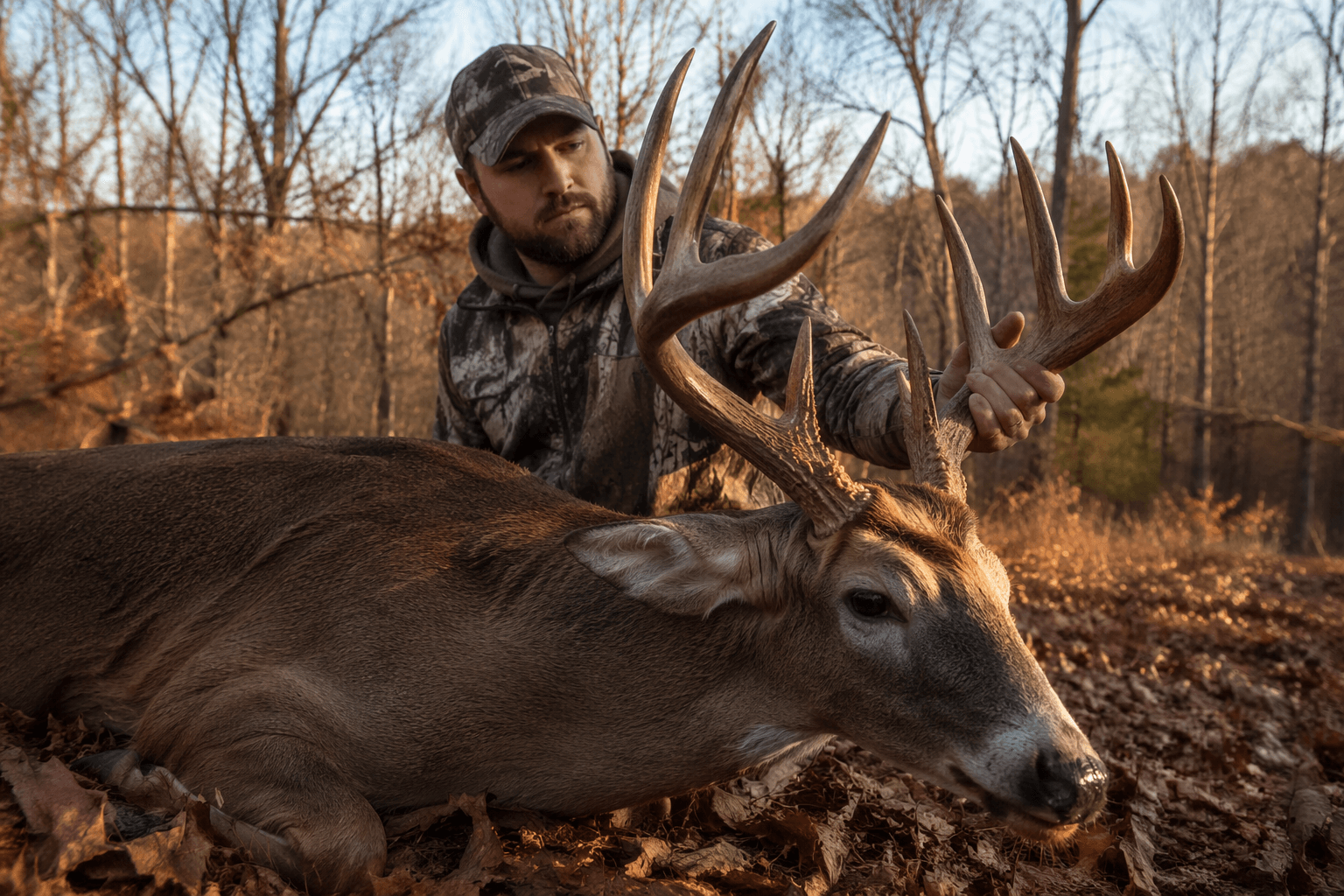
Shed hunting helps track Wisconsin buck estimated at 14.5 years old
Shed finds and trail cams helped trace a Wisconsin buck estimated at 14.5 years old, even with more than 54 vehicles at one public access point during gun season.

A Wisconsin buck estimated at 14.5 years old survived thick public land and enough gun-season pressure to put more than 54 vehicles at a single access point. That alone makes the deer a rare case, but the real story is how his age and habits were pieced together from sheds, trail cameras, patience, and repeated observation.
Sportsmen’s Empire Whitetail Hunting laid out that trail in its N.F.C. - The Oldest Buck In The World episode, posted June 19, 2026. The buck lived in cover that let him stay nearly invisible, and the hunters kept learning about him season after season instead of treating him like a one-year target. The description points to the kind of clues shed hunters and deer chasers know well: a buck’s antlers can confirm he is still alive, help narrow his travel routes, and show where he is moving between bedding and feeding areas.
That’s what makes this story useful beyond one freakish whitetail. Independent aging guides say hunters look at the chest, belly, back, neck, legs, and hoof condition to estimate a deer’s age on the hoof, and the episode called out the same kind of field signs, including swollen ankles, worn hooves, and subtle movement patterns. When those details line up with repeated shed finds and consistent camera hits, you stop guessing and start building a life history. A buck does not reach mid-teens by accident on public dirt; he survives by living in pockets of cover, slipping pressure, and moving in ways most hunters barely notice.
Wisconsin makes that lesson even sharper. The Wisconsin DNR says the state has more than 6 million acres of public land, most of it open to hunting, and describes Wisconsin as nationally recognized for producing some of the largest whitetail bucks. Its deer metrics system tracks harvest figures, population trends, deer-health issues, and hunter dynamics, all of which help explain why a long-lived public-land buck stands out so much. The 2026 extended archery season also runs until Jan. 31, 2027, in Metro subunits, keeping pressure and scouting interest in play well beyond the first wave of the season.
For shed hunters, the takeaway is plain: antlers are not just trophies on the ground. They are evidence. In a place where the access lots fill up, the cameras keep clicking, and the deer keeps slipping away, a shed can tell you a buck is still alive, where he has been, and how long he has managed to beat the odds.
This article was produced by Prism’s automated news system from verified source data, official records, and press releases, then run through automated quality and moderation checks before publishing. The system is built and supervised by the people who set the standards it runs under. Read our full AI policy.
Did this article answer your question?