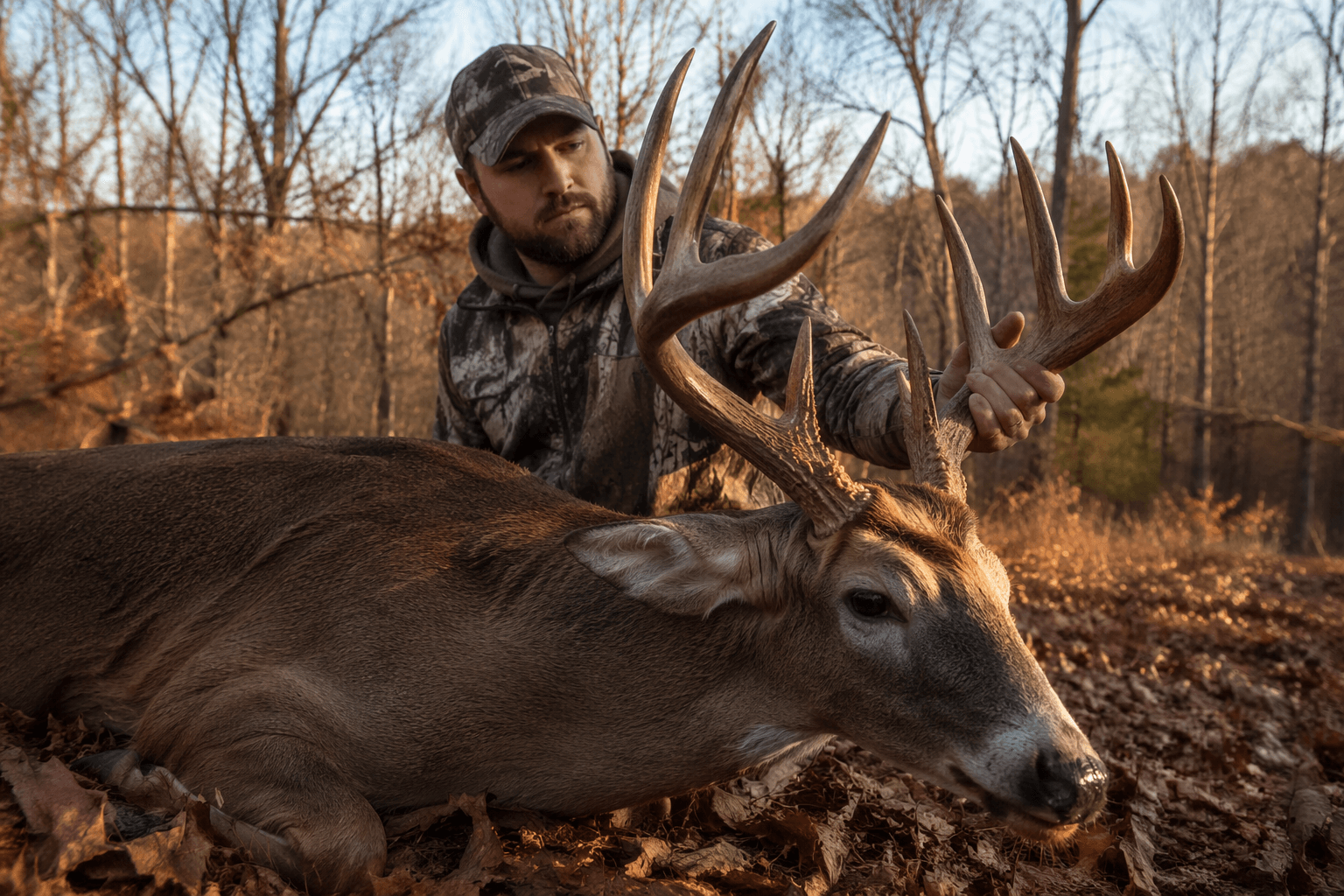
Shed hunting scoring follows strict rules, not just eyeballing length
A giant shed can still miss the record book if you measure it wrong. NASHC, Boone and Crockett, Pope and Young, and Buckmasters all score by different rules.
A heavy antler in hand does not automatically translate to a record-book number. In shed hunting, the tape only matters after the right person measures the right way, on the right form, under the right system. That is why a shed that looks like a monster on the tailgate can land differently depending on whether it goes through NASHC, Boone and Crockett, Pope and Young, or Buckmasters.
What NASHC actually measures
The North American Shed Hunters Club was founded in 1991 and is the official scoring, measuring and record-book authority for North American big-game shed antlers. Its rules are not casual guidelines. Every entry must be measured on official NASHC score sheets by a qualified NASHC measurer or by a volunteer Boone and Crockett or Pope and Young Club measurer.
NASHC does not treat shed scoring like eyeballing beam length in camp. No spread credits are allowed. Typical tines are measured from the top of the main beam, and unusual antler forms such as common-based tines or webbed antlers should go to a knowledgeable measurer who knows how to handle the oddball geometry.
Why the photos matter as much as the tape
NASHC also cares how you document the shed, not just how you measure it. A single shed entry needs two photos showing the inside and outside profiles. A matched pair needs five photos: inside and outside views of each antler, plus a front view that shows how the pair would appear on the buck.
The club warns against laying sheds flat on the ground for photos. The better move is to prop the antler under the main beam so the tines and beam shape are readable.
For top-ten all-time entries, NASHC requires a two-person panel of qualified measurers.
The paper trail behind a shed score
NASHC does not just run the scoring room. It also maintains a record book, Shed Antler Records of North American Big Game; Fifth Edition, priced at $24.95. The club’s site also supports the whole infrastructure around it, including a measurer list by state, measurer applications, entry guidelines, and the two-person panel form.
Why official measurers carry so much weight
Boone and Crockett’s involvement with measuring trophy animals dates to 1895, when Theodore Roosevelt and other members served as judges at the Sportsmen’s Exposition in New York’s Madison Square Garden. The club began laying the foundations for its records program in 1902, when Roosevelt was appointed chairman of the first records committee, and James Hathaway Kidder published the first scoring manual in 1906.
Trophies must be scored by a B&C Official Measurer and accepted by the club to be official record-book entries. Its score charts for all 17 forms are available as PDFs, but those downloadable charts are for personal use only and are not acceptable for entry into the awards program.
How Pope and Young fits into the same measuring world
Pope and Young says it and Boone and Crockett maintain the universally accepted scoring system for North American big game. The club has documented well over 100,000 harvests and represents all 29 North American big-game species harvested with bow equipment.
North American big-game species live inside a larger measurement culture that already expects standardized forms and trained measurers. Pope and Young’s official measurer workshops take five days, require travel, and are taught by invitation.
Why the same shed can score differently elsewhere
Buckmasters uses the Full-Credit Scoring System to measure and record antlers without forcing symmetry deductions. Buckmasters adopted the Full-Credit approach in the mid-1990s, and the philosophy first appeared in print in 1982.
That difference can change how the same shed looks on paper. Under one system, symmetry and deductions shape the final number; under another, every inch counts in a different way. Buckmasters says the idea is to create a common language for hunters, but two people can admire the same antler and walk away with different totals depending on the book they use.
How to keep your shed from being scored wrong
- Get it on the correct official score sheet.
- Use a qualified measurer, not a guess.
- Photograph it the way the record book asks, not the way it looks best on a truck tailgate.
- Watch for abnormal growth, common-based tines, and webbed antlers, because those details change how the measurement is taken.
- Know which system you are entering before you ever start the tape.
If you want a shed to mean something beyond a memory, the safest path is simple and strict:
This article was produced by Prism’s automated news system from verified source data, official records, and press releases, then run through automated quality and moderation checks before publishing. The system is built and supervised by the people who set the standards it runs under. Read our full AI policy.
Did this article answer your question?