Wyoming clarifies shed antler rules, maps and access for 2026
Wyoming’s shed rules are a map-and-clock game now: miss the opener, the closed land, or the access slip, and the whole trip can go sideways.

Wyomingshed season is not a free-for-all, and the 2026 rules page makes that obvious fast. Chapter 61 sits beside the big-game brochures, the antler hunting area map, the closed-state-lands list, and the special access links for Dubois country, which is exactly how the state wants you to approach it: planned, mapped, and legal before you step out of the truck.
Start with the rulebook, not the trailhead
The first thing that matters is where Wyoming puts the rules. The department’s regulations hub points directly to the 2026 antelope, deer and elk brochure, then to Chapter 61, the shed antler and horn rule set, so the antler calendar is being managed in the same big-game system that drives the rest of the state’s hunting structure. That hub also warns that some regulations are still awaiting final approval, and that nothing is fully effective until it is approved, signed by the governor, and filed with the Secretary of State, a process that can take up to 75 days.
Know where the closure line falls
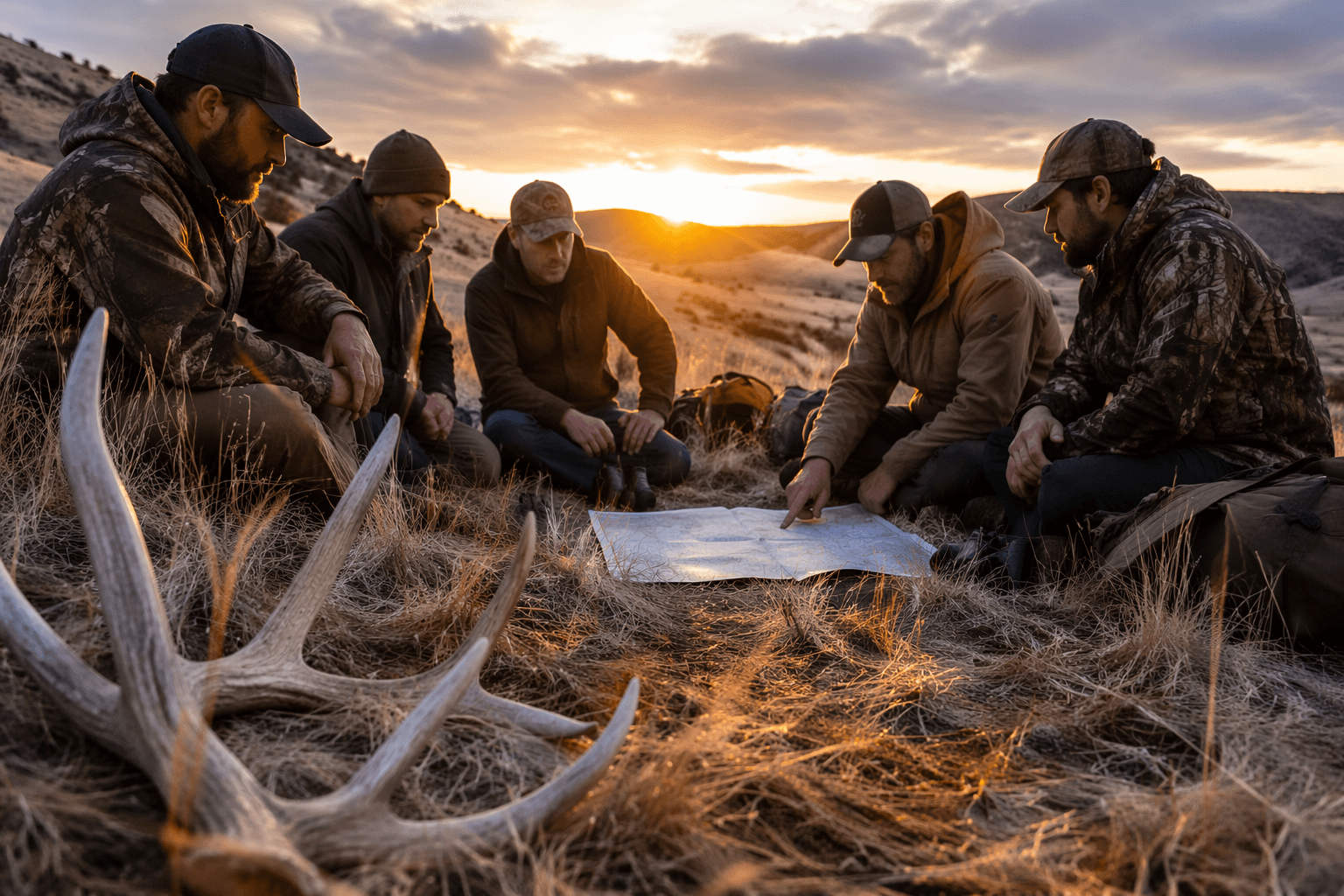
Chapter 61 is built around public land west of the Continental Divide, and the regulations page says the Great Divide Basin is excluded from that rule set. That is the part that keeps people from assuming “west of the Divide” is a blanket answer, because Wyoming is managing by boundary, not by vibes. The page also sends you to an antler hunting area map and a separate state-lands closure list, which is the practical clue that legal access can change from one parcel to the next even when the country looks the same on the ground.
The opener is a date, an hour, and a residency split
On Collection Area 1, Wyoming residents can begin collecting shed antlers at 6 a.m. on May 1. Nonresidents can enter on that date, but they cannot collect until 6 a.m. on May 8, and nonresidents 15 and older also need a conservation stamp to collect shed antlers or horns in that area. The state also keeps shed collection prohibited year-round inside Grand Teton and Yellowstone National Parks, and it reminds hunters that private property is off-limits without permission and that antlers or horns still attached to a head or skull require prior approval from a Game and Fish law enforcement officer, along with a Wyoming Interstate Game Tag if the take is approved.
WhMA closures are there for winter range, not to slow you down for sport
The department says it has 44 wildlife habitat management areas, and it describes them as crucial habitat for big-game winter ranges. Those areas stay closed until their listed opening dates to minimize disturbance to wintering big game and other wildlife, while also protecting habitat from resource damage, which is the real management logic behind the spring lockout. Several of the better-known sheds and access areas do not open on the same day either: Forbes/Sheep Mountain is closed Jan. 1-April 30, Greys River Dec. 1-April 30, Spence & Moriarity and Inberg/Roy both run to May 15, and Whiskey Basin is closed to vehicles only while staying open to foot and horse traffic.
Dubois access is managed, not wide open
If you are aiming at Spence & Moriarity WMA or Inberg/Roy WHMA, the early opening rules are a good example of how Wyoming handles pressure instead of pretending it does not exist. The area opens at 8 a.m. on May 15 for 40 permission-slip holders, and each slip can bring up to three additional people in the vehicle, for a maximum of 160 people entering through the Bear Creek Gate. The system is tightly controlled too: slips are numbered randomly, everyone stages at Thunderhead campground, must check out by 6 p.m., and only one motorized vehicle per party is allowed, with clothing issued by the department required for easy identification.
This is why the state keeps winter-range protection at the center
The shed calendar in Wyoming is really a winter-range calendar wearing antlers. The closures, maps, and gated early access are all designed to keep people from piling onto animals that are still stretched thin at the end of winter, and the department’s spring reminders add one more field detail that matters in bear country: carry EPA-approved bear spray, keep it handy, and watch for tracks, scat, diggings, and birds circling a food source. That is the kind of stuff that separates a clean shed run from a sloppy one, and Wyoming’s 2026 rules make clear which side of that line the state expects you to stay on.
This article was produced by Prism’s automated news system from verified source data, official records, and press releases, then run through automated quality and moderation checks before publishing. The system is built and supervised by the people who set the standards it runs under. Read our full AI policy.
Did this article answer your question?