140-Year-Old Sourdough Starter Brings Bread and Biology to Classroom
A 140-year-old starter turns one classroom into a live lesson in fermentation, local history, and the science hidden inside every loaf.

A starter with a history
Sheri Karosich did more than bring bread dough into Carson Valley Middle School. She brought a 140-year-old sourdough starter, a living culture with a lineage that reaches back well over a century, and dropped it into Heather Stodieck-Barker’s Practical Assessment Exploration System classes as a working lesson in what sourdough really is. That kind of starter changes the story immediately: it is not a novelty jar on a shelf, but a piece of food history that still rises, bubbles, and feeds on the same basic rules bakers rely on today.
That history matters because it gives students something concrete to hold onto. A starter this old turns fermentation into a timeline they can see and measure, not just a concept in a textbook. In the classroom, the jar becomes a bridge between old-world bread making and present-day curiosity, which is why the lesson lands as both practical and memorable.
Bread, biology, and the math in the bowl
The strongest classroom value in sourdough is how quickly it ties together different subjects without feeling forced. Students are not simply hearing that flour and water can become bread over time. They are measuring ingredients, tracking how dough changes as it ferments, and watching a live culture do the work that gives sourdough its rise and flavor.
That process pulls in math and science at the same time. Ratios matter when you build a starter or mix a dough. Timing matters when you wait for fermentation to develop. Temperature changes how quickly the culture moves, which means the same recipe can behave differently from one day to the next. For students, that is an immediate lesson in variables, observation, and cause and effect. Bread becomes a practical way to understand how living systems behave.
The biology piece is just as important. Sourdough is one of the easiest ways to show that food can depend on living organisms, not just heat and ingredients. The starter is active, responsive, and visible in a way that makes microbiology feel less abstract. When students see bubbles form and dough loosen or swell, they are seeing biology at work in something they can eventually eat.
Reading dough the way bakers do
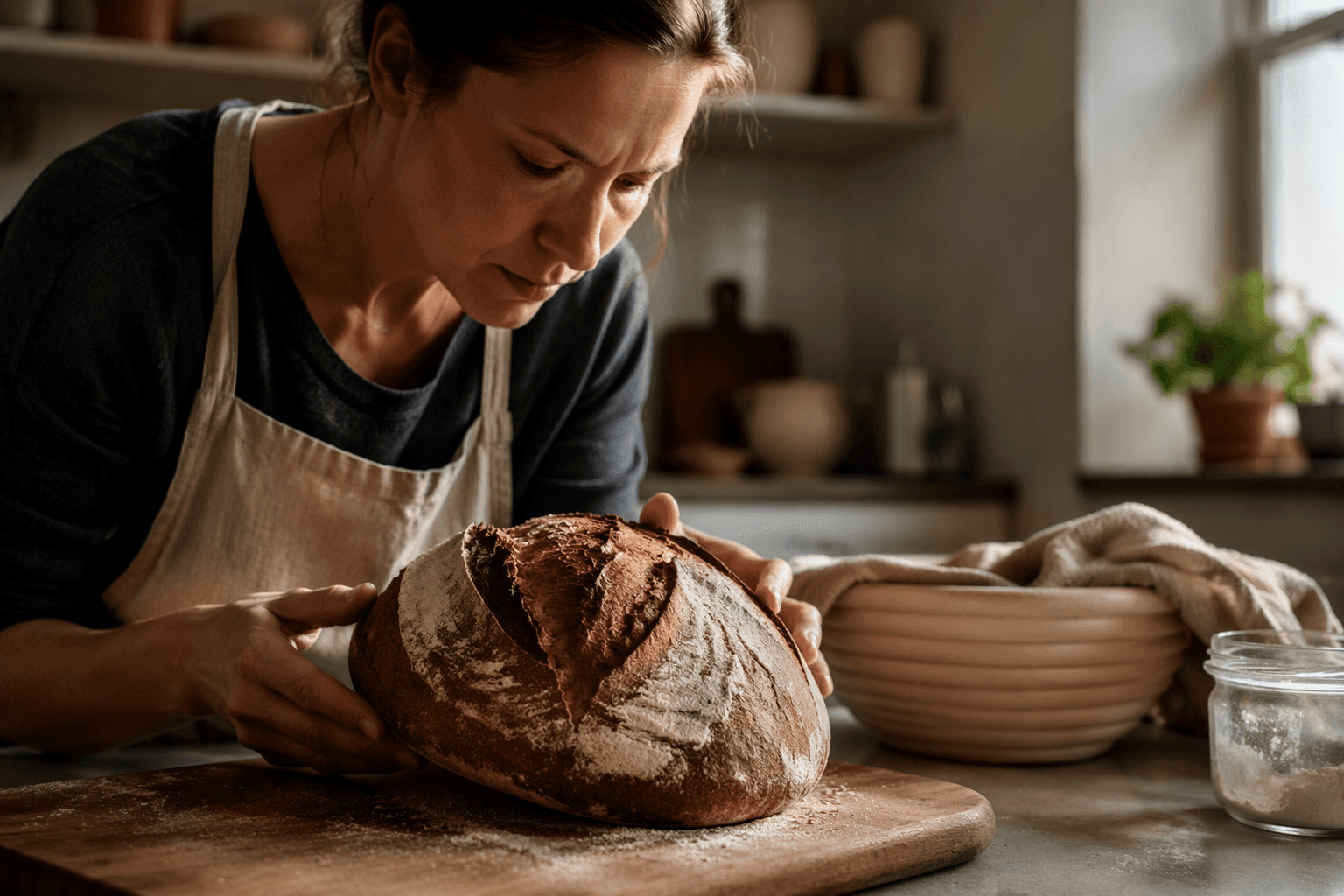
One of the most useful skills the classroom visit highlights is learning how to read dough instead of treating a recipe like a fixed script. That is where sourdough becomes especially valuable as a teaching tool. A baker has to notice whether dough is moving too fast or too slowly, whether the starter looks lively enough, and whether the mix has the right feel before shaping and baking.
That kind of observation builds patience and judgment. It teaches students that good results depend on paying attention, not just following directions. In sourdough, a small shift in temperature or time can change the final loaf, and that makes the process ideal for teaching why precision matters without stripping away creativity. The dough gives feedback, and learning to listen to that feedback is part of the lesson.
For a practical class, that is gold. Students get experience with measurement, timing, and adjustment in a setting where the result is visible and immediate. A loaf that rises well or a starter that perks up after feeding shows them that careful work produces tangible results. A flat loaf or sluggish fermentation teaches just as much, because it forces a closer look at what changed.
Local heritage baked into the lesson
The story also works because it gives the starter a regional identity, not just a culinary one. The reference to old-time prospectors adds local color and places the lesson inside a broader memory of the area. That matters in a place where history is not only something written in books, but something carried in stories, foods, and family habits.
A 140-year-old starter naturally invites that kind of connection. It suggests continuity, migration, endurance, and the way bread traditions survive because people keep feeding them. When students hear that kind of background, they are not just learning how to make sourdough. They are being introduced to the idea that food can carry community history in the same way as photographs, letters, or local landmarks.
That is what gives the classroom visit its real weight. The starter is old, but the lesson is current. Students see that heritage is not locked away in a museum case. It can live in a jar on a counter, wake up with water and flour, and keep a local story moving from one generation to the next.
Why sourdough works so well in a classroom
Sourdough is especially effective in a school setting because it is slow enough to observe and simple enough to repeat. You can feed a starter, compare how it behaves, and connect each stage to a larger concept without needing specialized equipment. The process is tactile, visual, and easy to link to everyday problem-solving.
That makes it a rare kind of lesson: one that teaches science through smell, texture, and timing. Students learn how fermentation affects dough, why living cultures need care, and how recipes depend on conditions that can shift from day to day. They also see that good bread is the result of managing those variables, not ignoring them.
For home bakers, that same lesson carries over immediately. A starter often holds more than leavening power. It can also hold family memory, neighborhood tradition, and regional identity. That is part of why sourdough keeps resonating far beyond the home oven. It gives people a way to practice patience, observe change, and stay connected to something older than the loaf in front of them.
A lesson that rises beyond novelty
What makes this classroom visit matter is not just that a 140-year-old starter showed up in a middle school. It is that the starter turned bread making into a full lesson in biology, math, observation, and local history all at once. Students walked away with more than the idea that sourdough is old-fashioned or artisanal. They saw how a living culture behaves, how fermentation transforms dough, and how a recipe can carry a community’s memory along with its flavor.
That is the deeper value of sourdough in education. It teaches that bread is not only something you bake. It is something you study, maintain, and inherit.
This article was produced by Prism’s automated news system from verified source data, official records, and press releases, then run through automated quality and moderation checks before publishing. The system is built and supervised by the people who set the standards it runs under. Read our full AI policy.
Did this article answer your question?