Beginner-Friendly Sourdough Focaccia Makes Baking Simple and Flexible
This sourdough focaccia skips kneading, shaping, and stress, giving beginners a flexible 12- to 24-hour bake with golden, bubbly results.
Why focaccia is the smartest first sourdough bake
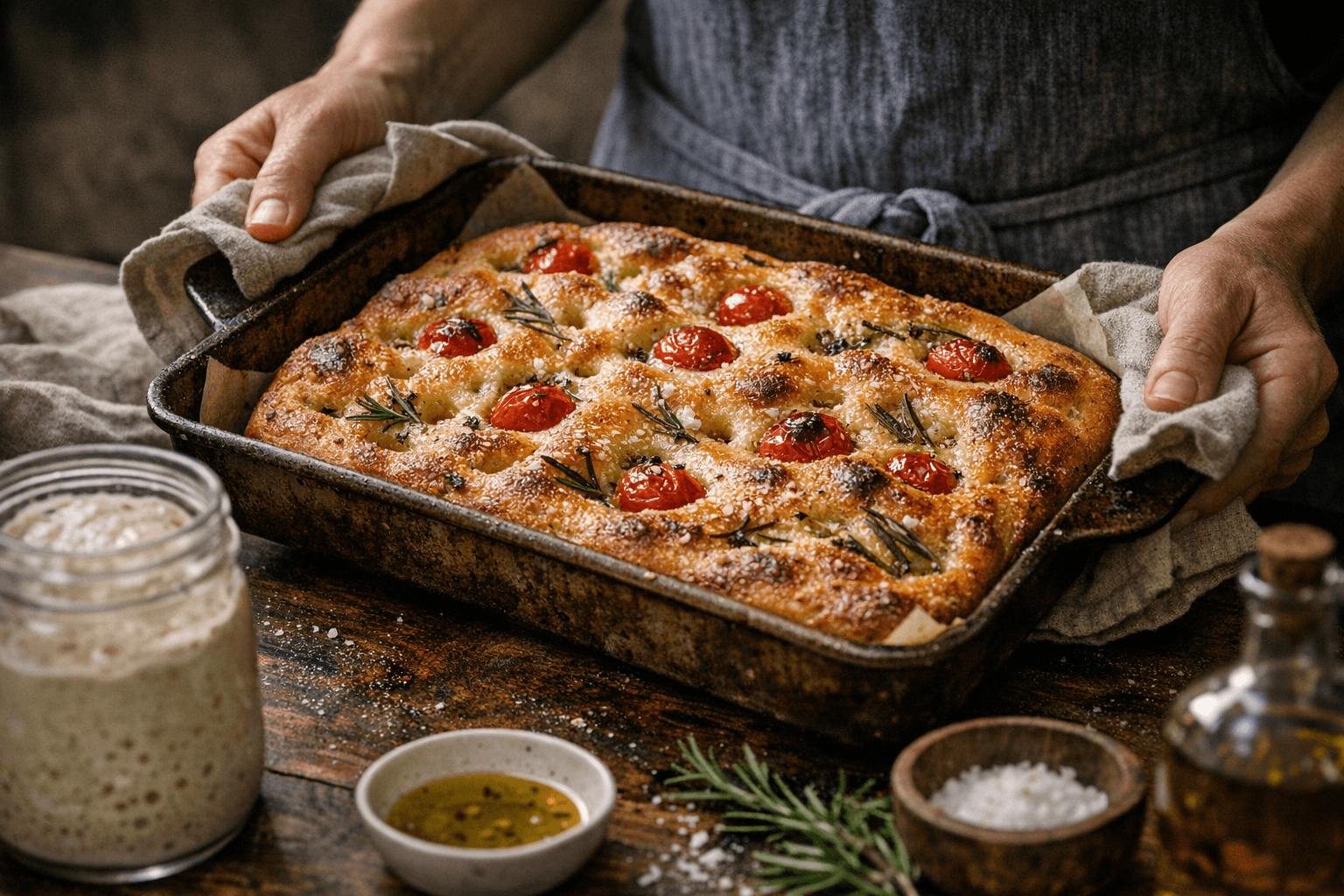
If sourdough has felt like a project you need to be ready for, focaccia is the gentler way in. Mirlandra Neuneker’s easy sourdough focaccia strips out the three things that scare off a lot of first-time bakers: kneading, stretch and folds, and shaping. What you get instead is a golden, bubbly bread with crisp edges and a soft, airy center, built on hydration, time, and a little restraint.
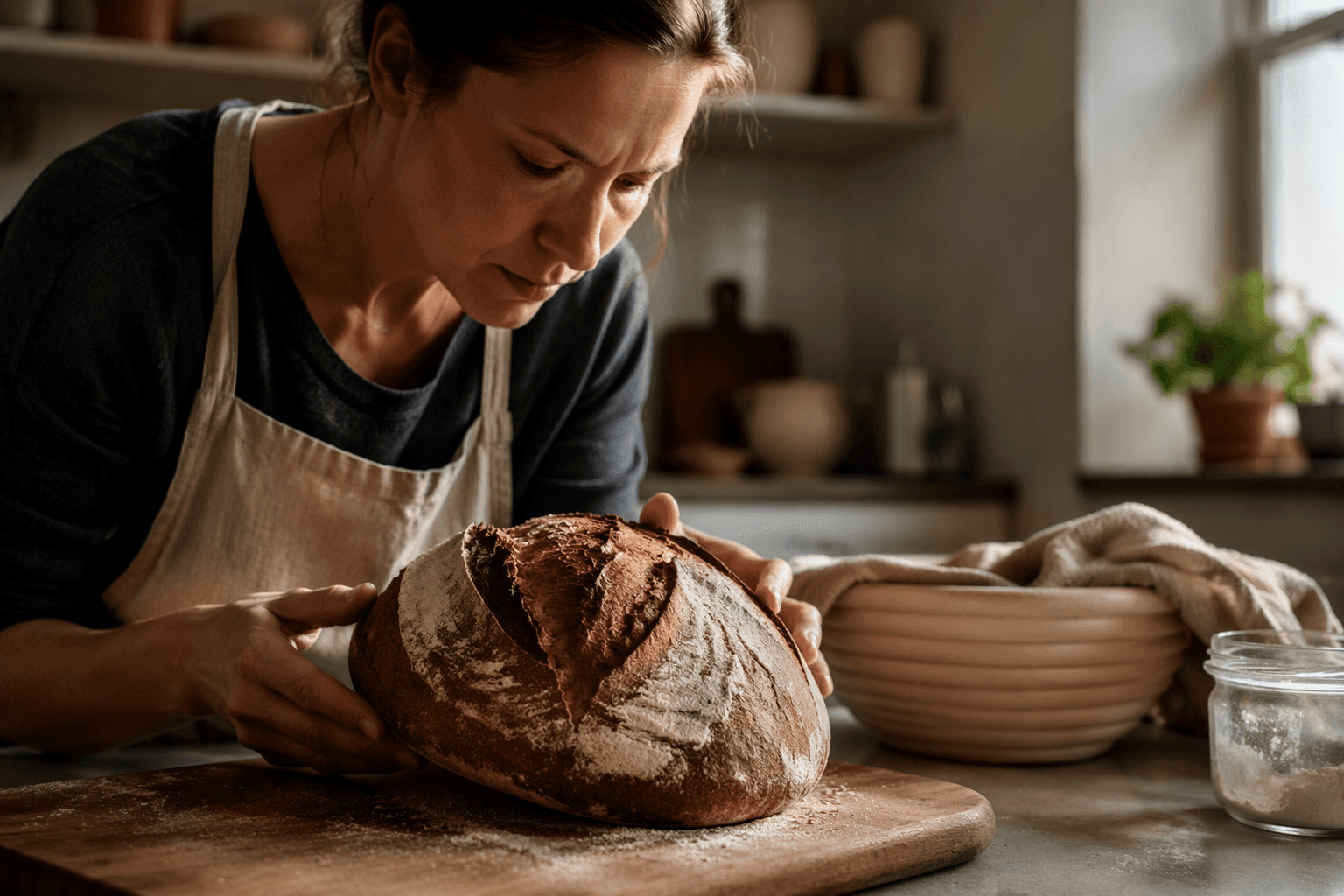
That combination matters because beginner sourdough usually goes sideways at the same pressure points. A boule asks you to build structure, handle a sticky dough with confidence, score it cleanly, and trust oven spring to do the rest. Focaccia changes the job description. The dough is pressed into a pan, dimpled instead of tightly shaped, and topped rather than carved open, so you can focus on fermentation and texture instead of trying to make a perfect round loaf.
The no-stress method that makes it work
Neuneker’s recipe is deliberately low-lift. There is no kneading, no stretch and folds, and no shaping, which is exactly why it works so well as an entry point. The dough relies on high hydration and time, which gives it that familiar focaccia personality: crisp at the edges, soft in the middle, and light enough to feel bakery-made.
The bigger win is psychological. A lot of people get stuck waiting until they feel “ready” to bake sourdough bread, as if the first loaf has to be a dramatic boule with a perfect ear. Focaccia removes that barrier. You still need an active starter, proper hydration, and a sense of when the dough has proofed enough, but the format is forgiving if your hands are still learning what well-fermented dough looks and feels like.
Why this is easier than a classic boule
A boule can punish small mistakes. Under-proof it and you get a tight crumb. Over-handle it and it tears or deflates. Score it poorly and the loaf can burst wherever it wants. Focaccia sidesteps most of that. Because it is baked as a flatbread, it does not depend on a dramatic score line or a carefully built skin to expand properly.
- how an active starter behaves
- what a properly hydrated dough feels like
- how proofing changes texture and lift
- how little handling a sourdough dough actually needs
That makes it a better teacher, too. With focaccia, you learn the essentials without the theater:
You are still baking sourdough, but without the high-wire act.
A bread with real history, not just convenience
Part of the charm is that focaccia’s simplicity is not some modern shortcut. Britannica describes it as one of Italy’s most ancient breads, thought to have originated with the Etruscans. The earliest versions were unleavened flatbreads made from flour, water, and salt and baked in the hearth. That gives the bread a kind of old-world credibility that fits the way it behaves in a home kitchen: rustic, adaptable, and not fussy.
King Arthur Baking takes that same flexibility seriously in its own focaccia work. It describes focaccia as a simple Italian flatbread that can be made thinner for more chew or thicker for a softer bread. That shape-shifting quality is a big part of why it travels so well from ancient hearth bread to modern starter bake.
Why the timing is such a good fit for real life
The other reason this recipe stands out is the schedule. Neuneker’s version allows for same-day or overnight fermentation in a 12- to 24-hour window, which is a huge deal for home bakers trying to fit bread around work, errands, or dinner plans. You are not locked into a narrow window where missing one step ruins the whole loaf.
That flexibility is part of why focaccia keeps winning over bakers who want something reliable. King Arthur Baking notes that many focaccia recipes take at least 24 hours, which is why its 2025 Recipe of the Year, Big and Bubbly Focaccia, was developed as a repeatable, customizable version that does not require an overnight rise. It was designed for a bubbly, bronzed top, crisp edges, and a tender interior, and the company also points out that the dough can be baked in two 9 x 13 pans, one to keep and one to share. That is the kind of practical detail that makes focaccia feel generous instead of precious.
The sourdough moment behind the recipe
There is also a timing story here. Tufts Now reported in January 2021 that sourdough baking had surged since March 2020, driven in part by the early pandemic yeast shortage and by the simple fact that more people were at home. That home-baking wave made live-fermented bread feel more accessible, and focaccia fit the moment unusually well because it is less punishing than a loaf that needs perfect shaping and scoring.
Neuneker’s personal angle helps, too. She first encountered memorable focaccia through a family member, then realized how easy it was to recreate at home. That gives the recipe a social, lived-in feel instead of a purely technical one. The best beginner sourdough content usually does exactly that: it makes the process feel like something you can actually bring into your kitchen, not a rite of passage reserved for people with flawless bannetons and six jars of starter.
What to focus on the first time you bake it
If you make this once, pay attention to the things focaccia rewards most. Do not rush the fermentation. Give the dough enough time to become airy and extensible, because that is what creates the open crumb and that light, bubbly top. Handle it gently when you move it to the pan, and resist the urge to overwork the surface just because it looks loose.
- use an active starter
- respect the hydration
- let the dough proof fully
- dimple instead of shape aggressively
- trust the pan to do the heavy lifting
Keep these priorities in mind:
That is the beauty of focaccia as a starter sourdough bake. It teaches you what matters without making you fight the dough for every inch of progress.
The bigger lesson baked into the pan
There is a lot of talk around sourdough about health, but the strongest case for this bread is still practical and sensory. A 2023 systematic review in Advances in Nutrition said sourdough fermentation is widely believed to offer nutritional benefits, but many claims still outrun the evidence. A 2025 review in Applied Microbiology found that sourdough fermentation can improve mineral bioavailability, while also making clear that the evidence is still evolving.
That is worth knowing, but it is not the main reason to make this loaf. The real draw is that sourdough focaccia gives you the flavor, texture, and confidence-building payoff without the usual beginner traps. It is ancient bread made modern, and for a first sourdough project, that is about as smart as it gets.
This article was produced by Prism’s automated news system from verified source data, official records, and press releases, then run through automated quality and moderation checks before publishing. The system is built and supervised by the people who set the standards it runs under. Read our full AI policy.
Did this article answer your question?