From software to sourdough, Menlo Park microbakery builds loyal following
A Paris-born starter called Albus helped turn a software career into Kirana Bakehouse, a Menlo Park microbakery with weekly Friday sourdough delivery.

The starter is the story
Albus is the kind of starter that makes a microbakery feel real before you’ve tasted a single loaf. Created during a baking workshop at Le Cordon Bleu Paris, the starter now drives Vanya Weng’s home bakery in The Willows neighborhood of Menlo Park, where Kirana Bakehouse has built its identity around naturally leavened bread with a backstory. That matters in sourdough, because a strong starter is never just a jar on the counter, it is the engine that carries the whole business.
Weng’s path also lands in one of the most familiar modern pivots in the Bay Area: software to sourdough. Instead of treating baking as a side hobby, she turned the discipline, patience, and repetition of home sourdough into a small food operation with recurring customers. The result is not a storefront bakery trying to do everything at once, but a microbakery with a clear lane and a very specific audience.
What Kirana Bakehouse actually sells
Kirana Bakehouse describes itself as a microbakery specializing in made-to-order artisanal sourdough in the Palo Alto and Menlo Park area. The bread is positioned less like an impulse buy and more like a weekly ritual, with a monthly bread subscription built around Friday delivery. That cadence gives the business a rhythm home bakers will recognize immediately: mix, ferment, shape, bake, deliver, repeat.
The ordering system is just as telling. Each loaf is made to order and takes about 3 days to prepare, with delivery landing 2 to 3 days after ordering. There is free delivery and no pickup, which keeps the operation tightly controlled and lets Weng focus on production instead of managing a retail counter. For a home bakery, that simplicity is not a limitation, it is the model.
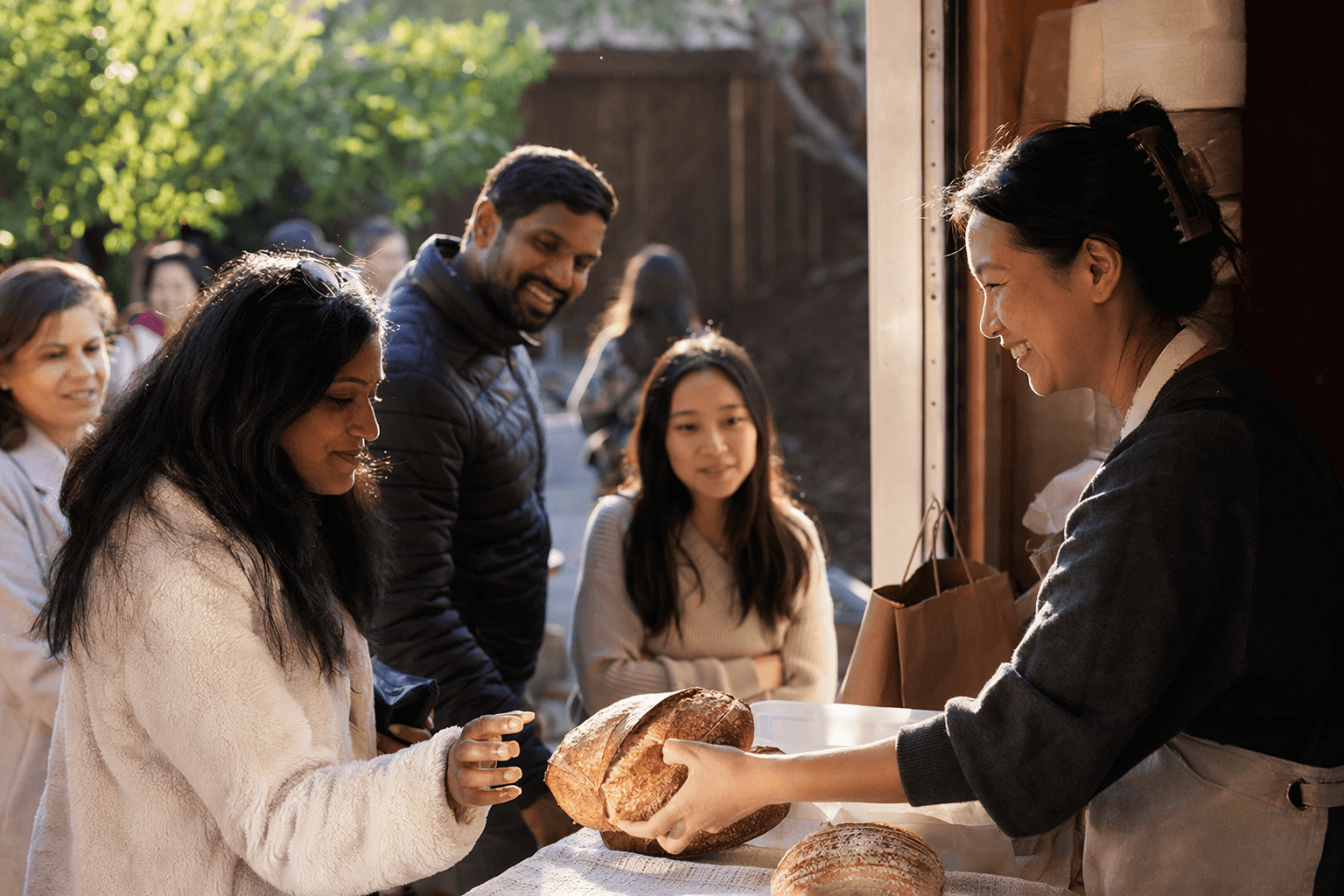
The menu also shows how a microbakery can keep sourdough interesting without drifting away from its core. Kirana Bakehouse offers House White, Everything Seasoning, and Cheddar Jalapeño, alongside basil pesto, olives with herbes de Provence, milk chocolate, and strawberry white chocolate loaves. That mix says something practical: people will subscribe to good bread, but they come back for variety that still feels handmade.
Why the subscription model works
The monthly subscription is the smartest part of the setup because it turns one-off interest into habit. Weekly Friday delivery gives customers a predictable bread day, which is exactly how you build loyalty when you do not have foot traffic or a café full of display cases. In sourdough terms, it is the difference between chasing random orders and building a schedule that matches fermentation instead of fighting it.
There is also a business lesson in the “slow, grounding ritual” language Kirana Bakehouse uses. That framing is not fluff. It matches what customers want from good sourdough: consistency, anticipation, and the sense that the loaf was made for them, not pulled from a shelf. If you are trying to turn home baking into revenue, that is the kind of promise you can actually keep.
The legal lane that makes a home bakery possible
Kirana Bakehouse does not exist in a vacuum. California’s Cottage Food Operations framework allows certain non-potentially hazardous foods to be made and packaged in a private home kitchen, and baked goods that do not support rapid microorganism growth fall within that lane. That is the legal opening that lets a serious home baker move beyond gifting and into real sales without opening a commercial storefront.
Santa Clara County adds another layer: home kitchens selling to the public need a cottage food operator permit. The county’s approved cottage food operations page is updated daily and currently shows 297 entries, which is a useful reminder that this is an established part of the local food economy, not some obscure loophole. If you want to build a home bread business in the county, you are entering a regulated system with a well-worn path.
The county also adopted a separate ordinance in March 2023 for Microenterprise Home Kitchen Operations. Under that model, operators are limited to 30 meals per day or 60 meals per week, with $58,275 in verifiable gross annual sales under the ordinance cited by the county. That matters because it shows how the region has started making room for small-scale food entrepreneurship while still keeping health permits, inspections, and food-safety certification in the picture.
California’s training rule is another one to keep in mind: cottage food operators must complete a food processor course within three months of being registered or permitted, then repeat that training every three years. If you are serious about turning a starter and a skillset into income, the paperwork and food-safety side is not optional. It is part of the business plan.
The practical blueprint behind the success
The Kirana Bakehouse model works because every piece is aligned. The starter has a story, the product line is narrow but appealing, the delivery schedule is fixed, and the sales format fits a home kitchen. That combination is what separates a charming hobby from a business that can hold onto customers.
If you are trying to map the same path, the takeaways are straightforward:
- Build around one reliable starter and learn its timing before you expand the menu.
- Keep the product list tight enough to bake consistently, but varied enough to make repeat orders feel fresh.
- Use a subscription or recurring delivery window if you want predictable demand.
- Price and plan around prep time, because a loaf that takes 3 days to make cannot be treated like a same-day commodity.
- Make the legal structure part of the setup from the beginning, not an afterthought.
That is the real value of Weng’s pivot. It shows that sourdough can move beyond the pandemic hobby phase and become a local bread business when the craft, the logistics, and the rules all line up. Albus may have started in Paris, but in Menlo Park, the starter has become proof that a home oven, used with discipline, can still build a loyal following.
Know something we missed? Have a correction or additional information?
Submit a Tip
.jpg&w=1920&q=75)