Home-based Circle Bakery rises before dawn to serve communities, teach sourdough
Circle Bakery proves a 4 a.m. home kitchen can power real sourdough sales, local workshops, and a business built for the cottage-food rules.

Before dawn, the work is already underway
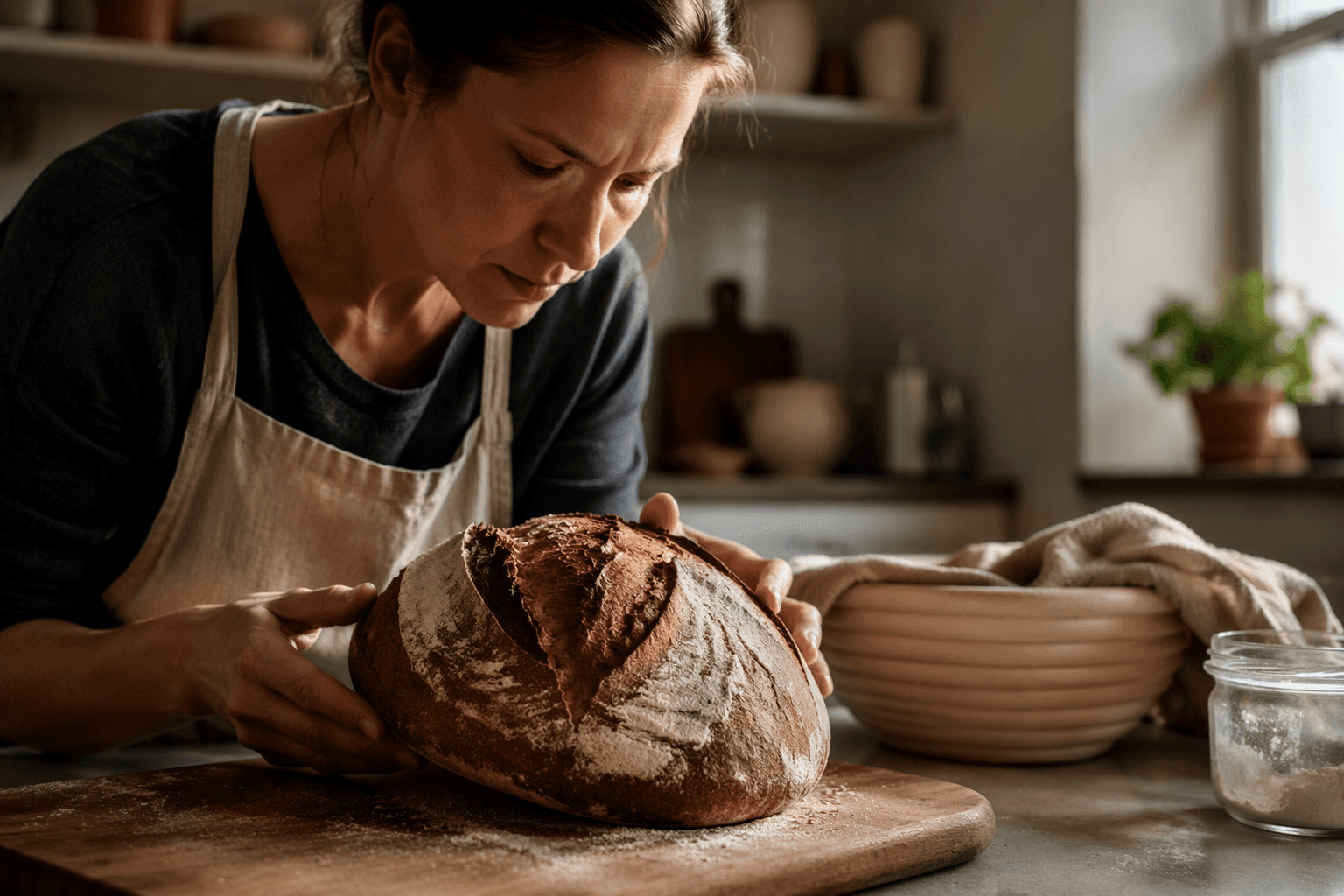
Circle Bakery runs on the kind of schedule most home bakers only flirt with. In Juliana Spencer’s kitchen, the smell of fresh sourdough can rise as early as 4 a.m., which tells you everything you need to know about the labor behind a small-batch bakery operating from a house instead of a storefront. The business serves Brownsburg, Indianapolis, and nearby communities, but its real footprint starts at the counter, where early mornings turn into bread, and bread turns into a business.
Spencer’s path into baking is not a tidy entrepreneurship story built in a seminar. She says she wanted to do this since high school, when she worked decorating cakes in a yogurt shop, but she also understood the downside of professional baking: the hours are punishing. After starting a family, she finally made the leap anyway, and now she balances Circle Bakery with raising two young children. That detail matters because it explains why the home bakery model keeps attracting serious bakers. It is demanding, but it can also fit real life in a way a commercial lease often cannot.
What Circle Bakery makes, and why that matters
Circle Bakery is built around sourdough, not a sprawling menu or a polished cafe identity. That focus is part of the appeal. Small-batch bread sells on trust, consistency, and the sense that the person mixing and shaping the dough is close to the product all the way through.
The bigger lesson for home bakers is that Circle Bakery does not try to look like a factory in miniature. It leans into what cottage baking does best: visible care, limited output, and a direct relationship with the people eating the bread. In a market crowded with sourdough branding, that is not a soft advantage. It is the whole business model.
Teaching is part of the bakery, not a side project
Spencer is not only baking loaves for customers. She also teaches sourdough workshops at Brownsburg Public Library, usually in small groups of eight to 12 people. That is an important number because it shows the scale she is working at. This is not a mass classroom or a glossy demo. It is a tight, low-pressure setting where people can actually learn starter care, shaping, and the confidence needed to keep a loaf alive from one bake to the next.
That teaching piece makes Circle Bakery more than a sales outlet. It turns bread into an entry point for local education, and it gives the business another way to build demand without chasing volume for its own sake. If you are trying to understand why some home bakeries stick and others stall, this is one of the clearest answers: Spencer is selling bread, but she is also selling competence.
The operating model behind a home bakery
Circle Bakery sits inside Indiana’s home-based vendor framework, and that framework is what makes the model workable. Indiana’s Home-Based Vendor law was originally created in 2009 and amended in 2022. Under that system, home-based vendors can make non-potentially hazardous baked goods, including bread, in their primary residence or another permanent structure on the property. They sell directly to consumers, not to resellers, and they cannot use rented kitchens.
That distinction is not a footnote. Purdue University’s College of Agriculture notes that Indiana HBVs are a separate category from retail food establishments, which is why Circle Bakery looks less like a hobby and more like a legitimate cottage-food business with a defined lane. The state has drawn a line around what can be made at home, what cannot, and how those goods can move to market.
For anyone baking at home and thinking about scale, the rules are the blueprint:

- You can make items such as bread, cookies, cupcakes, cake pops, and muffins.
- You can produce them in your residence or another permanent structure on the same property.
- You cannot make potentially hazardous foods.
- You cannot use a rented kitchen.
- You can sell online, but shipping rules apply.
- Your label has to carry the producer’s name and mailing address, the product name, ingredients in descending order by weight, the net weight or volume, the processing date, and a statement that the product is home produced and not inspected by the state health department.
- The FAQ says separate allergen labeling is not required.
The Indiana Home-Based Vendor Handbook was developed by the Indiana Department of Health in partnership with the Food Entrepreneur and Manufacturing Institute at Purdue University, which gives the whole system a practical, not just bureaucratic, backbone. This is not a free-for-all. It is a regulated lane designed to let small producers operate while keeping the limits clear.
What Circle Bakery says about the market for small-batch sourdough
The real takeaway from Spencer’s bakery is not that home baking is cute or restorative. It is that there is still a genuine market for bread with a story, especially when that story is anchored in daily use, local trust, and clear limits on scale. People are not just buying loaves from Circle Bakery. They are buying a baker they can meet, a process they can learn from, and a product that comes out of a home kitchen before the rest of the neighborhood is awake.
That is why Circle Bakery feels bigger than its footprint. It shows how sourdough can support entrepreneurship, parenting, education, and neighborhood connection at once, without pretending any of those things are effortless. The business rises early, stays local, and keeps its focus where it works best: on bread that is made, taught, and sold with the kind of attention that only a small operation can sustain.
This article was produced by Prism’s automated news system from verified source data, official records, and press releases, then run through automated quality and moderation checks before publishing. The system is built and supervised by the people who set the standards it runs under. Read our full AI policy.
Did this article answer your question?