How a Home Sourdough Bakery Built a Thriving Cottage Food Business
A 300-square-foot kitchen, smart preorder habits, and the right permits show how sourdough can become a real business without a storefront.
The home kitchen that works like a bakery
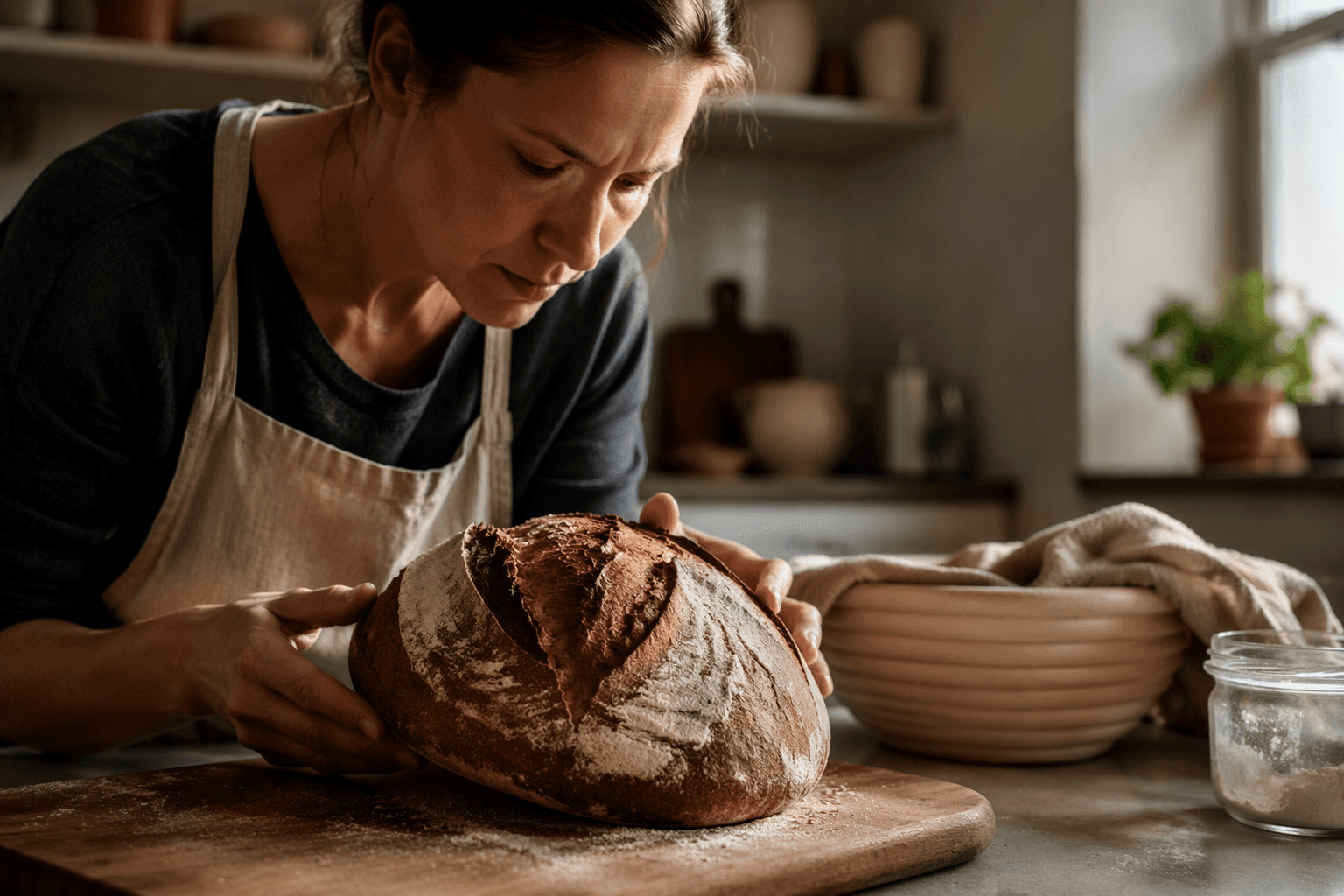
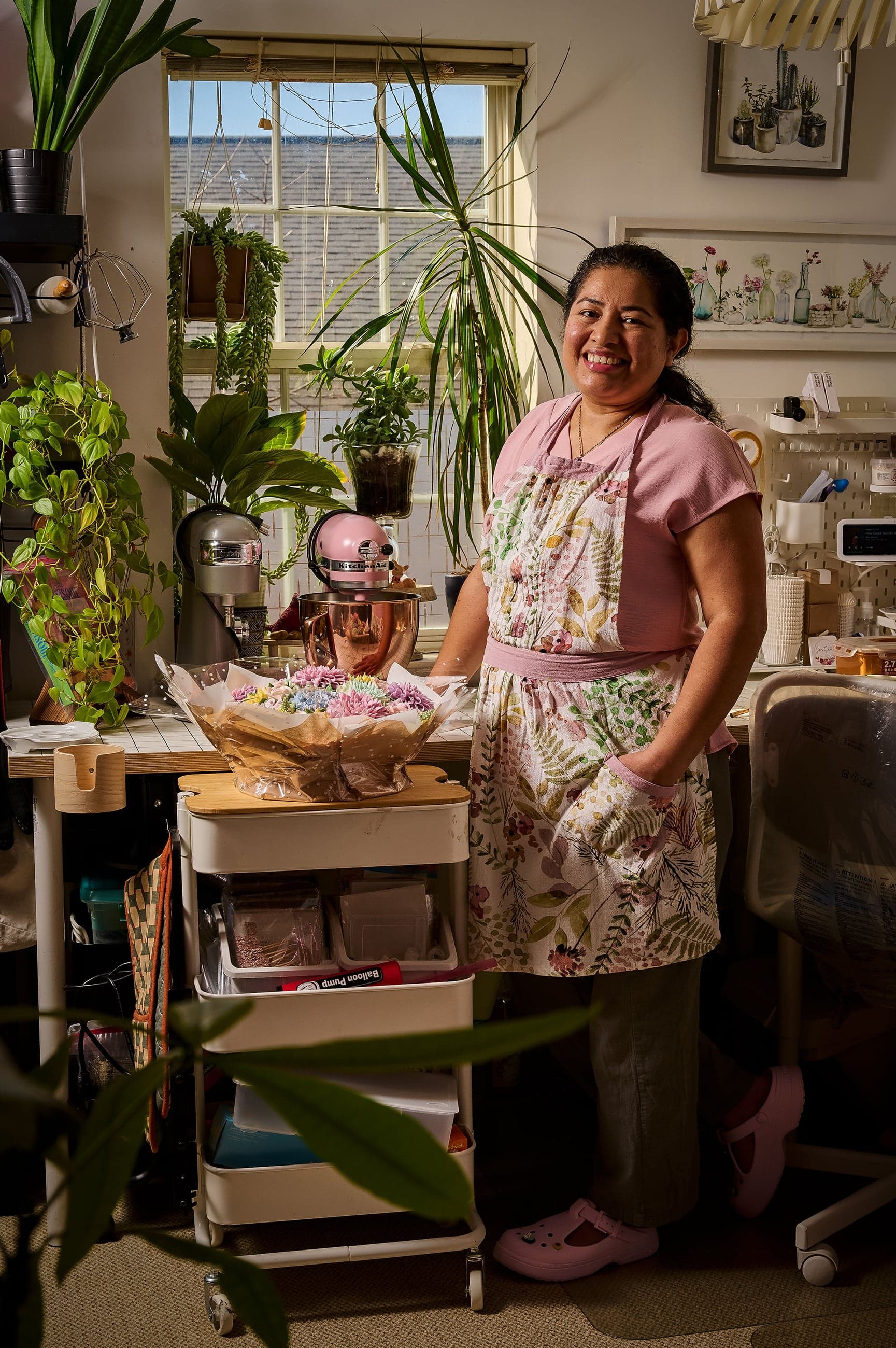
A bakery does not need a glass case or a street-facing sign to feel real. In the right hands, a licensed home kitchen can do the job, and Jill Nguyen of Capitol Jill Baking shows exactly how that model works when sourdough is the anchor product. She runs her bakery two days a week from a 300-square-foot kitchen with a conventional oven, a bread oven, and a spiral mixer, proving that a small domestic setup can still support serious output.
What makes the setup workable is not just the equipment. It is the rhythm. On bread days, Nguyen typically offers three kinds of sourdough, a baguette, and slices of cake. On Sundays, the menu shifts to cinnamon buns, biscuits with honey and chili crisp, and chewy pretzel bagels. That kind of rotation matters in a cottage business because it lets one kitchen serve different demand patterns without trying to imitate a full storefront.
Why sourdough fits the cottage food model
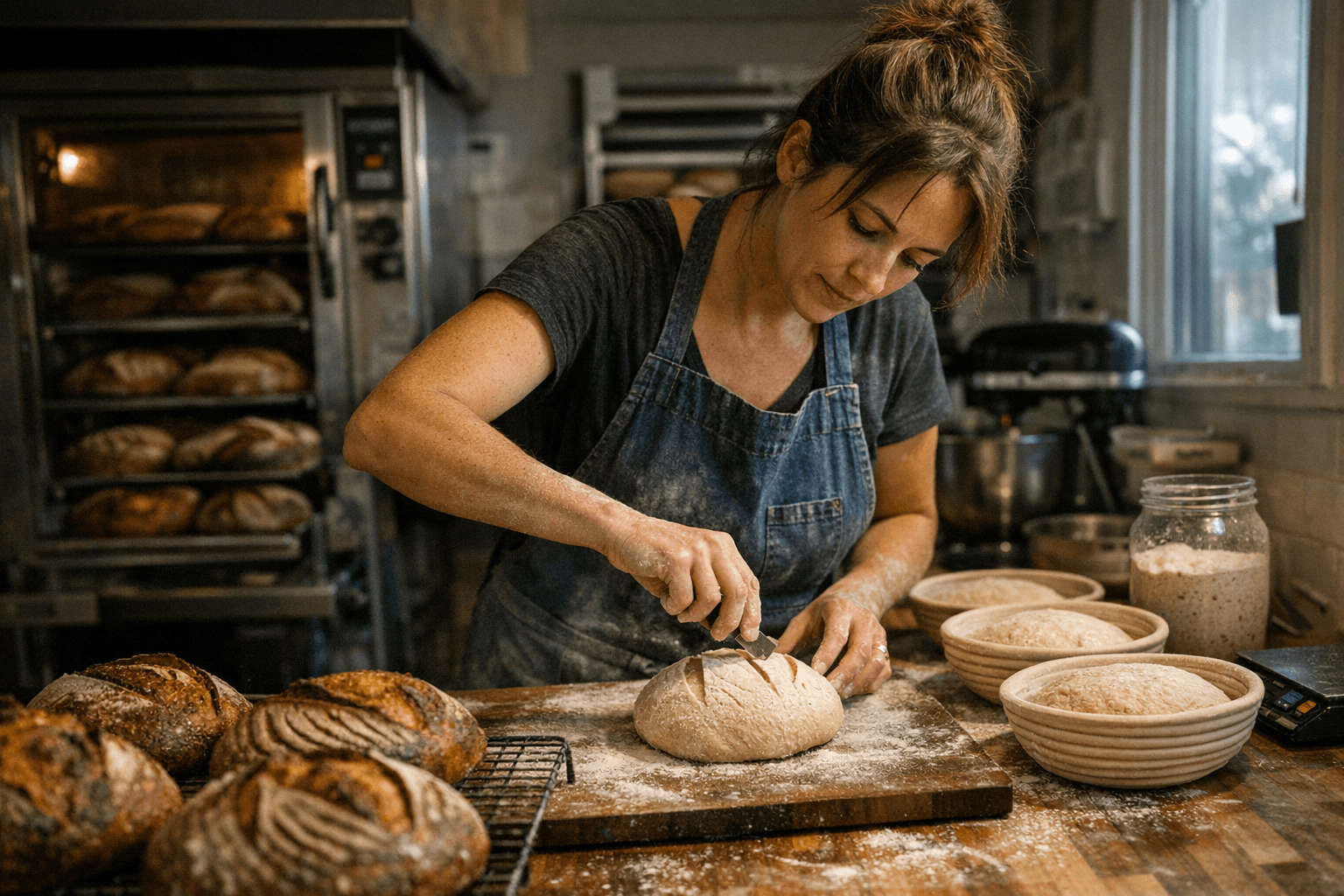
Sourdough is especially well suited to a home bakery because it already rewards planning, timing, and a tight menu. A baker can build a preorder calendar around fermentation, bake days, and pickup windows instead of keeping a retail counter open all week. That lowers overhead and keeps the operation focused on products that travel well, hold quality, and command a premium because they feel handcrafted and limited.
The bigger lesson from Nguyen’s setup is that the product mix has to match the scale. Three breads, a baguette, and cake slices are a manageable production line for a small kitchen; the Sunday pastry lineup adds variety without turning the business into a full cafe. For readers thinking about selling loaves at home, that is the real playbook: choose a core product family, keep the menu tight, and let repeat customers come back for the next bake day instead of forcing constant inventory.
The customer experience matters too. Preorders and a neighborhood pickup vibe turn a home bakery into a community ritual. People line up at a residence instead of walking into a commercial shop, and that creates a different kind of loyalty, one built around limited drops, familiar faces, and the feeling that the bread was made specifically for them.
How DC makes a home bakery legal
In Washington, D.C., this model is not a loophole. It is a regulated cottage food business. DC Health says cottage food businesses are prepared in the owner’s residential home kitchen, which means the law is built around the reality that a kitchen at home can produce food for sale if the baker follows the rules.
Those rules are specific. Applicants must submit a Cottage Food Registry Application, and some businesses may need a pre-operational inspection before they start selling. Once approved, the business receives a registration certificate and ID number, along with a Health Certificate that is valid for two years. That combination gives a home bakery the paper trail it needs to operate professionally, even without a storefront.
The sales model is also broader than many people assume. DC’s rules allow direct sales to consumers through retail and online channels within the District, and a 2025 amendment added the ability to sell wholesale to licensed food establishments. That matters because it gives small bakers room to grow: a home operation can start with neighborhood pickups, then move into retail and wholesale relationships without immediately taking on the cost of a shop lease.
Oversight is part of the picture too. DC Health says its Division of Food inspects about 7,500 food establishments in the city, including cottage food businesses. For a home baker, that is the reminder that cottage food is still food business, not hobby baking with a cash jar on the counter.
A different route into baking, but the same business logic
Alex Reponen’s path into baking shows how personal the cottage food world can be. He was a CIA operations officer, recruiting spies and stealing secrets, before leaving the agency in 2015. He later worked with the team that went on to open Pluma by Bluebird Bakery in Union Market, then launched his own cookie business in 2020. He is 48.
His story is not about sourdough specifically, but it explains why so many food businesses start small and personal before they become full operations. A strong product, a clear identity, and the discipline to keep making and selling it are enough to build a following. In the cottage bakery world, that same formula can carry sourdough from home oven to steady income.
The state-by-state rules shape what is possible
The DC model looks flexible, but the regional context matters because nearby states draw the lines differently. Maryland Department of Agriculture guidance says cottage food products can be sold directly to consumers from a residence, at farmers markets, at public events, by personal delivery, or by mail delivery. One guidance document sets an annual sales cap at $25,000, while a newer guidance document lists $50,000.
Maryland also keeps the market tightly in state. Another guidance document says the food can be sold only within Maryland and cannot enter interstate commerce. For a home baker, that means the menu and sales plan have to be designed with geography in mind, not just demand.
Virginia uses a different framework. The Virginia Food and Drink Law says private homes that manufacture, process, pack, or hold food for sale are subject to state rules and related regulations, and enforcement includes regular periodic inspections of food establishments, including private homes. That means a home bakery may still be viable there, but it operates under a more formal inspection structure.
What actually makes a cottage bakery work
The winning formula is surprisingly practical. Keep the kitchen small enough to control, keep the menu narrow enough to produce consistently, and keep the sales process simple enough that customers know when and how to buy. Nguyen’s two-day schedule, her preorder-driven pickups, and her focused product lineup show how a home kitchen can function like a real bakery without trying to become one overnight.
For sourdough bakers, the opportunity is clear. The loaf itself is already a premium product, and the cottage food model lets that premium be captured at home, on a schedule that fits real life, with overhead that stays far below a storefront’s. That is why the modern home bakery is more than a side hustle. It is a legitimate small business structure, one that can turn a neighborhood pickup into a dependable bread line and a home oven into a sustainable operation.
This article was produced by Prism’s automated news system from verified source data, official records, and press releases, then run through automated quality and moderation checks before publishing. The system is built and supervised by the people who set the standards it runs under. Read our full AI policy.
Did this article answer your question?