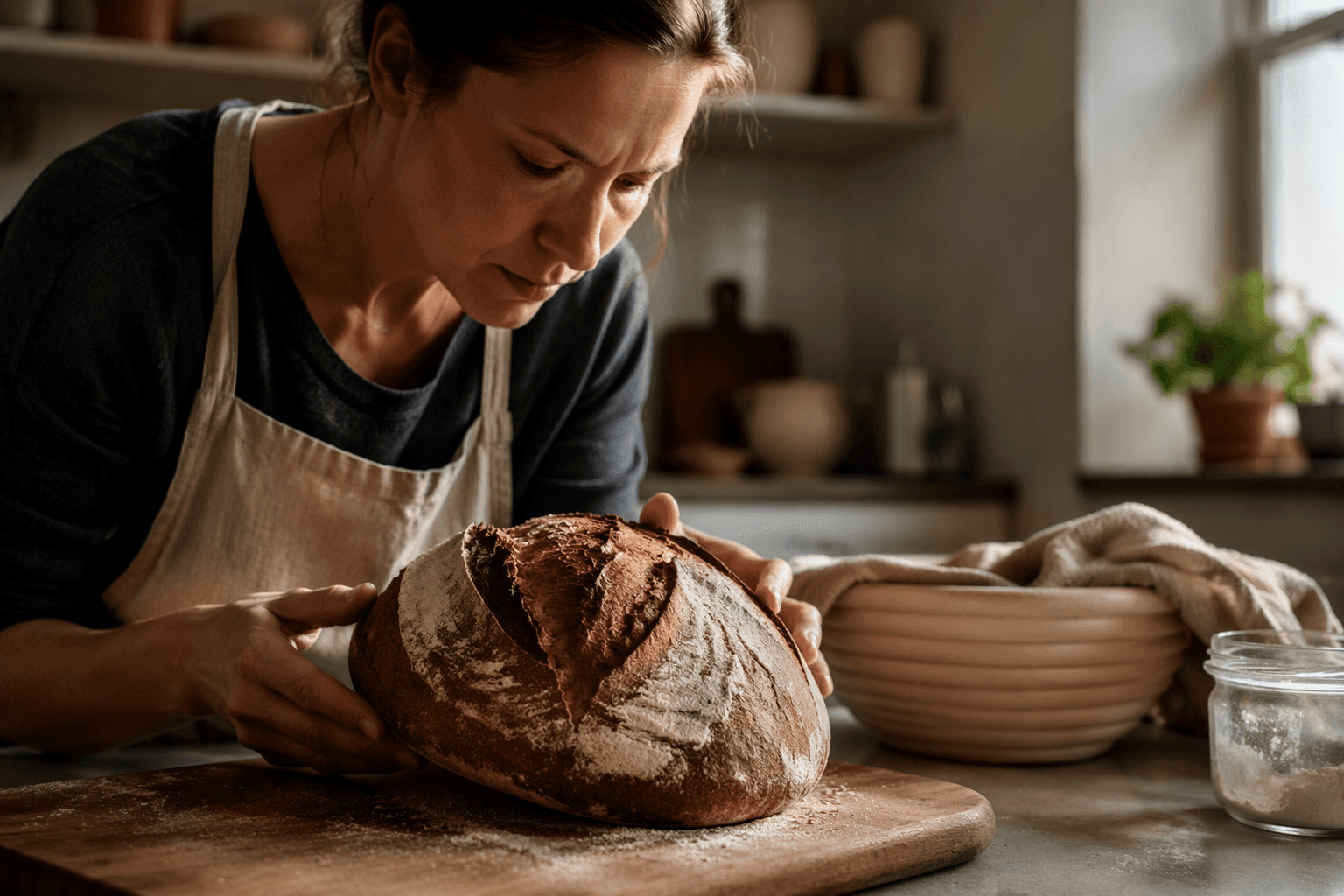
How to Spot Real Sourdough, and Avoid Label Tricks
A sourdough label can hide a lot. The shortest ingredient list, and the baker who can explain the fermentation, usually tell the truth.
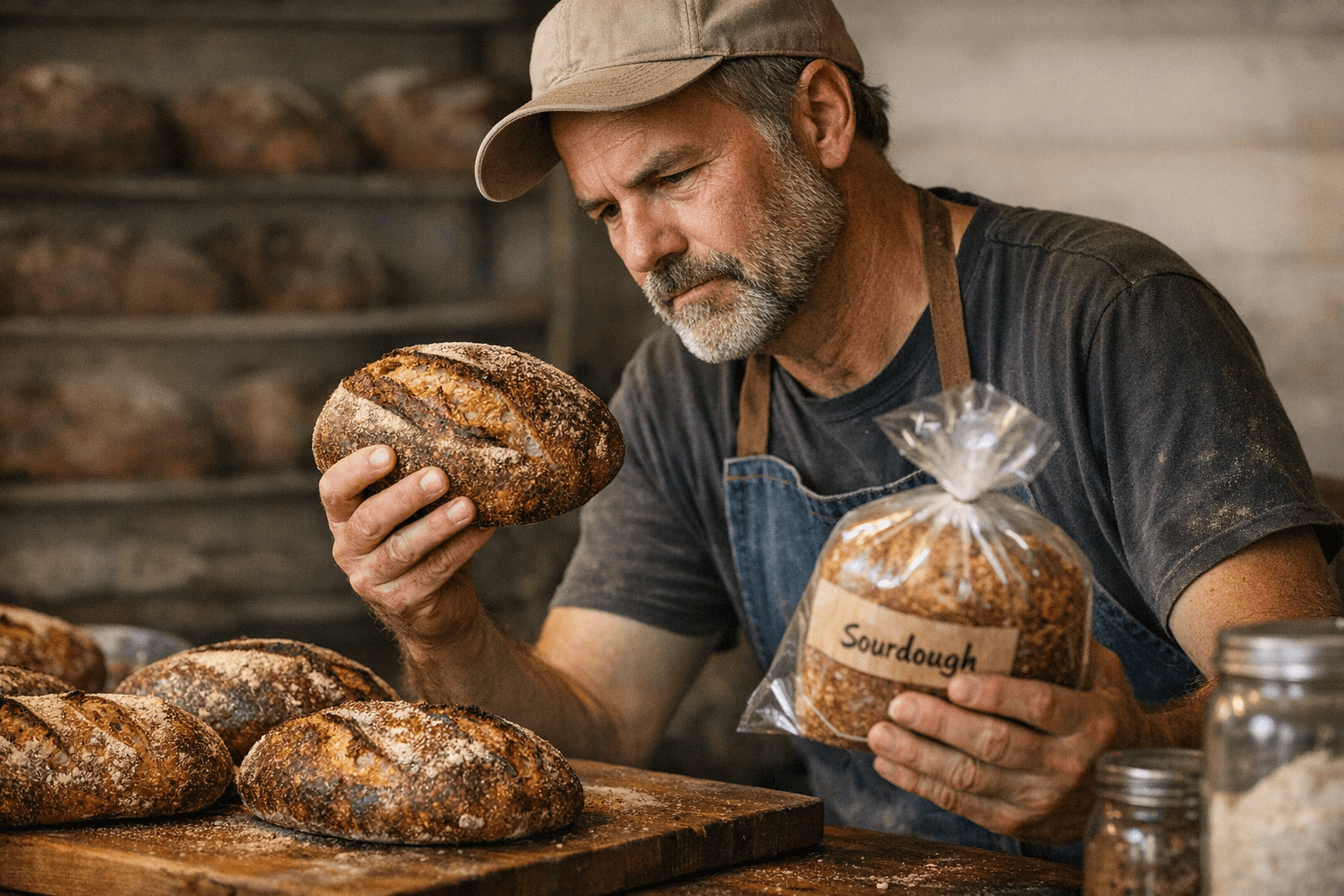
The fastest way to spot real sourdough is to flip the loaf over and read the ingredient list. If you see flour, water, and salt doing the heavy lifting, you are probably looking at a true slow-fermented bread. If the label starts leaning on commercial yeast, added acids, preservatives, or a long list of helpers, you are in the territory of sourdough-flavored marketing, not the pure thing many shoppers think they are buying.
Why the label matters so much
Sourdough is not just a flavor word. It is one of the oldest forms of leavened bread, with peer-reviewed research tracing sourdough fermentation back about 5,000 years. That long history matters because the method is the point: a real sourdough starter is a living culture of wild yeast and lactic acid bacteria mixed with flour and water, and it changes dough through time, not shortcuts.
That slow fermentation is also why sourdough has such a loyal following. Reviews of the science say it can improve sensory quality, dough handling, texture, and shelf life. Consumers buy it expecting tang, digestibility, and a more natural feel, and that is exactly why label tricks hit a nerve. When a loaf borrows the sourdough name without the full process, shoppers are paying premium bread money for a story they did not really get.
What real sourdough looks like on the ingredient list
The ingredient panel is the most reliable shopper-protection tool you have. A genuine sourdough-style loaf can still be simple, often with a short list centered on flour, water, salt, and a starter culture. The key detail is not just what is present, but what is missing. If the bread is propped up by commercial yeast, acids meant to mimic tang, or preservatives that extend shelf life, that loaf may be technically legal and still far from the bread you expected.
John Oechsner of the Auguste Escoffier School of Culinary Arts and Stephen Chavez of the Institute of Culinary Education both drive home the same basic point: the ingredient list tells you whether the loaf was built through fermentation or through imitation. A starter is not a flavor packet. It is a living ecosystem, and if a baker speeds up the process too much, the bread changes identity along with its schedule.
The gray area: when sourdough is real, but not the whole story
This is where shoppers get tripped up. Some commercial bakers add a trace of yeast for schedule reliability, and that means a loaf can still honestly use the sourdough label while being less pure than many customers assume. In other words, the bread may be sourdough in a technical sense but still rely partly on bakery convenience rather than long, natural leavening.
That does not automatically make the loaf bad. It just means the word on the front of the bag is not enough. If you care about the deeper fermentation, the real test is whether the baker can explain how the loaf was made, how long it fermented, and whether the tang came from time and culture or from additives doing impersonation duty.
What to ask for at the counter
When you can buy from a local bakery or farmers market, you get a better chance to separate genuine sourdough from label theater. A baker who made the loaf should be able to tell you what starter was used, whether commercial yeast was added, and how long the dough fermented. That conversation is worth more than a front-of-pack claim that simply says sourdough.
- Short ingredient list, with flour, water, and salt near the top.
- No obvious additives trying to fake acidity or keep the loaf soft for days.
- A baker who can describe the fermentation without reaching for vague marketing language.
- Packaging that makes the process clear instead of hiding behind a premium-sounding name.
A practical shopping check looks like this:
For sandwich bread in particular, this matters on any baking schedule. A loaf can be soft, sliceable, and still genuinely fermented. But if softness is the main selling point and the ingredient list starts to look engineered, you are probably buying convenience first and sourdough second.
Why the rules are fuzzy in the U.S.
The confusion is not just a marketing problem. The U.S. Food and Drug Administration says standards of identity are meant to protect consumers by making sure foods match expectations for characteristics, ingredients, and production processes. But the current federal bakery-products rule defines bread as yeast-leavened and lists yeast and salt among the ingredients, without creating a specific federal sourdough standard.
That gap leaves room for broad claims. If a product meets a general bread definition, a company can still lean hard on the sourdough name even when the loaf was not built the way many shoppers picture it. That is why label literacy is now part of buying bread well.
The UK fight over “sourfaux” shows how sharp this argument has become
This debate is not limited to American supermarket shelves. In the United Kingdom, the Real Bread Campaign has spent years challenging sourdough marketing it sees as misleading. On January 30, 2024, it wrote to Co-op CEO Shirine Khoury-Haq with concerns about the marketing of the chain’s sourdough baguette. In June 2025, it criticized Warburtons’ “sourdough but softer” products and used the term “sourfaux” to describe what it saw as fake sourdough framing.
That language may sound blunt, but the underlying complaint is simple: if a loaf is being sold as sourdough, shoppers deserve clarity about whether it was naturally fermented or merely styled to taste that way. The bigger the premium and the cleaner the health halo, the more exact that distinction becomes.
Why the category keeps growing anyway
This matters because sourdough is not a niche shelf item anymore. BakeryInfo, using Circana data, reported that sourdough was the fastest-growing part of the in-store bakery market, up 9% in volume for the 12 months to August 12, 2023. Growth like that brings more products, more copycat labels, and more confusion.
It also explains why the word carries so much commercial weight. Sourdough is tied to taste, naturalness, healthfulness, and digestibility in consumer research, so brands have every reason to borrow its reputation. The more popular the category becomes, the more important it is to tell the real thing from the loaf that just looks the part.
The bottom line at the bread aisle
If you want real sourdough, trust the process before you trust the package. Look for a short ingredient list, ask how long it fermented, and treat added yeast, acids, and preservatives as signals that the loaf may be sourdough in name but not in spirit. The old bread is still the best bread when it is allowed to be itself.
This article was produced by Prism’s automated news system from verified source data, official records, and press releases, then run through automated quality and moderation checks before publishing. The system is built and supervised by the people who set the standards it runs under. Read our full AI policy.
Did this article answer your question?