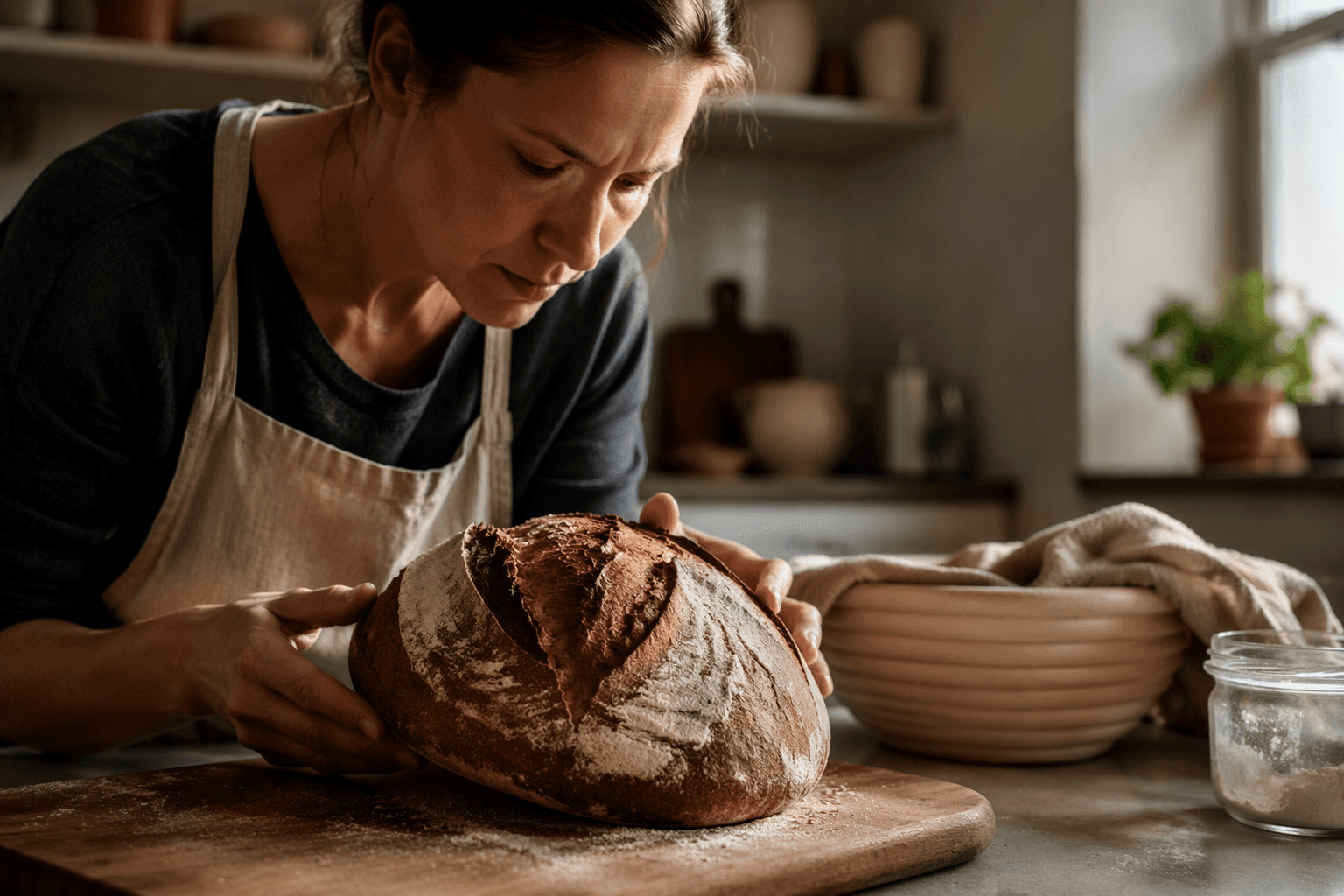
Why Sourdough Scoring Can Transform Loaves and Improve Oven Spring
A good slash does more than decorate a loaf. It gives sourdough a controlled escape route, helping the crust lift, bloom, and open into a more dramatic oven spring.
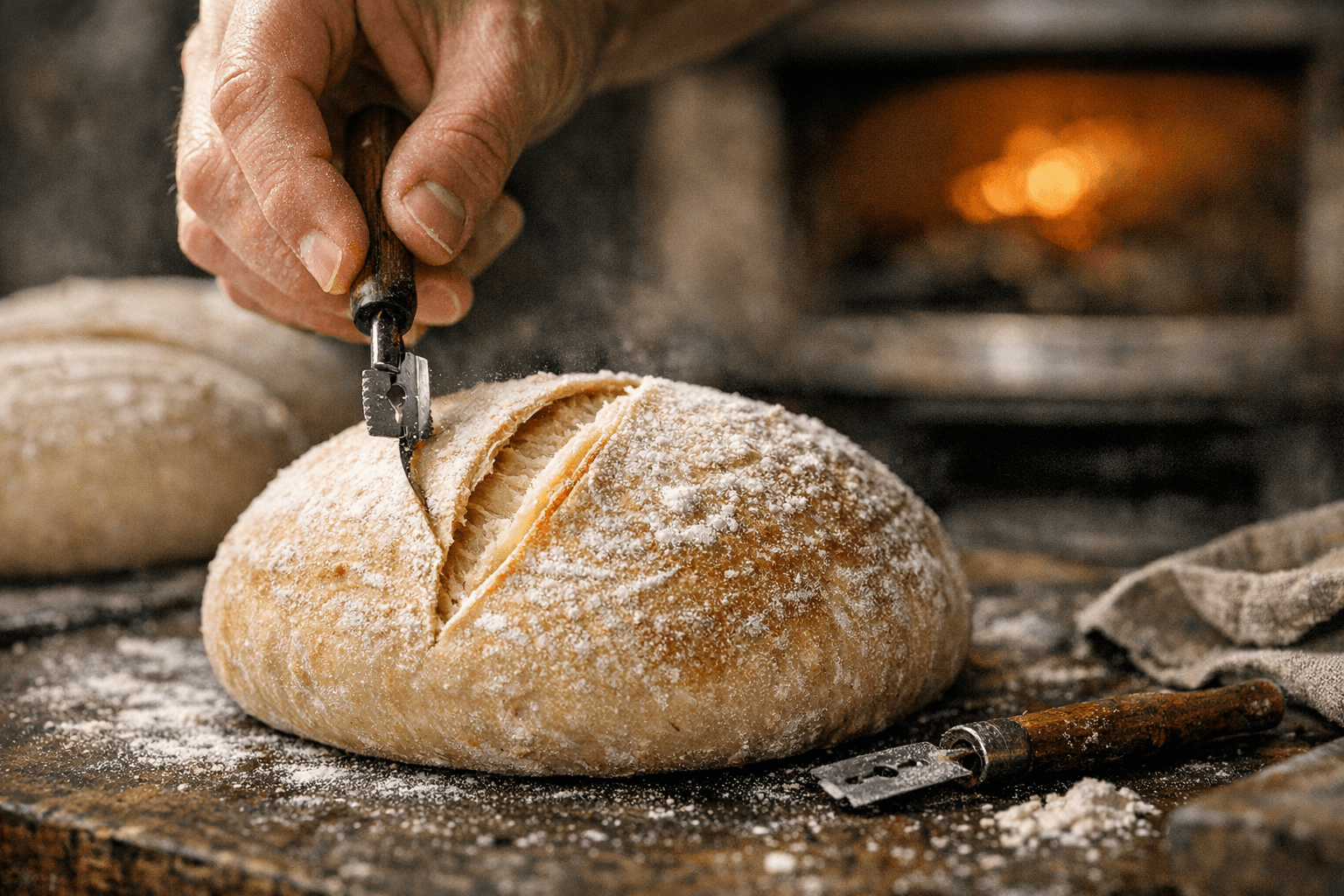
The difference between a cut and a plan
A flat loaf is often not a fermentation problem at all. Sometimes the dough fermented beautifully, but the blade never gave it a clear place to expand, so the crust tore wherever pressure found the weakest point. That is why scoring is such a high-leverage move in sourdough: one well-placed cut can turn the same dough, with the same formula, into a loaf that rises higher, looks cleaner, and bakes with real drama.
The common mistake is treating scoring like decoration after the hard work is done. A random slash pattern, a cut that goes too deep, or a blade that drops straight down into the dough can all work against you. Instead of guiding expansion, those choices can flatten the loaf, weaken its shape, or send the oven spring sideways instead of upward. A simple, repeatable scoring setup does the opposite. It tells the dough where to open, protects the loaf’s structure, and creates the ear and bloom that make sourdough look intentional.
Why scoring changes the first minutes in the oven
Scoring is structural, not cosmetic. Once the loaf hits heat, the dough wants to expand quickly as gases push and steam builds inside. The slash acts like a pressure release valve, giving the loaf a planned path of expansion instead of forcing it to split unpredictably. That is why a shallow, well-angled line can open into a crisp ear, while a poorly placed or overly aggressive cut can collapse the shape you worked so hard to build.
This is also why scoring directly affects oven spring. A well-fermented, well-shaped loaf still has enough internal strength to push upward once the crust yields. When the blade opens the surface at the right moment, the dough can burst with force and lift in the oven. A weak or misjudged score wastes that energy, letting the loaf spread out rather than spring up.
The two things that matter most: cut direction and dough state
If you want consistent results, think about the blade and the dough together. The direction of the cut determines where the loaf will expand, while the state of the dough determines how much it can actually give. A shallow line on a loaf with good surface tension can open beautifully. The same line on dough that has lost strength may barely hold shape, or it may expand without definition.
Overproofed dough is especially tricky. By the time it reaches the oven, it may have already lost too much gas retention to respond to a dramatic pattern. In that case, an elaborate design will not rescue the loaf. By contrast, dough that is well-fermented and carefully shaped still has power left in it, and scoring becomes the lever that releases it. That is the practical heart of the technique: the cut is only as good as the dough beneath it.
Simple scoring setups that work again and again
If your loaves spread instead of blooming, start by simplifying the pattern. One reliable approach is a single, confident slash along the top of a batard, set at a slight angle so the cut can open into an ear. Another dependable option is a centered score on a round loaf that creates one main expansion seam instead of several competing openings. Both approaches work because they direct force instead of scattering it.
What you want to avoid is the kind of scoring that looks busy but gives the loaf no clear release point. Multiple shallow nicks, cuts that are too deep, or blades that dive straight down can all confuse the expansion path. The loaf then responds by tearing where it wants, not where you planned. A focused score pattern may look simpler on paper, but in the oven it produces a more dramatic lift and a more bakery-style finish.
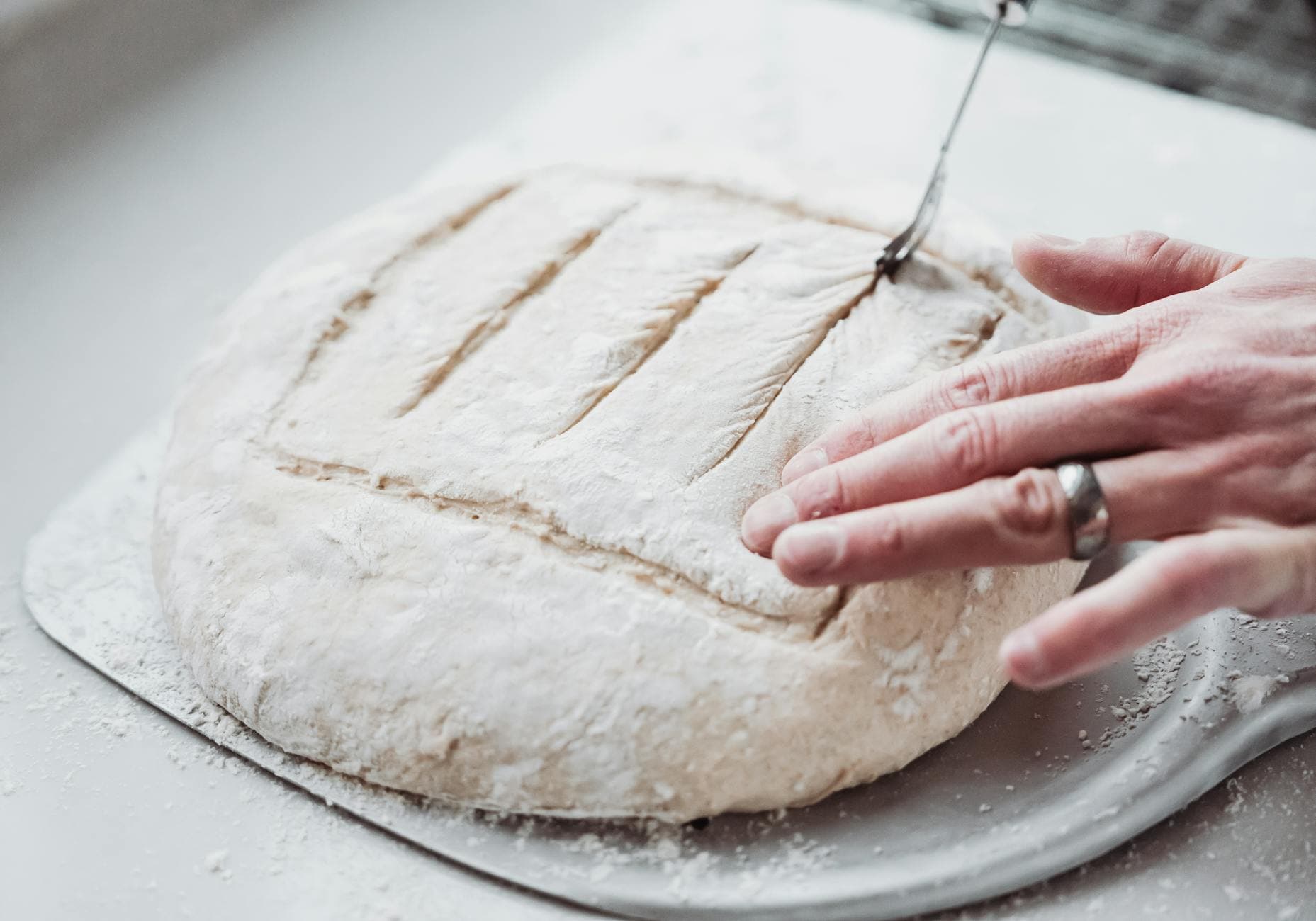
- One main score gives the loaf a clear place to bloom.
- A shallow angle helps form the ear instead of just opening the crust.
- Consistency matters more than complexity when you are trying to improve oven spring.
A good rule of thumb is to think in terms of control:
Why the timing matters just as much as the pattern
Scoring works best when the loaf goes from bench to oven with confidence and speed. Once the dough is shaped and ready, you want the blade to do its job before the loaf starts to relax. That matters because surface tension is part of what helps a cut open cleanly. If the dough has slackened too much, even a precise slash may not lift the way you want.
This is where scoring becomes a quiet test of the whole bake. The blade reveals whether the dough was fermented enough, shaped tightly enough, and handled gently enough to hold its structure. A loaf that enters the oven in good condition can spring up hard in the first minutes of baking. A loaf that has already gone soft will usually show it at the cut.
The visual payoff is part of the craft
There is a reason bakers chase the ear. A well-scored loaf looks more confident, more deliberate, and more bakery-like the second it comes out of the oven. That visible lift is not just a pretty finish; it is proof that the loaf had structure, tension, and enough strength left to respond to heat. For anyone sharing loaves with friends, selling locally, or simply setting a finished boule on the counter with pride, that visual impact matters.
Scoring also gives homemade sourdough a sense of identity. A beautiful slash pattern tells people that the loaf was handled with intention, not just mixed and baked. It signals control over fermentation, control over shape, and control over the final look of the crust. That is why the difference between an average loaf and a memorable one can come down to a few deliberate inches of blade work.
The small adjustment with the biggest payoff
The best part of scoring is that it improves the bake without changing the recipe. You do not have to rebuild your process to see a better loaf. Keep the formula, keep the fermentation, keep the shaping, and start treating the cut as part of the structure rather than the decoration. Once you do, the loaf has a clear path to expand, the crust opens with purpose, and the oven spring becomes something you can actually steer.
That is the real power of scoring: it turns a good sourdough into a loaf that looks alive the moment it hits the heat.
This article was produced by Prism’s automated news system from verified source data, official records, and press releases, then run through automated quality and moderation checks before publishing. The system is built and supervised by the people who set the standards it runs under. Read our full AI policy.
Did this article answer your question?