Le Pain Quotidien Builds Spring Menu Around Freshly Baked Sourdough Wheat
LPQ's spring menu built around sourdough wheat toast is a reverse-engineering challenge: the crumb structure that wins on Instagram collapses under tuna and chipotle sauce.
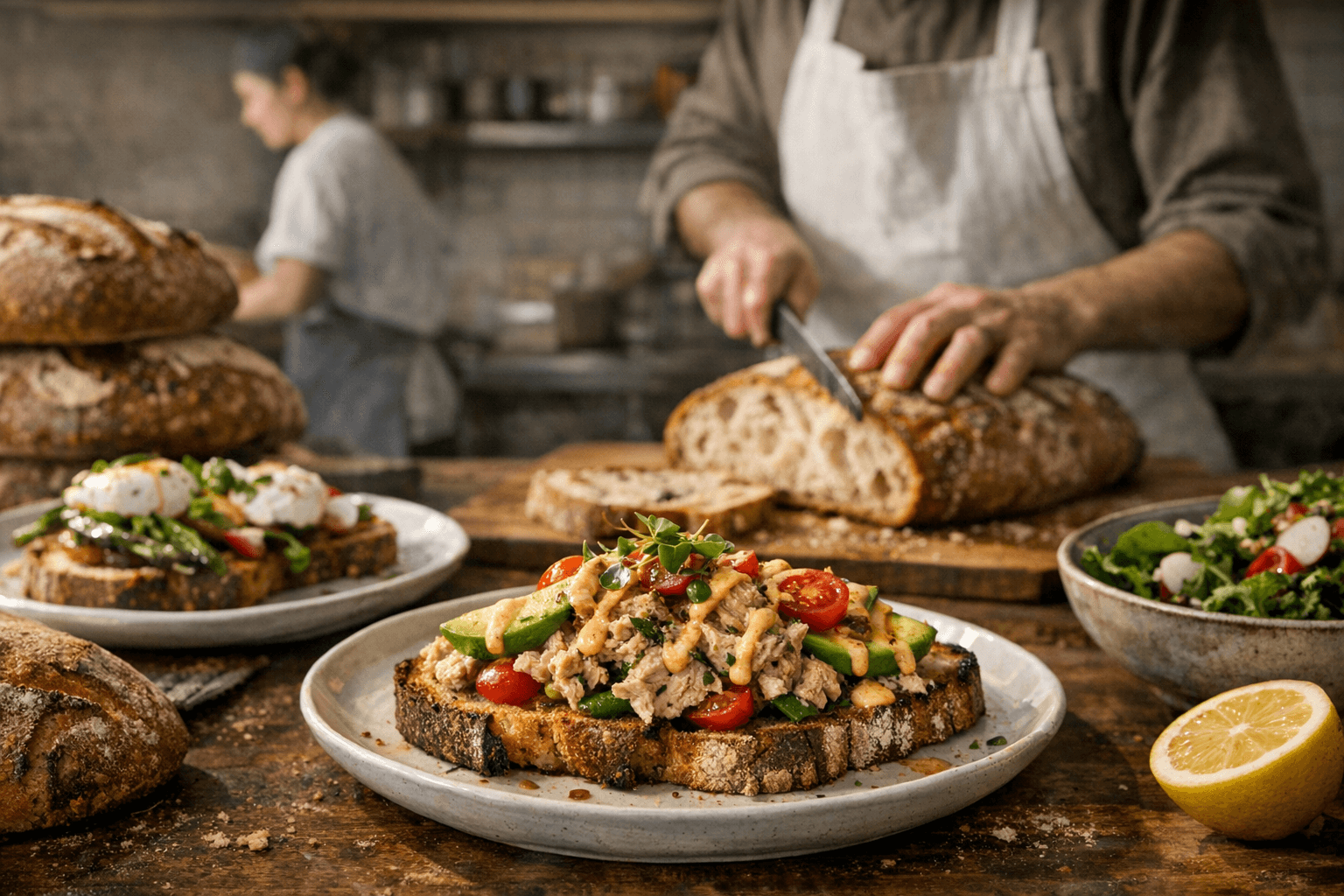
The crumb structure that gets the most saves on your Instagram feed is probably the wrong one for a toasted sandwich. Le Pain Quotidien's spring menu, which launched April 8 with items like the Tuscan Tuna Toast and Chipotle Chicken Club Toastie served on freshly baked sourdough wheat, makes a useful case study in exactly why.
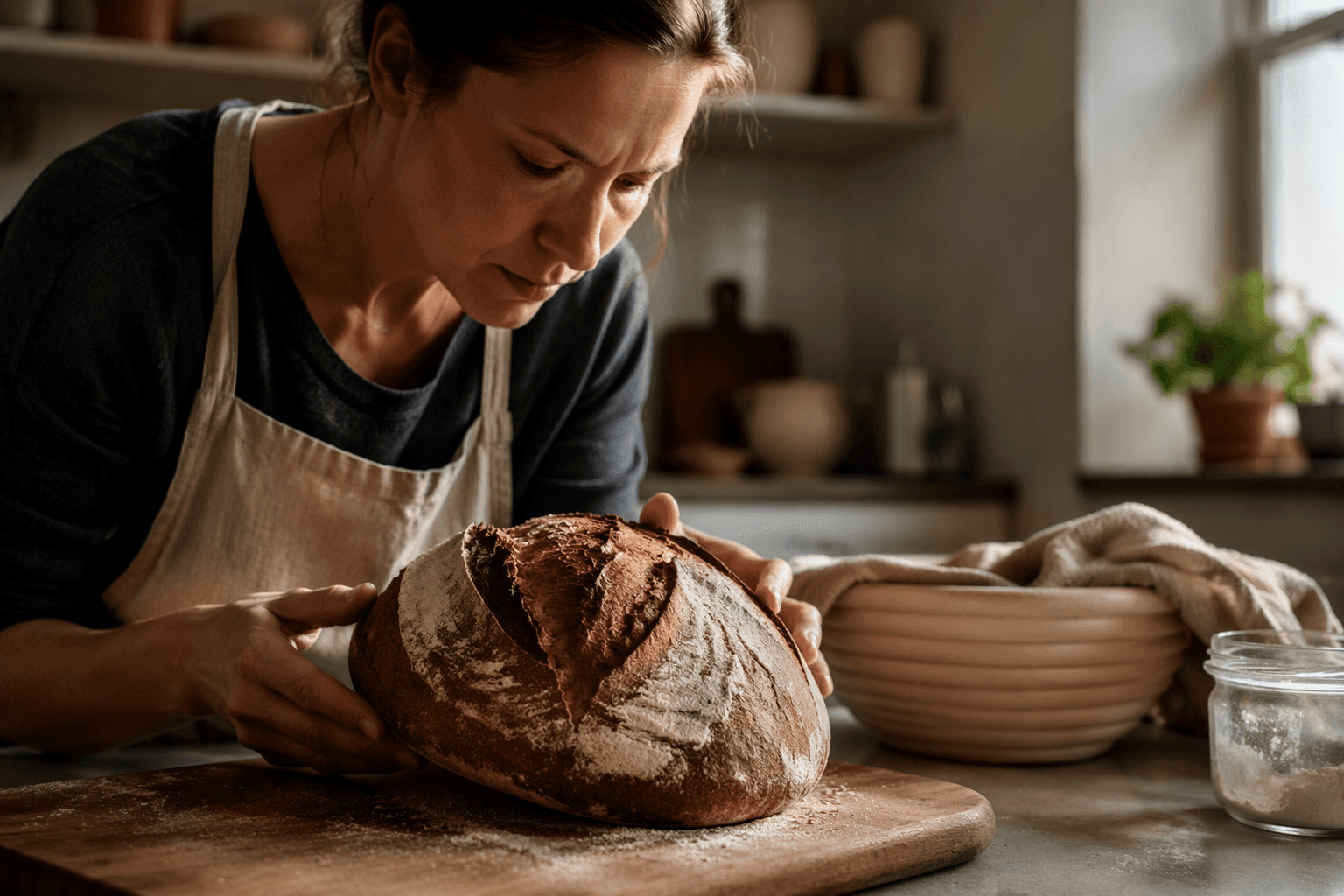
Most home sourdough bakers optimize for an open, irregular crumb: the dramatic ear, the translucent cell walls, the honeycomb cross-section that photographs well. But a café operating lunch service at scale needs something fundamentally different from its house bread. LPQ's toasted sourdough wheat has to survive contact with tuna, chipotle sauce, and the structural demands of a club sandwich without collapsing mid-bite. That calls for tighter, more uniform cell structure, moderate hydration, and a wheat-forward dough that sets firmly in the toaster rather than going limp.
Ellen de Smedt Kilgariff, VP of Food & Beverage at Le Pain Quotidien, framed the seasonal launch around hospitality rather than bread science: "At Le Pain Quotidien, we're thrilled to welcome springtime with my favorite seasonal menu to date." But the operational reality behind that menu tells a technical story worth reverse-engineering.
Running daily toasted sandwiches across multiple restaurant locations demands consistent levain health, predictable cold-fermentation schedules, and tight bake-day timing. The loaves need to emerge with predictable crust thickness: firm enough to crisp under a toaster or broiler, not so thick that it shatters and ejects the filling. Crumb behavior during reheating matters too, since a sandwich loaf used in a 10 a.m. bake needs to stay table-ready through a 2 p.m. lunch rush without going gummy or leathery as it cools.
To approximate this at home, the main lever is hydration. A sourdough wheat built for toast and lunch plates typically runs 68-72% hydration rather than the 78-82% range common in open-crumb boules. Adding 15-20% whole wheat flour by total flour weight increases water absorption capacity while contributing the nutty, slightly tannic flavor that grounds a savory open-face sandwich. An autolyse of 30-45 minutes before incorporating the levain develops the gluten structure needed for a tight, even slice without overworking the dough. Cold retard overnight, then bake at high heat around 450°F (230°C) with a shorter covered period than you would use for a boule; the result is a crust that crisps under the toaster rather than staying chewy.
The immediate test: slice a cooled loaf to 12-14mm thickness, the range that gives structural integrity and even browning in two toaster cycles, and build your lunch on it. At that hydration, the crumb holds a smear of aioli or a wet protein without soaking through, and sourdough's lactic acid profile slows staling noticeably compared to a commercial wheat sandwich loaf, meaning the second-day slice is still worth eating.
LPQ's spring menu runs for a limited period. The bread technique behind it does not expire.
This article was produced by Prism’s automated news system from verified source data, official records, and press releases, then run through automated quality and moderation checks before publishing. The system is built and supervised by the people who set the standards it runs under. Read our full AI policy.
Did this article answer your question?